Highly Sensitive Content
A 21-year-old female Radford student charged with second-degree murder in which a student was found stabbed to death Thursday morning – Radford’s first murder charge in eight years, the city prosecutor said.

A 21-year-old female Radford student charged with second-degree murder in which a student was found stabbed to death Thursday morning – Radford’s first murder charge in eight years, the city prosecutor said.

TyQuan Holloway
2017
TyQuan Holloway is a graphic designer and artists from New Jersey.
As one of the first websites I’ve ever made, it’s a showcase for TyQuan’s creations. When developing this website, it needed to be all show, as the art he does is seen and not read. For its time, it was okay. Features include: portfolio, contact page, menus, and about me.


Ron Woodroof (Matthew McConaughey), an unlikely hero, was the cowboy of drugs, sex, and alcohol in the 1980s where the AIDS crisis started in 1981 with 270 reported cases and the World Health Organization estimating that there were up to 400,000 cases worldwide in 1989 (Avert., 2018). Ron’s Dallas Buyers Club changed everything for the AIDS epidemic by pointing out the flaws of the FDA, giving hope for those to freely live their lives, and flag shipping one of the most significant movements for the gay community. Once cowboy Ron came to realize that he had HIV, he knew he did not have time anymore to go back to his old life, a mission to stay alive began. AIDS was killing, and it did not help that the time linked homosexuality with AIDS, which gave people a more significant reason to hate the gay community further (FOCUS FEATURES., 2013). The FDA concocted the drug AZT to battle the AIDS crisis, but the amount of AZT the patients were receiving made them worse even if it worked at suppressing against the disease. The buyer’s club was being stifled by the FDA because of Ron’s experimentation with drugs to prolong his life. Ron was changing, and the turning point was when Ron started his research into AIDS. He lost many of his old friends, like T.J., in the process but gained many more even if he did not act like it, such as Rayon (Jared Leto) and Dr. Eva Saks (Jennifer Garner). Nobody could ever tell Ron who or what he is and how to live his life, he fought for that freedom. Poor, drug and sex addicted cowboy of an electrician to turning into a poor, drug distributor, and sex addicted hero of the gay community.
Philosopher Ayn Rand states, “Just as man cannot survive by any random means, but must discover and practice the principles which his survival requires, so man’s self-interest cannot be determined by blind desires or random whims, but must be discovered and achieved by the guidance of rational principles.” Those rational principles come in the form of rational egoism (or rational selfishness) the “concern with one’s own interests” and, in a film, it would be what the actor want’s that maximize their benefit. Rand says that it is not evil to pursue one’s own self-interest for life and survival as the concept does not include any moral evaluation. “The only man who desires to be moral is the man who desires to live.” She makes the argument that altruism is evil instead because it “permits no concept of a self-respecting [and] self-supporting man” and that we are only as “sacrificial animals and profiteers-on-sacrifice, [and] as victims and parasites,” (Rand et al, n.d.).
The ethical theory of egoism, mainly rational egoism/selfishness, can be seen throughout the start of the film where Ron is seen wearing extremely warn clothes, coughing, and almost seems hollow. He is gambling with fellow men like him (but something feels off particularly with Ron) at a Bull Riding Competition. The bet is on Ron’s friend, T.J., who needs to ride the bull for eight seconds in order for Ron to win. Ron is in his natural habitat, working from a distance and controlling what happens no matter what. T.J. falls on three, and Ron bolts. The men chase after him, and Ron then sees Tucker, a local cop, walking to his car. Ron rushes to his side asking him to arrest him so he can avoid the disgruntled men. “Figure it out yourself,” said Tucker. Ron then punches Tucker, and Tucker hits him twice back on the head. “Back off! I’ll rest all of you,” Tucker yells (“Dallas Buyers Club,” 2013). A few moments later, Ron was seen in the front passenger seat of Tucker’s cop car pulling up next to Ron’s trailer. Ron has gotten what he wanted, money, a show, and a grand escape all to feed his personal survival. Unless T.J. had made it to eight seconds, there was no other way Ron could have won, but by poking the bull, Tucker. This establishes where Ron comes from and who he is. Ron is a fighter literally and figuratively. He is not an evil person; it is the circumstance that he is in and probably was born into that leads him to find and rationalizes situations that will maximize his self-interest to continue his survival as Ron Woodroof. For Ron to become the unintentional hero he becomes at the end of the film, Ron’s rational selfishness is a vital part in his journey of self-preservation and ultimately helping the gay community through his own needs of medication. As Ron put it, “I got a news flash for all y’all, there ain’t nothin’ out there that can kill fuckin’ Ron Woodroof in thirty days,” (“Dallas Buyers Club,” 2013).
The theme of self-interest and Ron’s fight for survival is even more apparent when he starts his research into medicating himself from dying. Ron begins in a library researching on the topic of HIV and discovers that there was a very likely chance he obtained HIV from unprotected sex with a drug-addicted woman. He goes back to the hospital to find Dr. Saks and get possibly working drugs from out of the country which he discovered. Dr. Saks says that the drugs are not approved by the FDA; however, they are working on new test runs for a drug that could suppress HIV. Ron demands the drug AZT, but Dr. Saks says she could not give him any because the drug, again, is in testing and that he could sign up for the test, however, some patients are receiving placebos to see if the drug works which could take years. Ron says, “So, you’re tellin’ me I’m as good as a horse being sold for dog food,” and “screw the FDA, I’m gonna be DOA. Do I have to sue this hospital to get me some medicine,” (“Dallas Buyers Club,” 2013). Ron storms off but eventually finds a way to obtain AZT through a custodian in the hospital. Ron ignores any morals or laws in place and does what he can because of the possibility of dying within 30 days. He shows how far he would go to save his life. A man that looks like he never opened a book in his time, is the outcast in a library that fills him with pain. This is the first time in Ron’s life that he has to face the bull head-on. There is no escaping this and Ron has to be more conniving than he ever has been to make it out alive. As Ron continues his self-interested self, he starts to change a little at a time. He becomes smarter, more aware of what’s going on around the world, and how he can get what he needs when he needs it, inadvertently discovering the flaws of the FDA as well.
To help establish Ron’s continuous ethical path through the movie we first need to discuss the characters that he meets along the way. First, Rayon, a homosexual cross-dresser drug addict with HIV, whom Ron meets in a hospital after he has a blood transfusion due to the high consumption of drugs, alcohol and the AZT he obtained. Ron first stays distant of Rayon as he gets closer. Rayon asks if he would like to play cards and Ron agrees as long as he has cash. Ron is again trying to benefit out of a situation. Ron loses but not long after he gets a cramp in his leg that Rayon helps subdue by massaging it. Ron says thanks and tells him to go away. Ron then discovers that Rayon has been selling half of his AZT prescription for $5,000 and wanted in, Rayon will not allow it. After leaving the hospital, Ron takes advice from the custodian who was giving him AZT and eventually goes across the border to Mexico to find Dr. Vass, a doctor who lost his license and now is running a sick clinic in Mexico City. Dr. Vass keeps Ron for three months to flush his system and gives him a regiment of vitamins to increase his T-cell count. He educates Ron on how to be healthy and to stay away from any toxic crap that may decrease his T-cells. Ron takes his advice and then sees another opportunity to earn money selling these drugs back in Texas for Dr. Vass. These drugs were never listed as illegal but merely unapproved, and in no time Dr. Vass agreed, and Ron heads across the border as a priest with a car filled with pills. At the border, Ron’s car gets inspected and in comes Richard Barkley who is from the Food and Drug Administration office. Ron promises him that the 3,000 pills are his 90 days’ supply of vitamins because of his cancer and that they are only for his personal use. Barkley does not seem to buy it and counts on it that they will bust Ron, but for now, they let him go. These three characters all challenge and teach Ron as he moves through the movie, and Ron takes it all in, creating the Dallas Buyers Club for profit and a way to keep him healthy and supplied. While also eventually getting Rayon in on it as his business partner because of his connections and money.
As Ron and Rayon run the Dallas Buyers Club and get new clients, the homosexual community begins to thank Ron and show respect for him even if he is doing it for profit. He notices this but continues his selfish and “screw off” ways, which he appears to say a lot as a way of deflecting emotions of kindness from others. In a moment where Ron and Rayon were shopping for healthy groceries thanks to Dr. Vass’ advice. Ron notices T.J., but Ron lets T.J. notice him first before he says anything. T.J. is shocked that he is alive and looking healthy. He makes an offensive remark towards Rayon as he approaches both of them. Rayon says hello and extends his hand. Ron says, “This is Rayon. He said hi to you. Shake his hand, T.J., come on, buddy, what’s your fuckin’ problem?” T.J. flips off Ron, but then Ron grabs T.J.’s arm and twists it around his back forcing T.J. to shake Rayon’s hand. T.J. does it, Ron lets him go, and then T.J. walks off humiliated. Rayon stares at Ron, unsure of how to react to this and shows a smile and starts to tear up. Ron says, “what,” (“Dallas Buyers Club,” 2013). Rayon was moved that Ron stuck up for him. This is the first time in the film that Ron demonstrates an act of support to Rayon. However, it was a self-interested act as he wanted revenge on T.J. for joking to the guys that Ron might be gay in the Lonestar bar, at the beginning of the film when Ron first got diagnosed with HIV. Ron is slowly becoming the selfish hero and face of the gay community. He is hard, but he provides medicine to the people sick with HIV when the doctors will not, and he protects his clients. Ron does feel, and he is aware of the power that he has been given. So, just like the grocery store, he begins to act on his compassion and feelings a little at a time.
The peak of Ron’s hero-istic egoism is when he takes the FDA to court after the FDA seized their drugs and any information on them Ron had, countless times. The judge hears Ron’s case and Barkley his there as well. The judge says, “The law does not seem to make much common sense. If a person has been found to be terminally ill they ought to be able to take just about any drug they feel will help … but that is not the law. Mr. Woodroof, there is not a person in this courtroom who is not moved to compassion by your plight, what is lacking here is the legal authority to intervene. I’m sorry. This case is hereby dismissed,” (“Dallas Buyers Club,” 2013). Ron left the courtroom that day hollow, defeated, and tired. After everything that Ron has been through and everything that he has done, he feels that nothing has changed at all. Ron comes back to his home and is greeted with applause from almost everyone he has ever helped. Ron finally realizes, at that moment, everything that he has done.
Throughout every small encounter in the film, Ron changes ever so slightly. It started with Rayon’s blunt kindness, kids sincerely saying thank you to Ron after buying his pills, having a fun time at a gay bar, elderly HIV patients crying because there is hope, to Ron protecting Rayon from T.J., then selling his car and everything he had when prices for importing his drugs went up, and finally fighting the FDA face to face. He never let his egoism and selfishness go, but he used it in the end for good, becoming a hero of the gay community, even if he still was just that poor, white trash, sex addicted, and drug distributor he was at the beginning of the film. It takes a big event to change someone’s path in life. Unfortunately, HIV was Ron Woodroof’s event, and he fought to have the last best seven years of his life. In the end, he was the one finally riding the bull.
References
Vallée, J. (Director). (2013). Dallas Buyers Club [Video file]. United States: Focus Features.
Rand, A., & Binswanger, H. (n.d.). Selfishness. Retrieved from http://aynrandlexicon.com/lexicon/selfishness.html
Avert. (2018, November 26). History of HIV and AIDS overview. Retrieved from https://www.avert.org/professionals/history-hiv-aids/overview
FOCUS FEATURES. (2013, November 9). The Life and Times of Ron Woodroof. Retrieved from http://www.focusfeatures.com/article/the_life_and_times_of_ron_woodroof
Wikipedia. (2018, November 05). Rational egoism. Retrieved from https://en.wikipedia.org/wiki/Rational_egoism
Kotz, S. (2018, December 13). Ethical Theories—master PowerPoint. Retrieved from https://learn.radford.edu/d2l/le/content/129730/viewContent/2058655/View

Reporting and covering events for news is not always an easy task and it is something that one must build on and learn from over time. In this essay, I will be simplifying how to effectively accomplish news writing and reporting for on and off camera use, considerations that can lead to problems if not addressed, things that will surprise or frustrate someone when attempting this process, and most importantly my experience working in this system. To start, what is news, why is important, and where can one find it?

On September 6, 1978 (40 years ago), the Grapurchat became … The Tartan. The name was changed in order to align to the university’s new school colors of white, red, and grey from its original purple and grey.

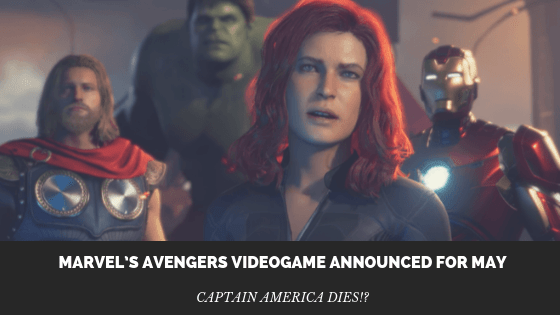
Avengers: Endgame, which takes place right after the events of Avengers: Infinity War, is getting an early release on April 26, 2019, instead of the previously announced May 3, 2019 date.

Stan Lee, a Marvel of the American comic book industry, dies at 95 due to a series of recent health problems such as a bout of pneumonia and vision issues.

A Research Synthesis essay.
My topic is on videogames and why violent videogames cannot be blamed for causing real-world acts of violence such as the school shootings of the recent past. It is known that most young people in this generation one way or another play videogames, whether that be a big budget AAA game or Solitaire on their smartphones. Moreover, most of these games contain some sort of violence one way or another; the game Whac-A-Mole is an arcade cabinet that involves bashing a hammer into the head of a small burrowing mammal with tiny eyes. The point is that I have to first acknowledge that violent videogames and violence in these games do exist, however, violent videogames have never been the cause of violence (Ferguson Christopher J., a., 2014) and have shown little to no proven research that videogames cause acts of violence (Calvert, S. L., et al, 2017).
The main reason I chose this topic for my Research Synthesis Assignment is that in the past month (March 2018) President Donald Trump said, “I’m hearing more and more people saying the level of violence on video games is really shaping young people’s thoughts,” said Trump. “And then you go the further step, and that’s the movies. You see these movies — they’re so violent, and yet a kid is able to see the movie if sex isn’t involved but killing is involved.” Now as a person with a deep passion and love for videogames I tend to hear these arguments a lot, and so I dug to find the truth in this “blame game.” In the great words of Michael Che, one of the hosts of SNL’s Weekend Update, “I grew up playing ‘Mario Brothers.’ But I never had the urge to curb stomp a turtle. Though I did grow up with a kid that played ‘Pac Man’ all day. And now he’s addicted to pills and sees ghosts everywhere [Che said sarcastically].”
I noticed that I needed five scholarly articles but a minimum of eight sources for my Research Synthesis Assignment and I was a little scared that I would not find anything, but I was determined to find papers on the subject because there was bound to be a professor that played Tetris at some point in their lives enough to write about it. I went straight to the McConnell Library database and searched “videogames” in the hope that something would come up while already knowing that there would be a ton of articles from magazines, specifically 51,824 results, but that, of course, was not what I was looking for. I refined the search of the publication date to 1985 to 2018 mostly in part of the Nintendo Entertainment System released in 1985, but more precisely this is when the public eye started to talk about violence in videogames more rapidly. Then going to the “Limit To” section and checking the “Scholarly Journals” box. There were 16,298 results, so I was feeling good about my chances of finding something. Now I took the last step in refining my search, looking up “Videogames and violence” which appeared as the second most recommended search result showing 1,364. I eventually figured out the three points about this topic I want to prove or make clear, which are—1) I am not saying that violent videogames do not have any effect on violent behaviors, thoughts, or actions but they might be a factor. 2) The time we spend playing videogames may have cause for bad health or emotional problems but little real-world violence, such as school shootings. Lastly 3) parents research in videogames rating and playability while also research in their children’s health and needs may help determine if or what videogames are right for their children to play because videogames have shown to help the developmental process of kids (Hughes, E. 2014). In other words, too much of anything can be bad; water is the best thing in the world, but too much water can cause sickness or even death which is known as ‘water intoxication.’
I first read “Rage Against the Machines: The real danger of videogames isn’t violence; it’s swindling” it wasn’t what I was looking for in terms of explicitly discussing violence in videogames but went on to discuss why videogames are used to swindle people into giving in to the machine with free-to-play and pay-to-win games, to even the 1970’s coin-op arcade cabinets, such as the Whac-A-Mole I previously mentioned. It also went into how someone would keep paying even if the games primary goal is to get the player out of the game as soon and fast as possible so he or she can put more money back into the machine (Bogost, I., 2014). Although interesting, it did not help my case. Then I got a little closer to what I was looking for but not fully there yet as the journal “Revisiting violent videogames research: Game Studies perspectives on aggression, violence, immersion, interaction, and textual analysis” states it’s looking for better research methods into researching about violence in videogames but doesn’t state it’s stance saying “whether this will ever be attempted, whether it is possible, and whether the results would be anything other than a dog’s breakfast, is of course something that remains to be seen. However, it seems prudent to attempt to move the conversation on violent digital games forward in a way that will be of benefit to researchers in both camps, and toward policy that takes into account the broader complexity of gaming as it has come to be,” (Kyle, K., 2009). So far, I can only find “predictors” of playing violent videogames, but there is no definite or even guessed answer yet. I searched further. I then narrowed my search from 2010 to 2018.
Now as this Research Synthesis dives deeper into the research of videogame violence dates become more important in determining how far the research has come in discovering if violent videogames cause acts of violence. Instead of starting with the release of the ESRB rating system of 1994 (Kohler, C., 2009) I want to jump ahead in the research to the Brown v. Entertainment Merchants Association of 2010. Former-California Senator Lealand Yee and Former-California Gov. Schwarzenegger, yes that Schwarzenegger, made a bill that would further allow the government control over the distribution of violent videogames to minors by banning the sale altogether (Brown v. Entertainment Merchants Assn., 08-1448). While each state has the decision to not sell games to children who do not follow the ESRB guidelines the Supreme Court found that “Like the protected books, plays, and movies that preceded them, video games communicate ideas — and even social messages — through many familiar literary devices (such as characters, dialogue, plot, and music) and through features distinctive to the medium (such as the player’s interaction with the virtual world). That suffices to confer First Amendment protection,” said Antonin Scalia, late Associate Justice of the Supreme Court of the United States. The reason I bring this up is that it is a significant win for the videogame industry proving that videogames are an art form and that the “violent speech” in videogames just like books and other mediums cannot be censored in accordance to the First Amendment.
My second source titled “Violent video games and young people,” said that “a 2001 report of the U.S. Surgeon General on the topic of youth violence found an association between violent video games and increased aggressive thinking and behavior in youths” and because of this report people during the time of 2001 and after were “assuming that tragic school shootings prove a link between such games and real-world aggression,” (Harvard Mental Health Letter, 2010). Even though this source does not help my argument about violent videogames, it does show why people could be quick to believe what they hear to justify or give reason to the events that happened in Columbine and Heath High School. My next source goes on to mention a report by Christopher J. Ferguson, a psychology professor at Texas A&M International University, titled “Violent Video Games and the Supreme Court: Lessons for the Scientific Community in the Wake of Brown v. Entertainment Merchants Association,” where the reports on violent videogames to real-world violence “were unable to demonstrate a cause and effect relationship between video game violence and aggression in youth,” (Ferguson, C. J. 2013). This source helps analyze the court case I mentioned before and counters the 2001 report in my favor.
Now it seems that I am at square one again still with no definite answer that violent videogames cause real-world acts of violence. The next source I found was on the right track for what I was looking for, “Violence, Crime, and Violent Video Games: Is There a Correlation?” It takes apart arguments stating that “The concerns about the effects of violent video games on aggressive thought patterns, emotions, and behavior are justified. Until now, no study has been able to show that exposure to violent digital games is associated with an increase in criminality, aggressiveness, or violent behavior. Nevertheless, these paradoxical results are not incompatible.” It goes on to state that violent videogames maybe a factor with violent behaviors, but it is no way the cause of these behaviors including that “the research is inconsistent, and thus psychiatrists may wish to be more careful in their public statements linking violent digital games to harm. There is indeed a lack of scientific data dealing with the relationship between violent video games … more research is needed before we can fully understand the influence of violent video games on real life,” (Fournis, G., et al, 2014). It was interesting that this article was not available on the McConnell Library databases but was listed, does Radford have a bias towards videogames? Anyways, I later found Whitney Decamp, WMU associate professor of sociology and associate director of the Kercher Center for Social Research, who researched the matter of younger kids who play violent videogames titled “Who plays violent video games? An exploratory analysis of predictors of playing violent games,” (2017).
Decamp said that “the young males in my research were in grades eight and 11. I found that just by themselves, even without any controls, violent video games were a poor predictor of violent behavior,” said DeCamp. “Even in the best model, it only explained about 3 percent of the variation in violent behavior” and “after controlling for other factors,” he says, “I found that not only were the effects very weak in comparison with other ones, they were mostly non-significant after you included those other controls.” Decamp found out that there was a better predictor of violent behavior at home rather than blaming videogames. Another interesting research that DeCamp and Ferguson got together for was called “The Impact of Degree of Exposure to Violent Video Games, Family Background, and Other Factors on Youth Violence,” and it said that “a meta-analysis consolidating these effects indicated that increased time playing violent video games does not significantly affect the risk of violent behavior. Rather, it is the social and familial background that seems to play a larger role in determining risk of violent behavior instead of video games,” (2017). In a funny way “the present study identified a curious effect: the more time males spent playing violent games, the less likely they were to engage in a group fight,” which he admits that it could be just a statistical anomaly or it could be when a release of a popular violent videogame comes out, and that research seems to suggest that crime rates actually decrease during that time.
Lastly, going back and commenting on what Trump said and referring back to the many sources and research papers that have repeated themselves multiple times Mark Appelbaum, an emeritus professor of psychology at the University of California San Diego and the chair of a 2015 American Psychological Association Task Force on Violent Media, puts it together nicely, saying that, “The short answer is there is virtually no research” on whether or not videogames cause violent acts like school shootings. Also, that “there is no scientific evidence that confirms or disconfirms that speculation.” But with the research of the American Psychological Association Task Force on Violent Media in the “Technical Report on the Review of the Violent Video Game Literature” it states that “the APA Task Force on Violent Media has determined that there is sufficient evidence to indicate that these effects appear in older children, adolescents and young adults; however, there remains a dearth [a lack] of studies that examine these effects in children younger than age 10 or that attempt to examine the developmental course of the effects.” Essentially, there is “no single risk factor [that] consistently leads a person to act aggressively or violently. Rather, it is the accumulation of risk factors that tends to lead to aggressive or violent behavior,” (Calvert, S. L., et al, 2017).
In conclusion, even after 48 years we still don’t have an answer to whether violent videogames are the cause of real-world acts of violence such as school shootings but from what we do have the evidence seems to put out that the positives of videogames out way the negatives. Ferguson says he supports DeCamp’s view, and those violent videogames may help reduce societal violence rather than increase it.” Basically, by keeping young males busy with things they like, you keep them off the streets and out of trouble,” said Ferguson, but the bottom line is that parents and people, in general, need to know that “we need to take a lot of caution before we place the blame on any one particular thing,” said DeCamp (Scutti, S. 2018). While, Ferguson noted that “almost all young males play violent video games,” and yet the majority are not committing crimes. The goal of videogames is to be as inspirational as the cinema, as imaginative as a book, and as abstract as music and sound. It is important to realize that videogames are art which we saw from Brown v. Entertainment Merchants Association and that art has many interpretations, but it is never to harm anyone, instead to share with others and have ideas that keep us thinking, not hurting.
Photo Credit: (Jamakassi on Unsplash)
References
Bogost, I. (2014). Rage Against the Machines: The real danger of videogames isn’t violence; it’s swindling. The Baffler, (24), 96-103. Retrieved from http://www.jstor.org.lib-proxy.radford.edu/stable/43306893
Bourgonjon, J., Vandermeersche, G., & Rutten, K. (2017). Perspectives on Video Games as Art. Clcweb: Comparative Literature And Culture, (4), https://pdfs.semanticscholar.org/f574/efd7cfef6814a7caaa7a5209819626a3595a.pdf
Calvert, S. L., Appelbaum, M., Dodge, K. A., Graham, S., Nagayama Hall, G. C., Hamby, S., & … Hedges, L. V. (2017). The American Psychological Association Task Force assessment of violent video games: Science in the service of public interest. The American Psychologist, 72(2), 126-143. doi:10.1037/a0040413 http://psycnet.apa.org.lib-proxy.radford.edu/fulltext/2017-07146-003.pdf
DeCamp, W., & Ferguson, C. (2017). The Impact of Degree of Exposure to Violent Video Games, Family Background, and Other Factors on Youth Violence. Journal Of Youth & Adolescence, 46(2), 388-400. doi:10.1007/s10964-016-0561-8 https://ee46fd3b-a-62cb3a1a-s-sites.googlegroups.com/site/tbdresearch0/2017idevvg.pdf?attachauth=ANoY7cr0_nWSNJ9lFRCYdHQ51r5geSObKqevHNkvQaRI6krcaMcY3ItHyDj_sd584nORu92VcJiCDVLYilp2TZdS2AnYImMNDZYLAiqHyy20oRK3IYWUafsnYdOv6duN7X_ufy31LQGBnDORP4d0kRC6A6FdcxzThPwzGKgRKTN6CUviA9Ahoc7Vs03mmb045gRkEAlsKqjEYGY0QsteKpUAJoosx0xsXg%3D%3D&attredirects=0
Ferguson Christopher J., a. (2014). Violent Video Games, Mass Shootings, and the Supreme Court : Lessons for the Legal Community in the Wake of Recent Free Speech Cases and Mass Shootings. New Criminal Law Review, (4), 553. doi:10.1525/nclr.2014.17.4.553 http://nclr.ucpress.edu/content/17/4/553.full.pdf+html
Ferguson, C. J. (2013). Violent video games and the Supreme Court: lessons for the scientific community in the wake of Brown v. Entertainment Merchants Association. The American Psychologist, 68(2), 57-74. doi:10.1037/a0030597 http://psycnet.apa.org.lib-proxy.radford.edu/fulltext/2013-04752-001.pdf
Fournis, G., & Abou, N. N. (2014). Violence, Crime, and Violent Video Games: Is There a Correlation?. Psychiatric Times, 31(9), 1-4. http://www.psychiatrictimes.com/cultural-psychiatry/violence-crime-and-violent-video-games-there-correlation
Hughes, E. (2014, April 24). Effect of Video Games on Child Development. https://my.vanderbilt.edu/developmentalpsychologyblog/2014/04/effect-of-video-games-on-child-development/
Kohler, C. (2009, July 29). July 29, 1994: Videogame Makers Propose Ratings Board to Congress. https://www.wired.com/2009/07/dayintech_0729/
Kyle, K. (2009). Revisiting violent videogames research: Game studies perspectives on aggression, violence, immersion, interaction, and textual analysis. Digital Culture & Education , Vol 1, Iss 1, Pp 6-30 (2009), (1), 6. https://doaj.org/article/f41d5b3b300344549f754026c469d36b
Scutti, S. (2018, February 22). Do video games lead to violence? https://www.cnn.com/2016/07/25/health/video-games-and-violence/index.html
Violent video games and young people. (2010). Harvard Mental Health Letter, 27(4), 1-3. http://eds.a.ebscohost.com.lib-proxy.radford.edu/eds/pdfviewer/pdfviewer?vid=3&sid=f82c1a5d-0812-4ca5-a9d0-3a286759fa77%40sessionmgr4009

By Dylan Lepore | dlepore1@radford.edu
During family weekend last Saturday, Oct. 20, Radford University hosted it’s first-ever Annual First Generation Family Weekend Luncheon in the Muse Banquet Room.

Due to the passage of the Tropical Storm Michael, which has caused a flash flood watch, wind advisory, and flood warning, the Radford University Police Department issued an RU Alert to move cars from Lot Z effective immediately.