Category: Movies

  • Why Blade Runner: The Final Cut (2007) Still Sets the Standard for Sci-Fi Cinema

    Why Blade Runner: The Final Cut (2007) Still Sets the Standard for Sci-Fi Cinema


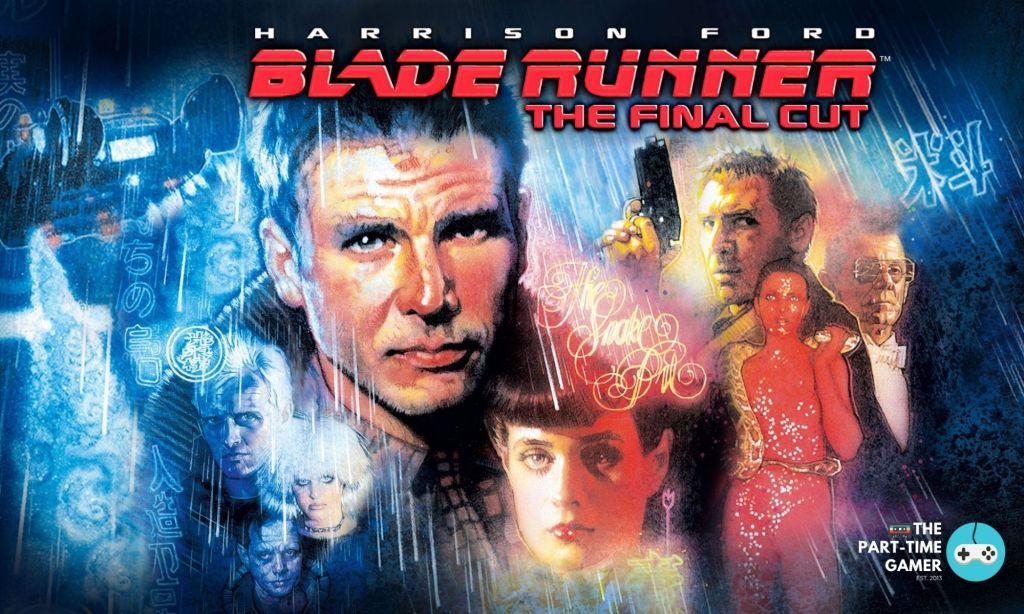
    Ridley Scott’s Blade Runner: The Final Cut isn’t just a science fiction classic—it’s a cornerstone of cyberpunk cinema and one of the most visually influential films ever made. Set in a dystopian 2019 Los Angeles, it explores artificial life, identity, and morality in a decaying, neon-drenched future.

    This version—the 2007 Final Cut—is the definitive edition. It reflects the director’s original vision, with restored footage, updated effects, and crucial changes that deepen its emotional weight and thematic ambiguity.

    “Spoiler Warning: This review contains major plot details. If you haven’t seen Blade Runner: The Final Cut, consider watching it first before continuing.”


    Advertisements

    A Noir Future Full of Questions

    The film follows Rick Deckard (Harrison Ford), a weary ex-cop pulled from retirement to track down and “retire” a group of rogue replicants—genetically engineered humanoids designed for labor and war. These replicants are the Nexus-6 models: biologically superior to humans but limited to a four-year lifespan.

    Unlike typical sci-fi thrillers, Blade Runner doesn’t rely on explosions or fast pacing. It moves slowly, deliberately. It wants you to soak in every rain-drenched neon sign and polluted skyline. That’s part of its hypnotic charm.

    And yet, it’s not an easy film to follow. Nothing in Blade Runner is truly certain. The story unfolds in fragments and implications, demanding your attention. You have to rewatch it—because every time you do, you catch something new. A glance. A phrase. A small moment that recontextualizes everything.

    It’s also a film filled with contradictions. Deckard is just a man—or maybe not. The replicants are just machines—or maybe not. The story seems simple, but the longer you think about it, the deeper it gets.


    Advertisements

    Roy Batty: The Replicant Who Stole the Show

    Roy Batty (Rutger Hauer) is the film’s philosophical and emotional core. As the leader of the escaped replicants, he’s a soldier, a killer, a poet, and—most of all—a man who knows he’s dying.

    Roy Batty in his final scene of the film.
    Roy Batty in his final scene of the film.

    His final confrontation with Deckard is more spiritual than violent. And in his final act—saving Deckard—he transcends his programming. His “Tears in rain” monologue, largely improvised by Hauer, is arguably one of the greatest moments in cinematic history:

    “All those moments will be lost in time, like tears in rain.”

    The other replicants—Pris (Daryl Hannah), Leon (Brion James), and Zhora (Joanna Cassidy)—each contribute to the film’s emotional texture. They’re not just villains. They’re confused, desperate, and dangerously self-aware. They’re children in adult bodies—strong, intelligent, but emotionally raw. Their rebellion isn’t just against humans—it’s against fate.

    And that’s what makes Roy’s arc so powerful. At the end, he doesn’t kill Deckard—not because he can’t, but because he chooses not to. It’s not worth it. He’s seen enough death. He’s tired. He’s at the end of his rope, and in that moment, he becomes more human than the humans trying to destroy him.


    Advertisements

    What Makes Us Human?

    Rachael (Sean Young), a replicant who believes she’s human, forces Deckard to confront his own identity. Their unsettling romance adds layers of tension and vulnerability. Her presence challenges everything Deckard thinks he knows—not just about replicants, but about himself.

    And then there’s the big question: Is Deckard a replicant?

    Blade Runner: The Final Cut leans toward yes. The unicorn dream sequence, paired with Gaff’s (Edward James Olmos) origami unicorn, strongly implies Deckard’s memories were implanted. But the film doesn’t confirm anything. That ambiguity is the point.

    “It doesn’t matter if Deckard is human. The point is that we’re still asking by the end.”

    And that’s what makes this film so special. It doesn’t hand you answers. It invites you to wrestle with questions that don’t go away. Questions about life, memory, purpose, and identity.

    Deckard takes a beating throughout the film—more than you’d expect from a regular human. Some viewers point to that as another clue that he’s a replicant. But maybe the replicants are holding back. Maybe they’re dying. Maybe Deckard just got lucky. The line between man and machine is deliberately blurry.


    Advertisements

    Aesthetic and Legacy

    Visually, Blade Runner is unrivaled. It created the modern cyberpunk aesthetic—gritty, industrial, crowded, and soaked in neon rain. The world feels lived in, decayed, and yet still full of life. It’s a nightmare of the future, but it’s also weirdly beautiful.

    Ridley Scott and cinematographer Jordan Cronenweth crafted a city that doesn’t just look iconic—it feels real. You don’t just see it—you can almost smell the smoke and feel the wet pavement under your feet.

    Vangelis’s score is equally iconic. It’s a blend of futuristic synths and haunting melodies that fills the film with desolation. It doesn’t just accompany the movie—it becomes part of it.

    “Blade Runner doesn’t just show you a world—it pulls you into it and refuses to let go.”


    Advertisements

    Final Thoughts

    Blade Runner: The Final Cut isn’t for everyone. It’s slow. It’s dense. It’s unclear. Some of its effects haven’t aged perfectly. But for what it’s trying to do—for the experience it creates—it’s perfect.

    Deckard and Gaff - Blade Runner The Final Cut
    Deckard and Gaff – Blade Runner The Final Cut

    This is a movie you study, not just watch. A movie you keep coming back to because it won’t stop echoing in your head.

    It’s filled with layers upon layers: metaphor, mystery, philosophy. It’s about artificial intelligence, yes—but more than that, it’s about the human condition. About memory. About the search for meaning in a life that might be manufactured. It’s about what makes us real.

    “A flame that burns twice as bright burns half as long—and you have burned so very, very brightly.”

    There’s never been another movie quite like it, even though so many have tried. From The Matrix to Cyberpunk 2077, you can see its fingerprints everywhere. But Blade Runner stands alone—its atmosphere, tone, and questions still unmatched.


    Final Score: 10/10 – Masterpiece

    Rating: 5 out of 5.

    A flawless, atmospheric sci-fi masterpiece that doesn’t just ask for your attention—it demands your contemplation. Every frame, every whisper of synth, and every question it raises rewards those willing to listen, watch, and think deeply. Decades later, Blade Runner: The Final Cut still leaves its mark—not just as a film, but as a philosophical experience.

    Movie Facts: Blade Runner: The Final Cut

    • Released: 2007 (Final Cut version)
    • Original Film Release: 1982
    • Director: Ridley Scott (Alien, Gladiator)
    • Screenplay: Hampton Fancher & David Peoples
    • Based on: Do Androids Dream of Electric Sheep? by Philip K. Dick
    • Runtime: 117 minutes
    • Notable Changes in Final Cut:
      • No voice-over narration
      • Unicorn dream restored
      • Digital fixes and color correction
      • “Happy ending” removed
      • Deckard’s replicant status made more ambiguous
    • Legacy:
      • Inducted into the U.S. National Film Registry in 1993
      • Inspired countless films, games, and works of fiction
      • Sequel released in 2017: Blade Runner 2049 (directed by Denis Villeneuve)

    Author

    Dylan Lepore is a multimedia professional, entrepreneur, and lifelong gamer who’s passionate about blending creativity with strategy. As the founder of LeporeMedia and The Part-Time Gamer, and the Business Manager at Port City Architecture, Dylan brings a unique mix of storytelling, design, and business savvy to everything he does. He lives in Portland, Maine, with his wife and his dog, Alecto.


    What did Blade Runner mean to you?
    Drop your thoughts in the comments—especially if you think Deckard is a replicant. Let’s dive deep into the neon shadows together. And if you enjoyed this review, share it with a fellow sci-fi fan and subscribe for more cinematic deep dives.

  • Nonnas (2025) Review: Vince Vaughn Delivers Heart and Humor in Netflix’s Feel-Good Hit

    Nonnas (2025) Review: Vince Vaughn Delivers Heart and Humor in Netflix’s Feel-Good Hit


    In a streaming landscape often dominated by algorithmic sameness, Netflix’s original film “Nonnas” emerges as a delightful and authentic anomaly.

    While many Netflix originals seem designed by algorithm—either going big and loud or veering into Hallmark territory—”Nonnas” manages to strike a genuinely sincere tone.

    Anchored by a grounded performance from Vince Vaughn, the film offers warmth, charm, and emotional depth.

    Vaughn’s Heartfelt Performance

    Vince Vaughn has made a career out of playing quick-witted, everyman characters—especially in the early 2000s. But in “Nonnas,” he dials things back, delivering a more nuanced and earnest performance.

    He still brings his signature humor, but this time it’s layered with naturalness and soul.

    This version of Vaughn feels real.”

    His connection to the story, the family, and the “nonnas” (Italian grandmothers) feels deeply personal.

    It’s clear that the film rests on his shoulders, and he carries it exceptionally well. In fact, this may be one of his best roles in years, allowing him to showcase his emotional range in a way we don’t often see.

    A True Story, Served with Love

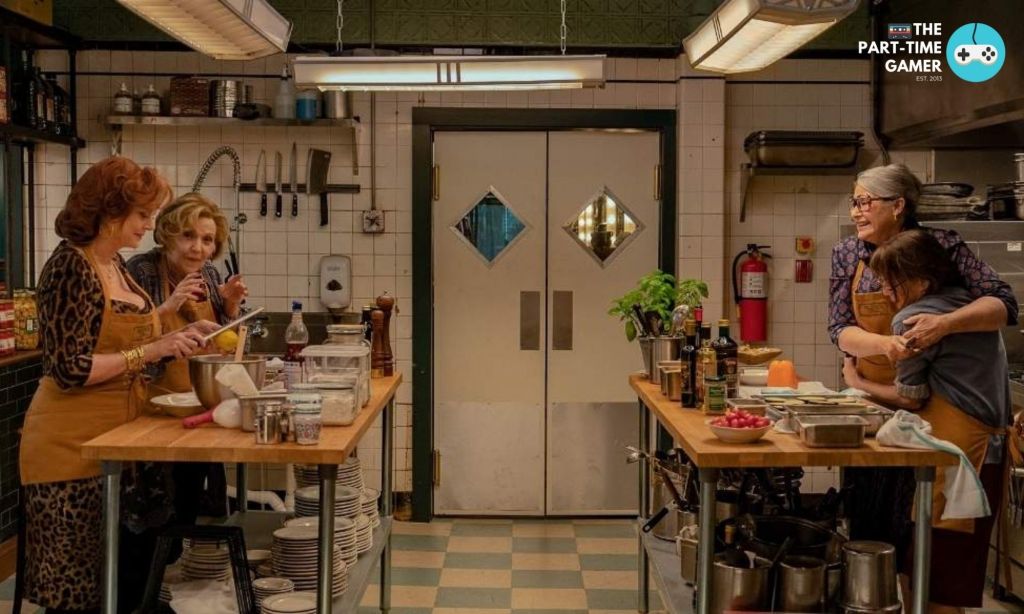
    What makes “Nonnas” even more special is that it’s based on a true story—the creation of Enoteca Maria, a real restaurant in Staten Island where grandmothers from around the world cook meals from their home cultures.

    That heartwarming real-life backdrop elevates the film, making it more than just feel-good fiction.

    It reminded me of my own Italian great-grandmother and the comfort of her cooking. The story captures that nostalgic comfort, even if it leans into a few fairy-tale moments where things wrap up a little too neatly.

    There are also some minor continuity issues, but nothing that pulls the film off track.

    A Deliciously Authentic Ensemble

    The supporting cast enriches the film’s emotional core.

    Lorraine Bracco (“Goodfellas”) offers a grounded, matriarchal strength. Talia Shire (“Rocky”) brings a delicate touch, reflecting family tradition.

    Joe Manganiello (“Magic Mike”) plays against type with vulnerability. Linda Cardellini (“Freaks and Geeks”) provides a sincere and emotionally rooted performance as Vaughn’s love interest.

    Meanwhile, Susan Sarandon (“Thelma & Louise”) is magnetic as ever, lending wisdom and gravitas. The grandmothers themselves infuse the film with authenticity, and their scenes are full of life, humor, and gentle guidance.

    It’s the kind of movie that leaves you smiling, thinking about your own family, and maybe even craving a homemade meal.

    Final Thoughts

    “Nonnas” is a heartwarming and enjoyable celebration of family, food, and the pursuit of passion. The film is driven by strong performances and genuine emotion.

    8 out of 10 — Great

    Rating: 4 out of 5.

    Movie Facts

    • Title: Nonnas
    • Director: Stephen Chbosky
    • Stars: Vince Vaughn, Susan Sarandon, Linda Cardellini, Talia Shire
    • Based On: The real-life story of Joe Scaravella and his Staten Island restaurant, Enoteca Maria, where grandmothers from around the world cook their traditional dishes.
    • Genre: Comedy-Drama / Family
    • Streaming On: Netflix
    • Language: English
    • Release Year: May 9, 2025

    Author

    Dylan Lepore is a multimedia professional, entrepreneur, and lifelong gamer who’s passionate about blending creativity with strategy. As the founder of LeporeMedia and The Part-Time Gamer, and the Business Manager at Port City Architecture, Dylan brings a unique mix of storytelling, design, and business savvy to everything he does. He lives in Portland, Maine, with his wife and his dog, Alecto.


    Let’s Chat: Did Nonnas stir up memories of your own family traditions? Share your thoughts in the comments below—and don’t forget to subscribe for more honest movie reviews, personal reflections, and entertainment picks.

  • Final Destination: Bloodlines (2025) Proves There’s Life Left in This Deadly Franchise

    Final Destination: Bloodlines (2025) Proves There’s Life Left in This Deadly Franchise


    Final Destination: Bloodlines is an exhilarating, blood-soaked return to form that reminds us exactly why this franchise took off in the first place. It’s tense, creative, and relentlessly paced—a worthy reintroduction that breathes new life into the series without trying too hard to reinvent what already works.

    From the start, the film grabs you by the throat and doesn’t let up. There’s this underlying anxiety that carries through every frame, which is exactly what a Final Destination movie should do. It’s not just about the gore (though there’s plenty, and it’s impressively executed); it’s about the looming dread, the quiet anticipation of chaos, and the fun in seeing how the dominoes fall.


    Death’s Design Never Felt So Inevitable

    One of the most effective—and honestly kind of funny—ways Bloodlines builds tension is through how it superimposes potential threats throughout the environment. You know, those little visual cues that hint at what could go wrong. In a lesser film, this might come off as cheesy or overly telegraphed, but here, it works really well.

    “It makes you laugh nervously or look away—not because it’s funny, but because the tension is so sharp, you have to react.”

    Instead of relying on the classic vision sequences the series is known for, this movie plays it differently—you see the possible cause-and-effect setups almost in real time. It creates this constant sense of dread, where you’re nervously scanning the screen, bracing yourself for the worst. You know something’s coming, but not exactly how or when, and that unpredictability makes it all the more intense.

    This approach becomes a brilliant alternative to the premonition trope. Rather than having characters receive a warning, the viewer gets the ominous puzzle pieces laid out just enough to anticipate disaster—without fully seeing the picture.


    A Smart, Blood-Soaked Legacy Sequel

    One of the most interesting creative choices here is how it handles the franchise’s signature premonition mechanic. While it doesn’t rely on the full-blown “vision sequence” we’re used to, there’s still a sense of fate creeping in—an eerie awareness that something is off, even if the characters can’t quite put their fingers on it. That subtle shift actually adds a fresh layer of mystery without losing the tension.

    What stands out most, though, is how cohesive the story is. Every character choice and every gruesome death feeds into a well-structured plot that’s smartly self-aware. The filmmakers clearly understood the assignment: bring the franchise back in a way that honors its roots while feeling new enough to justify its return. And they nailed it.

    The film centers on Stefani Reyes (Kaitlyn Santa Juana, The Flash), a college student plagued by recurring nightmares of a catastrophic event from the 1960s. As she delves into her family’s past, Stefani uncovers a chilling connection to a tragedy that her grandmother, Iris Campbell (Gabrielle Rose, The Man in the High Castle), narrowly escaped. This revelation sets off a chain of events, drawing Stefani and her relatives into a deadly sequence orchestrated by an unseen force.

    The ensemble cast delivers compelling performances, with notable appearances by Teo Briones (Ratched) as Stefani’s brother Charlie, Richard Harmon (The 100) as cousin Erik, and Rya Kihlstedt (Dexter) as Stefani’s estranged mother, Darlene. Their portrayals add depth to the narrative, grounding the supernatural elements in relatable family dynamics.

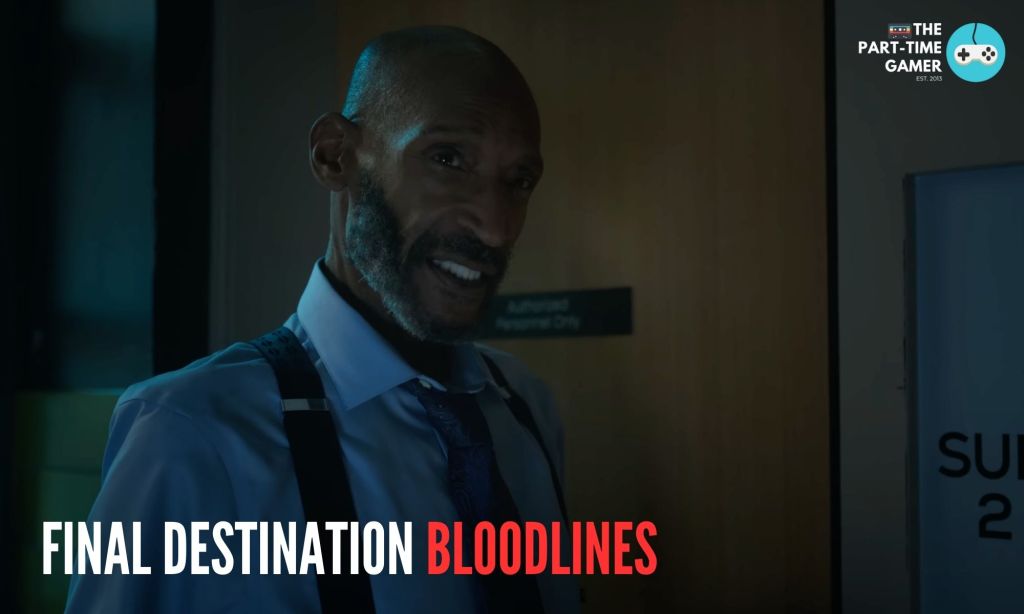
    A standout aspect of Bloodlines is the return of Tony Todd (Candyman) as the enigmatic William Bludworth. Todd’s presence has been a constant thread throughout the series, and his final performance adds a layer of gravitas and nostalgia. His portrayal offers a deeper glimpse into Bludworth’s mysterious connection to Death’s design, serving as a fitting tribute to the late actor’s legacy.

    Compared to other horror franchise reboots (looking at you, Scream), Bloodlines makes a stronger first impression. While I did enjoy the recent Scream films, they didn’t hit me the way this did. Bloodlines feels more confident in what it is—gruesome, thrilling fun from start to finish.


    Final Verdict:

    If you’re a fan of the Final Destination series—or just in the mood for something tense, bloody, and creatively twisted—Bloodlines delivers. It’s fun, it’s gruesome, and it knows exactly what it is.

    Rating: 9/10 – Amazing

    Rating: 4.5 out of 5.

    Quick Facts:

    • Title: Final Destination: Bloodlines
    • Director: Zach Lipovsky & Adam B. Stein
    • Writers: Lori Evans Taylor & Guy Busick
    • Release Date: May 3, 2025
    • Runtime: 95 minutes
    • Studio: New Line Cinema
    • Genre: Horror, Thriller
    • Rating: R
  • Movie Review: A Nice Indian Boy (2025) – A Heartfelt, Culture-Rich Romantic Comedy

    Movie Review: A Nice Indian Boy (2025) – A Heartfelt, Culture-Rich Romantic Comedy


    Romantic comedies often walk a fine line between heartwarming and overly emotional, but A Nice Indian Boy, directed by Roshan Sethi (Call Jane), lands comfortably in the sweet spot. Adapted from Madhuri Shekar’s stage play, the film brings a fresh and culturally grounded perspective to a familiar genre—offering laughs, sincerity, and just enough complexity to keep things meaningful without ever feeling heavy-handed.

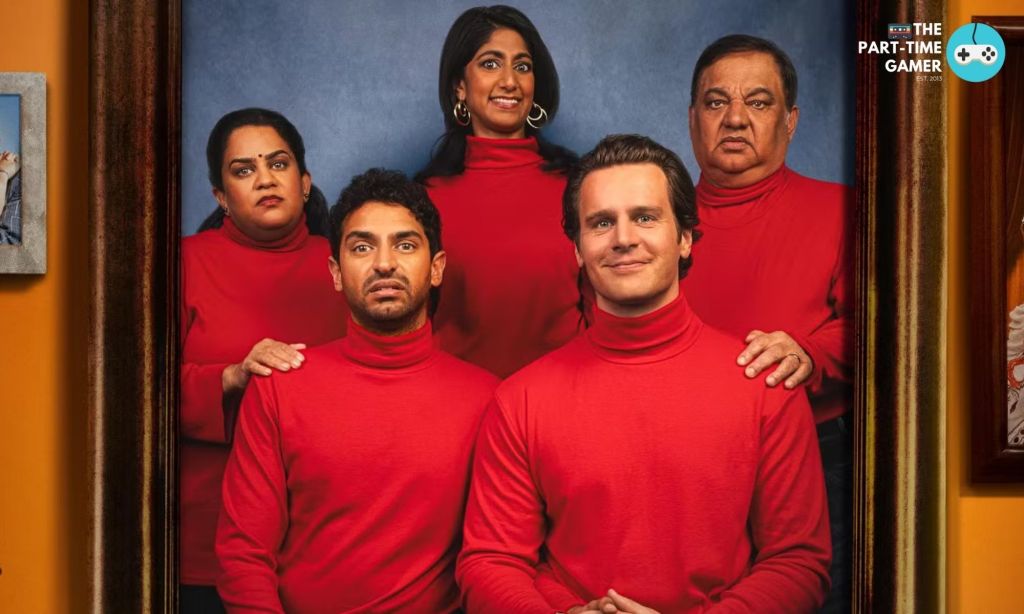
    The story centers around Naveen Gavaskar (Karan Soni – Deadpool), a reserved Indian-American doctor whose carefully structured life takes a welcome detour when he meets Jay Kurundkar (Jonathan Groff – Glee), a confident, charming man who just so happens to have been adopted and raised by Indian parents. What begins as a meet-cute at a local temple blossoms into a sincere romance that challenges not only cultural expectations but also family dynamics as they navigate the idea of a traditional Hindu wedding.

    The film is structured into chapters, giving the narrative a clear rhythm that makes each emotional turn feel deliberate and digestible. This choice helps ground the story, allowing the viewer to settle into each phase of the relationship and the family’s evolving understanding.

    Advertisements

    While the film certainly embraces some rom-com tropes—quirky side characters, feel-good montages, and a few sentimental speeches—it never loses its footing. The characters are layered, their relationships believable. Soni and Groff have genuine chemistry, and their performances carry emotional weight beneath the charm. Sunita Mani (Glow) delivers a standout performance as Naveen’s bold and hilarious sister Arundhathi, while Harish Patel (Run Fatboy Run) and Zarna Garg (The Zarna Garg Family Podcast) shine as the well-meaning but culturally tethered parents.

    A Nice Indian Boy doesn’t aim to reinvent the romantic comedy—it simply elevates it. It finds strength in accuracy, letting culture inform character and story rather than serving as a punchline. And while it isn’t overly dramatic, it still manages to explore identity, family, and love with a refreshing sense of care.

    This is a movie that knows what it is: a digestible, heartfelt, Hallmark-adjacent love story with an authentic emotional core. It doesn’t overstay its welcome, doesn’t try to do too much—and that’s exactly why it works.

    Final Verdict:

    A Nice Indian Boy is funny, warm, and sincere, offering a feel-good viewing experience without becoming overly sentimental. It’s an easy recommendation for fans of inclusive romantic comedies or anyone looking for a heartfelt story with charm and cultural depth.

    Rating: 8/10 – Great

    Rating: 4 out of 5.

    Movie Facts

    • Title: A Nice Indian Boy
    • Director: Roshan Sethi
    • Screenplay: Madhuri Shekar
    • Based on: A Nice Indian Boy (stage play) by Madhuri Shekar
    • Genre: Romantic Comedy / Drama
    • Starring: Karan Soni, Jonathan Groff, Sunita Mani, Harish Patel, Zarna Garg
    • Runtime: 105 minutes
    • Language: English
    • Country: United States
    • Release Date: March 15, 2024 (U.S. theatrical release)
    • Distributed by: Film Independent / Roadside Attractions


    Author

    Dylan Lepore is a multimedia professional, entrepreneur, and lifelong gamer who’s passionate about blending creativity with strategy. As the founder of LeporeMedia and The Part-Time Gamer, and the Business Manager at Port City Architecture, Dylan brings a unique mix of storytelling, design, and business savvy to everything he does. He lives in Portland, Maine, with his wife and his dog, Alecto.

  • The Tiger Rising (2022): A Short Movie Review

    The Tiger Rising (2022): A Short Movie Review


    Based on a book for 5th to 6th graders by Kate DiCamillo, The Tiger Rising is about a boy, a girl, and a tiger in a cage. 

    (more…)
  • Push (2009): A Short Movie Review

    Push (2009): A Short Movie Review


    Push is style over substance with two performances by a young Dakota Fanning and a pre-Captain America Chris Evans that are this film’s saving grace.

    (more…)
  • What Maisie Knew (2013): A Short Movie Review

    What Maisie Knew (2013): A Short Movie Review


    What Maisie Knew is a unique movie, through the eyes of a 6-year-old girl going through her parents’ divorce, where expectations always change, and masterful performances keep you glued.

    (more…)
  • Character Analysis: Dallas Buyers Club’s Ron Woodroof

    Character Analysis: Dallas Buyers Club’s Ron Woodroof


    Ron Woodroof (Matthew McConaughey), an unlikely hero, was the cowboy of drugs, sex, and alcohol in the 1980s where the AIDS crisis started in 1981 with 270 reported cases and the World Health Organization estimating that there were up to 400,000 cases worldwide in 1989 (Avert., 2018). Ron’s Dallas Buyers Club changed everything for the AIDS epidemic by pointing out the flaws of the FDA, giving hope for those to freely live their lives, and flag shipping one of the most significant movements for the gay community. Once cowboy Ron came to realize that he had HIV, he knew he did not have time anymore to go back to his old life, a mission to stay alive began. AIDS was killing, and it did not help that the time linked homosexuality with AIDS, which gave people a more significant reason to hate the gay community further (FOCUS FEATURES., 2013). The FDA concocted the drug AZT to battle the AIDS crisis, but the amount of AZT the patients were receiving made them worse even if it worked at suppressing against the disease. The buyer’s club was being stifled by the FDA because of Ron’s experimentation with drugs to prolong his life. Ron was changing, and the turning point was when Ron started his research into AIDS. He lost many of his old friends, like T.J., in the process but gained many more even if he did not act like it, such as Rayon (Jared Leto) and Dr. Eva Saks (Jennifer Garner). Nobody could ever tell Ron who or what he is and how to live his life, he fought for that freedom. Poor, drug and sex addicted cowboy of an electrician to turning into a poor, drug distributor, and sex addicted hero of the gay community.

    Philosopher Ayn Rand states, “Just as man cannot survive by any random means, but must discover and practice the principles which his survival requires, so man’s self-interest cannot be determined by blind desires or random whims, but must be discovered and achieved by the guidance of rational principles.” Those rational principles come in the form of rational egoism (or rational selfishness) the “concern with one’s own interests” and, in a film, it would be what the actor want’s that maximize their benefit. Rand says that it is not evil to pursue one’s own self-interest for life and survival as the concept does not include any moral evaluation. “The only man who desires to be moral is the man who desires to live.” She makes the argument that altruism is evil instead because it “permits no concept of a self-respecting [and] self-supporting man” and that we are only as “sacrificial animals and profiteers-on-sacrifice, [and] as victims and parasites,” (Rand et al, n.d.).

    The ethical theory of egoism, mainly rational egoism/selfishness, can be seen throughout the start of the film where Ron is seen wearing extremely warn clothes, coughing, and almost seems hollow. He is gambling with fellow men like him (but something feels off particularly with Ron) at a Bull Riding Competition. The bet is on Ron’s friend, T.J., who needs to ride the bull for eight seconds in order for Ron to win. Ron is in his natural habitat, working from a distance and controlling what happens no matter what. T.J. falls on three, and Ron bolts. The men chase after him, and Ron then sees Tucker, a local cop, walking to his car. Ron rushes to his side asking him to arrest him so he can avoid the disgruntled men. “Figure it out yourself,” said Tucker. Ron then punches Tucker, and Tucker hits him twice back on the head. “Back off! I’ll rest all of you,” Tucker yells (“Dallas Buyers Club,” 2013). A few moments later, Ron was seen in the front passenger seat of Tucker’s cop car pulling up next to Ron’s trailer. Ron has gotten what he wanted, money, a show, and a grand escape all to feed his personal survival. Unless T.J. had made it to eight seconds, there was no other way Ron could have won, but by poking the bull, Tucker. This establishes where Ron comes from and who he is. Ron is a fighter literally and figuratively. He is not an evil person; it is the circumstance that he is in and probably was born into that leads him to find and rationalizes situations that will maximize his self-interest to continue his survival as Ron Woodroof. For Ron to become the unintentional hero he becomes at the end of the film, Ron’s rational selfishness is a vital part in his journey of self-preservation and ultimately helping the gay community through his own needs of medication. As Ron put it, “I got a news flash for all y’all, there ain’t nothin’ out there that can kill fuckin’ Ron Woodroof in thirty days,” (“Dallas Buyers Club,” 2013).

    The theme of self-interest and Ron’s fight for survival is even more apparent when he starts his research into medicating himself from dying. Ron begins in a library researching on the topic of HIV and discovers that there was a very likely chance he obtained HIV from unprotected sex with a drug-addicted woman. He goes back to the hospital to find Dr. Saks and get possibly working drugs from out of the country which he discovered. Dr. Saks says that the drugs are not approved by the FDA; however, they are working on new test runs for a drug that could suppress HIV. Ron demands the drug AZT, but Dr. Saks says she could not give him any because the drug, again, is in testing and that he could sign up for the test, however, some patients are receiving placebos to see if the drug works which could take years. Ron says, “So, you’re tellin’ me I’m as good as a horse being sold for dog food,” and “screw the FDA, I’m gonna be DOA. Do I have to sue this hospital to get me some medicine,” (“Dallas Buyers Club,” 2013). Ron storms off but eventually finds a way to obtain AZT through a custodian in the hospital. Ron ignores any morals or laws in place and does what he can because of the possibility of dying within 30 days. He shows how far he would go to save his life. A man that looks like he never opened a book in his time, is the outcast in a library that fills him with pain. This is the first time in Ron’s life that he has to face the bull head-on. There is no escaping this and Ron has to be more conniving than he ever has been to make it out alive. As Ron continues his self-interested self, he starts to change a little at a time. He becomes smarter, more aware of what’s going on around the world, and how he can get what he needs when he needs it, inadvertently discovering the flaws of the FDA as well.

    To help establish Ron’s continuous ethical path through the movie we first need to discuss the characters that he meets along the way. First, Rayon, a homosexual cross-dresser drug addict with HIV, whom Ron meets in a hospital after he has a blood transfusion due to the high consumption of drugs, alcohol and the AZT he obtained. Ron first stays distant of Rayon as he gets closer. Rayon asks if he would like to play cards and Ron agrees as long as he has cash. Ron is again trying to benefit out of a situation.  Ron loses but not long after he gets a cramp in his leg that Rayon helps subdue by massaging it. Ron says thanks and tells him to go away. Ron then discovers that Rayon has been selling half of his AZT prescription for $5,000 and wanted in, Rayon will not allow it. After leaving the hospital, Ron takes advice from the custodian who was giving him AZT and eventually goes across the border to Mexico to find Dr. Vass, a doctor who lost his license and now is running a sick clinic in Mexico City. Dr. Vass keeps Ron for three months to flush his system and gives him a regiment of vitamins to increase his T-cell count. He educates Ron on how to be healthy and to stay away from any toxic crap that may decrease his T-cells. Ron takes his advice and then sees another opportunity to earn money selling these drugs back in Texas for Dr. Vass. These drugs were never listed as illegal but merely unapproved, and in no time Dr. Vass agreed, and Ron heads across the border as a priest with a car filled with pills. At the border, Ron’s car gets inspected and in comes Richard Barkley who is from the Food and Drug Administration office. Ron promises him that the 3,000 pills are his 90 days’ supply of vitamins because of his cancer and that they are only for his personal use. Barkley does not seem to buy it and counts on it that they will bust Ron, but for now, they let him go. These three characters all challenge and teach Ron as he moves through the movie, and Ron takes it all in, creating the Dallas Buyers Club for profit and a way to keep him healthy and supplied. While also eventually getting Rayon in on it as his business partner because of his connections and money.

    As Ron and Rayon run the Dallas Buyers Club and get new clients, the homosexual community begins to thank Ron and show respect for him even if he is doing it for profit. He notices this but continues his selfish and “screw off” ways, which he appears to say a lot as a way of deflecting emotions of kindness from others. In a moment where Ron and Rayon were shopping for healthy groceries thanks to Dr. Vass’ advice. Ron notices T.J., but Ron lets T.J. notice him first before he says anything. T.J. is shocked that he is alive and looking healthy. He makes an offensive remark towards Rayon as he approaches both of them. Rayon says hello and extends his hand. Ron says, “This is Rayon. He said hi to you. Shake his hand, T.J., come on, buddy, what’s your fuckin’ problem?” T.J. flips off Ron, but then Ron grabs T.J.’s arm and twists it around his back forcing T.J. to shake Rayon’s hand. T.J. does it, Ron lets him go, and then T.J. walks off humiliated. Rayon stares at Ron, unsure of how to react to this and shows a smile and starts to tear up. Ron says, “what,” (“Dallas Buyers Club,” 2013). Rayon was moved that Ron stuck up for him. This is the first time in the film that Ron demonstrates an act of support to Rayon. However, it was a self-interested act as he wanted revenge on T.J. for joking to the guys that Ron might be gay in the Lonestar bar, at the beginning of the film when Ron first got diagnosed with HIV. Ron is slowly becoming the selfish hero and face of the gay community. He is hard, but he provides medicine to the people sick with HIV when the doctors will not, and he protects his clients. Ron does feel, and he is aware of the power that he has been given. So, just like the grocery store, he begins to act on his compassion and feelings a little at a time.

    The peak of Ron’s hero-istic egoism is when he takes the FDA to court after the FDA seized their drugs and any information on them Ron had, countless times. The judge hears Ron’s case and Barkley his there as well. The judge says, “The law does not seem to make much common sense. If a person has been found to be terminally ill they ought to be able to take just about any drug they feel will help … but that is not the law. Mr. Woodroof, there is not a person in this courtroom who is not moved to compassion by your plight, what is lacking here is the legal authority to intervene. I’m sorry. This case is hereby dismissed,” (“Dallas Buyers Club,” 2013). Ron left the courtroom that day hollow, defeated, and tired. After everything that Ron has been through and everything that he has done, he feels that nothing has changed at all. Ron comes back to his home and is greeted with applause from almost everyone he has ever helped. Ron finally realizes, at that moment, everything that he has done.

    Throughout every small encounter in the film, Ron changes ever so slightly. It started with Rayon’s blunt kindness, kids sincerely saying thank you to Ron after buying his pills, having a fun time at a gay bar, elderly HIV patients crying because there is hope, to Ron protecting Rayon from T.J., then selling his car and everything he had when prices for importing his drugs went up, and finally fighting the FDA face to face. He never let his egoism and selfishness go, but he used it in the end for good, becoming a hero of the gay community, even if he still was just that poor, white trash, sex addicted, and drug distributor he was at the beginning of the film. It takes a big event to change someone’s path in life. Unfortunately, HIV was Ron Woodroof’s event, and he fought to have the last best seven years of his life. In the end, he was the one finally riding the bull.

    References

    Vallée, J. (Director). (2013). Dallas Buyers Club [Video file]. United States: Focus Features.

    Rand, A., & Binswanger, H. (n.d.). Selfishness. Retrieved from http://aynrandlexicon.com/lexicon/selfishness.html

    Avert. (2018, November 26). History of HIV and AIDS overview. Retrieved from https://www.avert.org/professionals/history-hiv-aids/overview

    FOCUS FEATURES. (2013, November 9). The Life and Times of Ron Woodroof. Retrieved from http://www.focusfeatures.com/article/the_life_and_times_of_ron_woodroof

    Wikipedia. (2018, November 05). Rational egoism. Retrieved from https://en.wikipedia.org/wiki/Rational_egoism

    Kotz, S. (2018, December 13). Ethical Theories—master PowerPoint. Retrieved from https://learn.radford.edu/d2l/le/content/129730/viewContent/2058655/View

  • Marvel’s Avengers 4 Is Officially Avengers: Endgame, Receives Earlier April Release Date

    Marvel’s Avengers 4 Is Officially Avengers: Endgame, Receives Earlier April Release Date


    Avengers: Endgame, which takes place right after the events of Avengers: Infinity War, is getting an early release on April 26, 2019, instead of the previously announced May 3, 2019 date.

    (more…)

  • Ideology and the Thorny Path to a Dignified Life – Final Comparative Essay

    Ideology and the Thorny Path to a Dignified Life – Final Comparative Essay


    Everyone has a different ideology, or they might be the same with various tweaks here and there, but for the most part, we all see ourselves in a different light. Watching, analyzing, and discussing our favorite mediums or our not so beloved mediums is how we in real life can relate and have a conversion with one another with something that’s not about the weather. Going into a film can be a rough time for some though, meaning that the director’s vision or ideology that they put in their film might be an entirely different interpretation for viewers of said film and that’s okay. Not everything in life can have a happy ending, but in the films, I will be discussing in this ideology essay at least try. They are Billy Elliot and Moonlight.

    (more…)