Category: Reviews

  • Soccer Dash: Football Simulator Review — A Mobile Game Wearing Switch Clothes

    Soccer Dash: Football Simulator Review — A Mobile Game Wearing Switch Clothes


    It’s Soccer… Sort Of

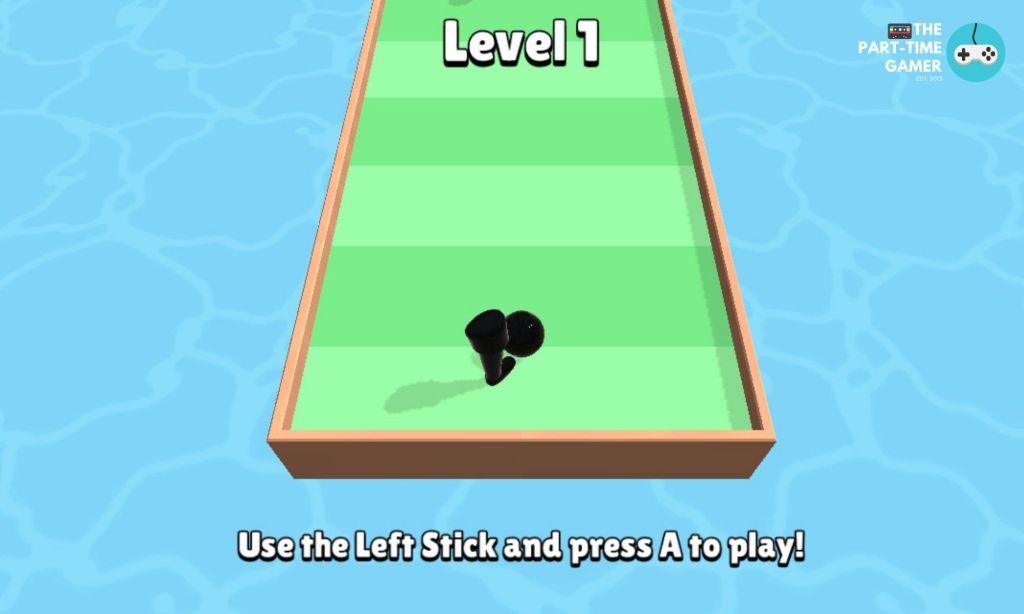
    In Soccer Dash: Football Simulator, you don’t control a player—you are the ball. You aim, charge, and kick your way through 46 near-identical levels, dodging obstacles and cartoonish defenders while navigating mini golf-style mazes.

    It’s an idea that could be fun in quick bursts. But the game doesn’t evolve. It doesn’t challenge. It doesn’t respect your time—or your money.

    “I had everything unlocked in under 30 minutes. And I wasn’t even rushing.”


    Advertisements

    One Mechanic, Zero Innovation

    The game’s main feature is slow motion. You pull back on the left stick to charge a shot, then press “A” to kick. This triggers a slo-mo effect that helps you line up your path.

    You can spam this mid-air, meaning you can basically cheese your way through any obstacle. There’s no scoring, no timing challenges, no tracking—just kick, coast, repeat.

    “There’s nothing to master. No skill ceiling. Just a skill floor you never need to leave.”


    Touchless on a Touchscreen?

    This game screams “mobile port,” but bafflingly, there are no touch controls on the Switch. For a game all about tapping direction and momentum, it’s a strange omission—and one that makes it feel half-finished.

    The UI is also barebones. Your only options in the settings menu? Mute sound and mute music. That’s it.

    World Cup Without the Cup

    The “World Cup” mode lets you choose from dozens of country flags and compete with a CPU through a 4–5 match sequence. Sounds exciting—but you win nothing, there are no rankings, and the matches don’t feel any different from normal levels.

    It’s a mode that exists just to exist.

    Skins Don’t Save It

    There are 16 unlockable “ball skins,” some with minor perks like more speed or coin bonuses. One of them is a literal golf ball that’s immune to traps. But they don’t add depth. If anything, they make the already-too-easy game even easier.

    “The skins are cute. But when your game is this thin, cosmetics aren’t a fix.”


    Advertisements

    Sound Effects: One Size Fits All

    The sound design feels as lazy as the level design. Every ball—whether it’s a beach ball, a steel ball, or a soccer ball—makes the same dull thud when kicked or deflated. No variation. No charm. No immersion.

    Final Thoughts: A Game That Barely Tries

    Soccer Dash: Football Simulator is what happens when a clever core idea gets lost in poor execution. There’s potential in controlling the ball and navigating puzzle-like soccer mazes, but this game simply does not care to do more than the bare minimum.

    No par system. No level variety. No rewards. No difficulty curve. No sound diversity. No joy.

    Score: 2/10 – Painfully Basic

    It feels like an early mobile prototype rushed onto a console marketplace—without even bothering to implement touch controls on a touchscreen system. It isn’t offensively bad. It’s just lazily made and quickly forgotten.

    “You won’t hate it. But you definitely won’t remember it.”


    Soccer Dash: Football Simulator – Fact Sheet

    Release date: July 23, 2025 (Switch Store March 6, 2025)
    Reviewed on: Nintendo Switch
    Developed by: [Developer name not specified]
    Published by: Upscale Studio
    Platform(s): Nintendo Switch

    Disclosure: I received a free review copy of this product from Keymailer. All thoughts and opinions in this review are my own.

    🎮 Want to try Soccer Dash: Football Simulator yourself?
    Visit the Nintendo eShop or check availability via your Keymailer dashboard.


    Author

    Dylan Lepore is a multimedia professional, entrepreneur, and lifelong gamer who’s passionate about blending creativity with strategy. As the founder of LeporeMedia and The Part-Time Gamer, and the Business Manager at Port City Architecture, Dylan brings a unique mix of storytelling, design, and business savvy to everything he does. He lives in Portland, Maine with his fiancée.

  • RoboCop: Rogue City Review – A Flawed but Faithful Sequel

    RoboCop: Rogue City Review – A Flawed but Faithful Sequel


    TL;DR – RoboCop: Rogue City Review

    RoboCop: Rogue City is a gritty, cinematic return for the legendary cyborg cop, acting as a spiritual RoboCop 4 complete with Peter Weller’s iconic voice. It nails the tone and story with impressive cutscenes and RPG-lite mechanics, but technical issues and weak replayability hold it back. The combat is fun but too brief, especially in New Game Plus, and the lack of mission select limits replays. Still, it’s a love letter to fans and a surprisingly faithful licensed game.

    Verdict: A must-play for fans—just be ready for some rough edges.
    Score: 6/10


    RoboCop Returns in Glorious, Gritty Fashion

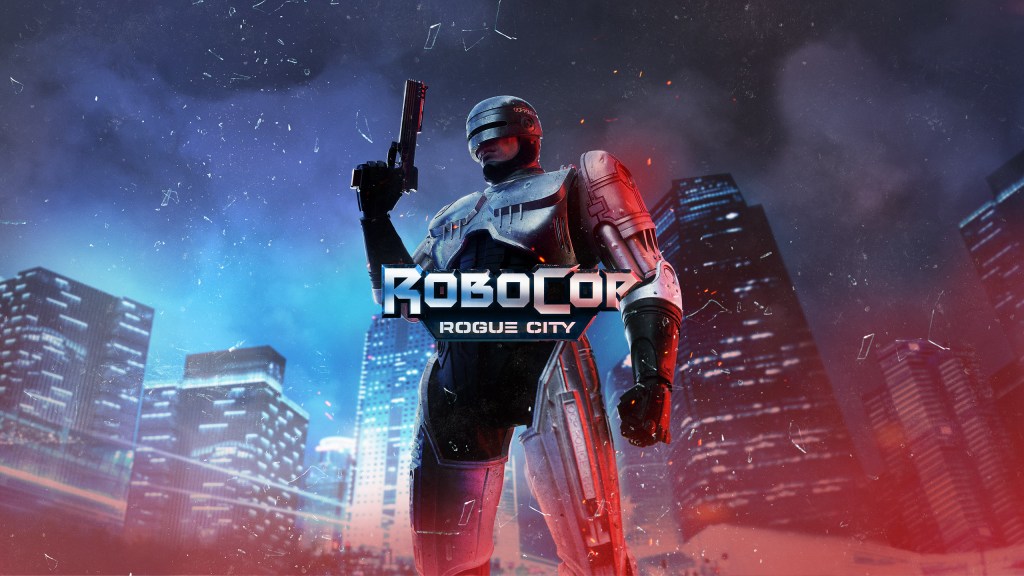
    RoboCop: Rogue City is the kind of surprise you don’t see coming. In a time when many licensed games feel like cash grabs or forgettable tie-ins, this one dares to deliver a full-blown cinematic experience rooted in love for the source material. It plays like a direct sequel to the original films—ignoring the reboot and stepping in as a worthy RoboCop 4. From the unmistakable voice of Peter Weller to the smog-choked streets of Old Detroit, this game is clearly made by fans, for fans.

    It’s a game that gets a lot right: the tone, the pacing, and especially the first-person feel of becoming RoboCop. But for every step forward in immersion and style, there’s a stumble in technical polish and replayability. The result is an experience that feels both authentic and ambitious, but ultimately uneven.

    Advertisements

    Authentic RoboCop Vibes

    RoboCop: Rogue City does a great job capturing the gritty, dystopian world of the classic RoboCop films. Set after the events of RoboCop 1 and 2, the story throws you into the boots of Alex Murphy once again, with new villains and conspiracy theories that feel right at home in the franchise.

    It nails that RoboCop tone—grimy streets, corrupt systems, and violent justice. What really impressed me was how faithfully it recreated iconic locations from the movies. These environments have been rebuilt from the ground up and are surprisingly detailed and immersive. It actually made me go back and rewatch the original films, which says a lot about how well the game captures the spirit of the source material.

    Peter Weller Returns as RoboCop

    One of the coolest things about this game? It’s voiced by Peter Weller, the original RoboCop himself. That alone gives the game a huge dose of authenticity. His signature monotone delivery and presence make it feel like you’re really stepping into a forgotten chapter of the movies. Fans of the franchise will absolutely appreciate hearing that familiar voice again—it’s not just a nostalgia hit, it’s a game-changer for immersion.

    This feels like RoboCop finally got the Alien: Isolation treatment.

    A Great Start with Solid Gameplay

    The first 15 minutes had me hooked. Playing in first-person as RoboCop feels right—it gives weight to every step and bullet, immersing you in his heavy, methodical presence. The pacing, music, and tone blend into something cinematic yet still fun to play. It’s reminiscent of how Alien: Isolation brought its movie world to life—this feels like RoboCop finally got that same treatment.

    Combat is satisfying. RoboCop doesn’t sprint or dive-roll—he stomps through enemies like a tank. As you level up, you can upgrade your skills and customize your Auto-9 pistol. The Deduction skill is especially useful early on for a 30% XP boost.

    Advertisements

    Customization and RPG Elements

    The skill tree is simple but effective—you’ll likely max it out by the end of the campaign. Each skill tier noticeably improves RoboCop’s capabilities, from combat efficiency to environmental scanning, making you feel progressively more powerful without overwhelming you with complexity.

    As far as customization goes, the RPG-lite mechanics are surprisingly engaging. RoboCop’s iconic Auto-9 sidearm supports swappable chip sets that alter its performance—everything from increasing damage and armor-piercing capabilities to boosting fire rate or ammo capacity. You’ll collect these chips throughout the game and use a clever mini-puzzle system to optimize how they’re slotted in. The trick is to align power flow through a circuit grid, finding the most efficient path to activate multiple bonuses at once. It adds just enough depth to reward experimentation without slowing down the pace.

    RoboCop in Old Detroit - Rogue City screenshot

    A Cinematic but Restrictive Experience

    Beyond the action and leveling system, the game leans heavily into its cinematic roots. The cutscenes are frequent, well-acted, and beautifully rendered, often blurring the line between game and movie. This immersive storytelling works great in your first playthrough. The story even branches in some interesting ways. You can affect relationships with characters and your decisions lead to either a “good” or “bad” ending.

    This layer of choice is a great addition to the RoboCop franchise in game form. But it also introduces some technical constraints that I don’t think the developers were quite prepared for. The branching narrative adds replay value, sure, but it also complicates things like mission select, and replayability—making the absence of those features feel more like a necessary compromise than a design choice.

    New Game Plus and Replayability Issues

    But once you get towards the end of the game and New Game Plus, the pacing falters. With RoboCop already fully leveled, enemies go down almost instantly, making combat encounters feel more like brief intermissions than actual challenges. The excellent cutscenes begin to feel like barriers between gameplay, especially when you’re just in the mood for some RoboCop-style carnage. Those moments of explosive action become too brief simply because of how overpowered you are.

    New Game Plus should’ve been a chance to relive the best moments with more freedom. Instead, it’s more of the same—and too easy. Once you’ve maxed out your skills and gear, even the hardest difficulty becomes a walk in the park.

    As mentioned before, there’s no level select or mission replay, which is a major oversight—especially in a game with such strong cinematic highlights. If you want to relive a specific shootout or story beat, you have to replay the entire campaign from the beginning. A sandbox or freeplay mode would’ve added a lot of value, especially for players who prefer gameplay over story or just want to flex their fully-upgraded RoboCop in combat.

    A dedicated practice mode or combat simulator could’ve solved this, offering quick access to action without narrative interruptions. There is one section of the game that does something close to this—and it’s a blast—but it ends up feeling more like a tease than a feature. Its presence only emphasizes how much the game would benefit from more of that kind of content.

    Combat gameplay in RoboCop Rogue City

    Ambitious World Design, Uneven Execution

    The game tries to walk the line between open-world exploration and a linear narrative. Some zones feel lively and well-integrated, offering side missions, interactive NPCs, and environmental storytelling that expands the RoboCop universe in interesting ways. However, this semi-open structure often clashes with the more rigid, cinematic pacing of the main story.

    Dialogue doesn’t pause when you walk away, and characters don’t repeat lines—so if you miss something, it’s gone. This leads to moments where the storytelling and gameplay feel out of sync. For instance, you may stumble across a meaningful side activity only to find it undercut by your current story objective or accidentally miss important narrative beats by straying too far off the path.

    It’s like the game wants to be both things at once—story-driven and semi-open—but doesn’t quite stick the landing. The lack of dynamic systems or reactive world-building means exploration can sometimes feel flat, and you’re left deciding whether to slow down for immersion or risk missing content entirely. A more focused structure or better integration of open-world elements could have really elevated the experience.

    Advertisements

    The Technical Glitches Hurt the Experience

    As fun as it is, the game isn’t without its issues—and they can pile up fast. Frame rate drops are common, especially during high-intensity scenes or crowded environments, which undercuts the game’s cinematic momentum. One particularly frustrating bug caused the right stick to stop responding entirely, meaning I couldn’t turn the camera—mid-fight or while exploring, that’s a dealbreaker.

    The audio also suffers: voice lines sometimes crackle, sound effects cut out, and lipsync frequently drifts out of sync during dialogue. Add in the occasional flickering textures or glitches, and immersion starts to crumble. If this game ever had a VR version, the performance alone would make it nauseating.

    Most of these issues can be temporarily resolved by restarting the game, but that’s no real fix. It disrupts the flow of gameplay and can make progress feel tedious rather than rewarding. For a title that relies so much on atmosphere and presentation, these technical flaws stand out even more. The developers clearly have a strong foundation here, but they absolutely need to follow up with patches and performance updates to let the experience shine the way it was meant to.

    Final Thoughts: A Love Letter to RoboCop with Room for Improvement

    RoboCop: Rogue City is clearly made by people who love the franchise. The visuals, the tone, Peter Weller’s return, and the general feel of the game all come together in a way that really honors the movies. It absolutely succeeds at making you feel like RoboCop.

    But as strong as the heart is, the body still needs work. Technical bugs, lack of quality-of-life features like mission select, and shallow replayability keep it from being a truly great game. With a little more refinement—like a training mode, improved pacing, and patching out the glitches—this could’ve been a definitive RoboCop experience.

    6/10 – Okay

    Rating: 6 out of 10.

    With a few patches and a little more content, it could easily be a 7 or even 8. As it stands, it’s a rough but lovable tribute to an ’80s icon—and definitely worth playing for fans of RoboCop.

    RoboCop: Rogue City
    Release date: November 2, 2023
    Reviewed on: PlayStation 5
    Developed: Protostar
    Published by: Teyon
    Platform(s): PlayStation 5, Xbox Series X and Series S, GeForce Now, Microsoft Windows, Amazon Luna, Mac operating systems


    Author

    Dylan Lepore is a multimedia professional, entrepreneur, and lifelong gamer who’s passionate about blending creativity with strategy. As the founder of LeporeMedia and The Part-Time Gamer, and the Business Manager at Port City Architecture, Dylan brings a unique mix of storytelling, design, and business savvy to everything he does. He lives in Portland, Maine with his fiancée.

  • It’s Literally Just Mowing: A Mobile Game Review

    It’s Literally Just Mowing: A Mobile Game Review


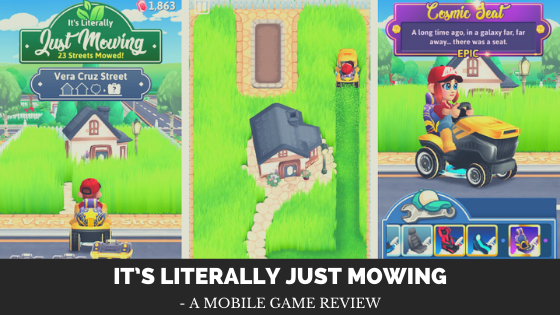
    It’s Literally Just Mowing is a game developed for people who like the satisfaction of a well-cut lawn but don’t want to do the actual work. The result is a self-aware game that delivers in giving you a casual zen experience by mowing grass from anywhere in the world on your mobile device.

    (more…)
  • Articles I’ve Written That Are Not Published on This Site

    Articles I’ve Written That Are Not Published on This Site


    Due to contractual agreements, some of the articles that I’ve have written can not be published on my site.

    (more…)

  • Utawarerumono: Mask of Truth Review

    Utawarerumono: Mask of Truth Review


    Utawarerumono: Mask of Truth is a Visual Novel with some Strategy Role Playing Game elements. That can’t go the other way around and is an important fact when considering to play this game.

    (more…)

  • Perception (PS4) Review

    Perception (PS4) Review


    A fear of the dark is something almost everyone has to face. But for Cassie Thornton, a blind woman, it’s something she wants to conquer. (more…)

  • Level: A Simple Puzzle Game Review

    Level: A Simple Puzzle Game Review


    Simple puzzle games are getting more and more common nowadays. Classic games like “Unblock Me” and “Flow” keep me hunting for new and exciting puzzle games because by now those games set the standard for your average mobile puzzle game.

    Level: A Simple Puzzle Game (only on the App Store) is no exception to that list. It’s simplistic mechanics and its ease-of-use makes it the perfect game to pick up and play for a when there’s a long line at that taco truck and you really want that taco, well at least so I thought.

    NOT YOUR AVERAGE PUZZLE GAME

    Level is a game where the player has to “level” multiple platforms together. It starts off with two platforms and two white whole circles. To level, the platforms move one circle to the other platform and leave the other circle where it was at. Therefore one circle is equal to one circle. Easy right, sure, at first but then it starts adding new shapes to each puzzle as you go through the ever increasing levels. It gets pretty difficult, it makes the player stop and think before carelessly moving a shape. So far the total amount of levels in the game are 80 and more is to be added in the future, Starch the makers of this game says.

    image

    There are shapes and there are platforms. Each piece has a purpose and nothing is ever left out in each puzzle. The pieces consist of a circle, triangle, and a square then they have their counterparts. The hollow versions of those white shapes. The whole shapes way down the platform and the hollow shapes raise up the platform. Black shapes are also hollow or whole, too, but can’t be moved. This provides a huge assortment of patterns and ways that each level can be solved which is one of the reasons it makes this game pretty difficult.

    The platforms are another key part of this “simple” game. There is a total of six different platforms represented by a symbol or a line connecting the platforms. A lock on a platform means it can’t be moved. Chains between two platforms mean one side needs to be weighed down to break the chains apart to turn them into their natural state. A platform might be broken in half and there are two magnets facing each other, once the two platforms are leveled they make a single platform. Some Connect using gears. When one goes up the other goes down. There is also a solid line connecting two platforms. They move together when a shape is moving it up or down. Finally, there is a key facing one direction, pointing to a lock. Level them and,Presto, they’re normal again.

    ADS SUCK BUT THEY MIGHT NEED THEM!

    The player has only a certain amount of moves before they lose a life, which there’s only five of. Once the lies run out there is a micro transaction to buy more lives or more moves. This is where the game kinda started getting irritating for me. I love how easy it is to pick up and play but if I’m struggling on level 35 and it takes all my lives because I couldn’t solve it, there is no way to continue playing unless I wait 20 minutes for a life to come back or pay for a complete set of five lives. There’s no way to watch an ad to get a free life back which is kind of a downer. It’s great that they have no ads (it keeps the game looking clean) but what if I’m waiting for a train and it’s taking a long time. I run out of lives but I want to keep playing but I have to pay. I’d rather play a different game then wait for my life to come back, there aren’t even any hints to help if you’re stuck and your just wasting lives. It’s a big problem for the player base and it’s really working against Starch.

    image

    The game gives you some help by providing a very helpful tutorial and a cheat sheet (which tells you how much each shape is worth) also when you pick up a shape and drop it back where you originally had it doesn’t count against your moves when you drop it back down.

    THE VERDICT

    Level: A Simple Puzzle Game is a really quick game meant to be played in short bursts. It’s challenging, brutal, and addictive but with no way to easily get lives or moves back and with no music to support its crafting gameplay I don’t see me coming back to this game that often. It’s good to challenge the player but waiting 20 minutes to continue that challenge is not something that I feel is complementing with this games fast mechanics.

    68/100

    *This article originally published on Brutal Gamer*