Author: Dylan Lepore

  • Opinion: Sony Is Pushing an All-Digital Future While Undermining Digital Ownership

    Opinion: Sony Is Pushing an All-Digital Future While Undermining Digital Ownership


    On July 1, 2026, Sony Interactive Entertainment issued two announcements that expose a fatal contradiction in the modern video game industry. The company is actively forcing players toward an all-digital future, while demonstrating in real time that digital libraries carry a corporate expiration date. They are demanding total consumer reliance on their digital infrastructure, while proving that infrastructure is anything but permanent.

    The first blow to physical preservation came via the official PlayStation Blog. Sid Shuman, Senior Director of SIE Content Communications, announced that starting in January 2028, physical game disc production will end for all new PlayStation releases. Shuman framed the decision as a necessary adaptation, stating the move is “in response to shifting trends in consumer preference.”

    “Physical game disc production for all new games releasing on PlayStation consoles will be discontinued starting January 2028.”

    — Sid Shuman, Senior Director, Sony Interactive Entertainment

    The market data certainly supports that trend. According to gaming industry analyst Piers Harding-Rolls of Ampere Analysis, the digital share of game purchases has skyrocketed over the past decade, jumping from just 13% at the PS4’s launch to nearly 80% by 2025. From a strict business perspective, eliminating the manufacturing, shipping, and warehousing overhead of physical media is an understandable corporate efficiency.

    But what makes financial sense for a corporation isn’t always what is best for the consumer—especially when digital ownership is legally treated as a revocable license.


    The Illusion of the Digital Library

    Sony is asking players to move toward an all-digital future, yet the company is actively dismantling its digital past. This concern is not theoretical; it is happening right now.

    Just days before announcing the end of physical discs, Sony confirmed a massive deletion of digital content from user libraries. According to reporting from Game Informer, written by Marcus Stewart, Sony began notifying users that hundreds of previously purchased movies and television shows from Studio Canal—including acclaimed films like Terminator 2: Judgment Day, Apocalypse Now, and Paddington 2—would be wiped from PlayStation digital libraries starting September 1, 2026. The removal, tied to expiring content licensing agreements, offers no refunds to the players who paid for them.

    “From September 1, 2026, due to our content licensing agreements, you will no longer be able to access your previously purchased content from Studio Canal, and it will be removed from your video library.”

    — Official PlayStation Store Notice

    This establishes a grim precedent: when a licensing agreement lapses, the consumer is the one left empty-handed. For anyone who has spent decades curating a physical media library, the reality is stark. A physical disc on a shelf belongs to you. A digital purchase is merely a conditional rental, tethered to the shifting legal agreements of corporate entities.


    Dismantling the Fallback

    To compound the issue, Sony used the very same day it announced the 2028 disc cutoff to reveal that legacy digital infrastructure is also on the chopping block.

    In a separate post, Shuman announced the impending closure of the PlayStation 3 and PlayStation Vita digital stores, shutting off new purchases globally by July 2027. The juxtaposition is staggering. Sony is demanding that consumers abandon physical media while showing exactly what happens when the digital storefronts that replace them eventually become obsolete.

    The community immediately connected the dots. Sony’s announcements quickly accumulated thousands of comments on the PlayStation Blog, the overwhelming majority expressing fierce opposition.

    “We literally own nothing now but licenses.”

    — PlayStation Blog Commenter

    For many core fans, the 2028 timeline marks a hard exit ramp, with another commenter adding, “Looks like the PS6 is where it sadly ends for me.”


    The Core Argument for Ownership

    Physical media provides rights that digital purchases simply do not: resale, lending, donation, and long-term preservation independent of platform control. In a fully digital ecosystem, access is conditional—governed by licensing agreements, account status, and storefront availability rather than permanent possession. As preservation organizations like the Video Game History Foundation have long warned, when physical formats die, the legal and practical ability to archive and protect the medium’s history is severely crippled.

    Thirteen years ago, Sony built a mountain of consumer goodwill with a 22-second viral video playfully demonstrating how to share physical games on the PS4. It was a defining moment that helped them win a console generation by positioning PlayStation as the platform that respected traditional ownership. Now, Sony is eliminating the very medium that made that message possible.


    The Retail Ripple Effect

    The consequences extend far beyond a single player’s game shelf. Without physical media, Sony gains significantly greater control over pricing within its own ecosystem because consumers no longer have access to competing retailers selling new physical copies or a used game market.

    This shift will fundamentally alter the broader retail landscape. Walk into many Target or Walmart stores today, and the console game aisle is already shrinking. Removing PlayStation discs eliminates one of the largest remaining categories of physical console software. Retail analysts warn that this transition could accelerate the decline of specialty electronics stores like GameStop, which rely heavily on the secondary market of used games to maintain foot traffic.

    Sony argues that it is following consumer behavior, but by removing the alternative, it is actively reshaping it. The question is no longer whether digital downloads are the future—they already are for a majority of the market. The real tension is no longer physical versus digital, but permanence versus permission. If that choice disappears in 2028, July 1, 2026, will be remembered as the day PlayStation fundamentally redefined game ownership.

  • How to Transfer 529 to Roth IRA at Robinhood (SECURE 2.0 Guide)

    How to Transfer 529 to Roth IRA at Robinhood (SECURE 2.0 Guide)


    Advertisements

    This guide combines real-world experience with the actual SECURE 2.0 rules for 529-to-Roth IRA transfers. It’s written for people who want to do this correctly, avoid brokerage automation traps, and walk away with clean tax reporting and every dollar of bonus they’re entitled to.

    This is not theory. This is how it actually plays out.


    The Goal: What is a SECURE 2.0 529-to-Roth IRA Transfer?

    • Transfer eligible 529 funds into a Roth IRA under SECURE 2.0
    • Have the transfer reported as an annual Roth IRA contribution (not a rollover)
    • Apply the contribution to the correct tax year
    • Max out the Roth IRA contribution for that year
    • Receive the full brokerage match (e.g., Robinhood Gold 3%)
    • Ensure correct IRS reporting on Form 5498
    Advertisements

    Phase 1: IRS Rules for 529 to Roth IRA Rollovers (The 15-Year Rule)

    Before moving any money, confirm all of the following. The IRS is strict here.

    Eligibility Rules

    • 15-Year Rule: The 529 plan must have been open for at least 15 years.
    • 5-Year Rule: Contributions (and earnings) made in the last 5 years are not eligible.
    • Lifetime Cap: Maximum of $35,000 per beneficiary over their lifetime.
    • Annual Limit: The transfer counts toward the annual Roth IRA contribution limit (e.g., $7,500 for 2026).
    • Earned Income: The beneficiary must have enough earned income for the year.

    Important: A 529-to-Roth transfer is not a rollover under IRS rules. It is legally treated as an annual Roth IRA contribution.


    Phase 2: Execution (The Paper-Trail Strategy)

    Brokerage systems often default to treating mailed checks as workplace rollovers. Your job is to document everything so errors can be corrected quickly.

    Step 1: Ask Support Before Sending Money

    Contact support and ask:

    • Where should a 529-to-Roth IRA transfer check be sent?
    • Will it be treated as a current-year Roth IRA contribution?
    • Will it be eligible for the full brokerage match?

    Save the chat or email — even if an AI chatbot gives the instructions.

    Advertisements

    Step 2: Send the Check (Even If It’s a “Rollover” Address)

    In real-world cases, support may instruct you to mail the check to a direct rollover PO Box. That does not automatically make it a rollover.

    What matters:

    • The source of the funds (a 529)
    • The beneficiary matching the Roth IRA owner
    • IRS rules governing classification

    The brokerage can (and should) reclassify it correctly after review.


    Step 3: Watch the Initial Posting — Don’t Panic

    When the deposit first appears:

    • The activity log may say “Rollover to Roth IRA”
    • You may see only a partial match at first (e.g., 2%)

    This does not mean it’s wrong yet.

    Front-end labels are operational. Tax reporting fields are what matter.


    Phase 3: Lock In the Classification (This Is the Critical Part)

    You want explicit confirmation from support that:

    • The funds are reported as a New IRA Contribution
    • The correct tax year is applied
    • The contribution maxes out the IRA for that year
    • Any brokerage match is classified as interest/bonus, not a contribution

    If needed, use this language:

    “The IRS specifies that a 529-to-Roth IRA transfer must be treated and reported as an annual Roth IRA contribution. Please confirm this will be reported on Form 5498 accordingly.”


    Phase 4: How to Get the Robinhood 3% IRA Match on 529 Transfers

    Advertisements
    Robinhood app showing a successful $7,500 Roth IRA contribution from a 529 plan.

    If your brokerage offers a match (e.g., Robinhood Gold):

    • Confirm your membership status is recognized
    • Verify the full match percentage is applied
    • Ensure the match is listed separately as interest or bonus

    Example:

    • $7,500 transfer × 3% = $225 match

    If the system initially applies only part of the match, support can manually credit the remainder.

    Recommend Tool: Try Robinhood Today and get your 3% Match!


    Phase 5: Final Verification (Your Receipts)

    Your account dashboard should show all three of the following:

    ItemCorrect StatusWhy It Matters
    Contribution TypeNew IRA ContributionEnsures correct Form 5498 reporting
    Tax YearCurrent year (e.g., 2026)Prevents rollover misclassification
    Until Max$0.00Confirms the IRA is fully maxed

    Additionally:

    • Total contribution: Equals the annual limit
    • Match: Listed separately and not included in the contribution total

    If all of this is true, you’re done.


    Common Gotchas (and Why They’re Not Fatal)

    “It Says Rollover in the History”

    This is a front-end label, not the tax classification. If the contribution type and tax year are correct, the IRS reporting will be correct.

    “I Only Got 2% Match at First”

    This usually means your premium status wasn’t detected immediately. Support can manually adjust it.


    Advertisements

    Final Checklist

    • Confirm the source of funds is a 529 plan and that the beneficiary and Roth IRA owner are the same person
    • Verify you meet all IRS requirements for a 529-to-Roth IRA transfer (account age, annual limits, lifetime limits, earned income)
    • Make the check payable directly to the Roth IRA custodian (for benefit of the account holder)
    • Do not label or describe the transfer as a “direct rollover from a workplace plan”
    • Expect the transfer to be treated as an annual Roth IRA contribution, not a rollover
    • Monitor your IRA contribution limits for the year to avoid over-contributing
    • Check Form 5498 when issued to confirm it is reported as a Roth IRA contribution
    • Save all confirmation emails, chat transcripts, and deposit receipts for your records
    • If something looks off, contact support early and ask how it will be reported to the IRS, not just how it will be deposited

    Final Notes

    This process exists specifically to prevent unused education savings from being trapped or penalized. The intent of SECURE 2.0 is to allow eligible 529 funds to become tax-free retirement savings — but brokerage systems are still catching up.

    Because of that gap, the most important skill here isn’t paperwork — it’s advocacy. Ask explicit questions, save every confirmation, and focus on how the transaction will be reported to the IRS, not just how it’s labeled in the app.

    If you do that, this transfer is not risky — it’s one of the cleanest ways to repurpose unused 529 money.


    Not Tax Advice

    This guide is for educational and informational purposes only and is based on real-world experience combined with publicly available IRS guidance.

    It is not tax, legal, or investment advice. Tax situations vary, and IRS rules can change or be interpreted differently depending on individual circumstances.

    Before completing a 529-to-Roth IRA transfer, consider consulting a qualified tax professional or financial advisor to confirm how the rules apply to you specifically.

    Author

    Dylan Lepore is a multimedia professional, entrepreneur, and lifelong gamer who’s passionate about blending creativity with strategy. As the founder of LeporeMedia and The Part-Time Gamer, and the Business Manager at Port City Architecture, Dylan brings a unique mix of storytelling, design, and business savvy to everything he does. He lives in Portland, Maine, with his wife and his dog, Alecto.

  • Rumor: PlayStation State of Play Set for February as PS6 Launch Slips

    Rumor: PlayStation State of Play Set for February as PS6 Launch Slips


    Sony is expected to host a new PlayStation State of Play presentation in February, according to multiple industry insiders and retail leaks surfacing this week. While Sony Interactive Entertainment has not officially confirmed the event, the reports suggest a showcase focused on the 2026 software lineup and upcoming PlayStation Plus Essential titles.

    The rumored event comes amid shifting expectations for Sony’s hardware roadmap. Industry analysts now suggest the PlayStation 6 may not arrive until 2030, a significant delay from the previously projected 2027 or 2028 launch windows.

    Extended Lifecycle for PS5

    The shift in console timelines is reportedly driven by the continued strength of the PlayStation 5 market and the impending release of Grand Theft Auto VI. Analysts at SandStone Insights noted that Sony likely wants to extend the PS5 lifecycle to capitalize on the massive momentum expected from Rockstar Games’ next title, which is slated for a late 2025 or early 2026 window.

    “Sony expects the PlayStation 5’s lifecycle to be extended,” said David Gibson, an analyst at SandStone. Gibson noted that the “Console Timelines Shift” at Sony points toward a longer-than-expected wait for next-generation hardware.

    February Content Outlook

    While hardware news remains speculative, the rumored February State of Play is expected to highlight immediate software concerns. Leaks suggest that the boxing title Undisputed—which currently holds a 70 on Metacritic—will headline the PlayStation Plus Essential lineup for February.

    Other potential highlights for the showcase include:

    • New gameplay details for Resident Evil Requiem.
    • Updates on Bungie’s Marathon, currently slated for a March 5 release.
    • Trailers for first-party titles like Ghost of Yotei.

    Sony typically announces State of Play events only a few days in advance. If the February rumors hold true, an official announcement from the PlayStation Blog is expected within the next two weeks.

  • Soccer Dash: Football Simulator Review — A Mobile Game Wearing Switch Clothes

    Soccer Dash: Football Simulator Review — A Mobile Game Wearing Switch Clothes


    It’s Soccer… Sort Of

    In Soccer Dash: Football Simulator, you don’t control a player—you are the ball. You aim, charge, and kick your way through 46 near-identical levels, dodging obstacles and cartoonish defenders while navigating mini golf-style mazes.

    It’s an idea that could be fun in quick bursts. But the game doesn’t evolve. It doesn’t challenge. It doesn’t respect your time—or your money.

    “I had everything unlocked in under 30 minutes. And I wasn’t even rushing.”


    Advertisements

    One Mechanic, Zero Innovation

    The game’s main feature is slow motion. You pull back on the left stick to charge a shot, then press “A” to kick. This triggers a slo-mo effect that helps you line up your path.

    You can spam this mid-air, meaning you can basically cheese your way through any obstacle. There’s no scoring, no timing challenges, no tracking—just kick, coast, repeat.

    “There’s nothing to master. No skill ceiling. Just a skill floor you never need to leave.”


    Touchless on a Touchscreen?

    This game screams “mobile port,” but bafflingly, there are no touch controls on the Switch. For a game all about tapping direction and momentum, it’s a strange omission—and one that makes it feel half-finished.

    The UI is also barebones. Your only options in the settings menu? Mute sound and mute music. That’s it.

    World Cup Without the Cup

    The “World Cup” mode lets you choose from dozens of country flags and compete with a CPU through a 4–5 match sequence. Sounds exciting—but you win nothing, there are no rankings, and the matches don’t feel any different from normal levels.

    It’s a mode that exists just to exist.

    Skins Don’t Save It

    There are 16 unlockable “ball skins,” some with minor perks like more speed or coin bonuses. One of them is a literal golf ball that’s immune to traps. But they don’t add depth. If anything, they make the already-too-easy game even easier.

    “The skins are cute. But when your game is this thin, cosmetics aren’t a fix.”


    Advertisements

    Sound Effects: One Size Fits All

    The sound design feels as lazy as the level design. Every ball—whether it’s a beach ball, a steel ball, or a soccer ball—makes the same dull thud when kicked or deflated. No variation. No charm. No immersion.

    Final Thoughts: A Game That Barely Tries

    Soccer Dash: Football Simulator is what happens when a clever core idea gets lost in poor execution. There’s potential in controlling the ball and navigating puzzle-like soccer mazes, but this game simply does not care to do more than the bare minimum.

    No par system. No level variety. No rewards. No difficulty curve. No sound diversity. No joy.

    Score: 2/10 – Painfully Basic

    It feels like an early mobile prototype rushed onto a console marketplace—without even bothering to implement touch controls on a touchscreen system. It isn’t offensively bad. It’s just lazily made and quickly forgotten.

    “You won’t hate it. But you definitely won’t remember it.”


    Soccer Dash: Football Simulator – Fact Sheet

    Release date: July 23, 2025 (Switch Store March 6, 2025)
    Reviewed on: Nintendo Switch
    Developed by: [Developer name not specified]
    Published by: Upscale Studio
    Platform(s): Nintendo Switch

    Disclosure: I received a free review copy of this product from Keymailer. All thoughts and opinions in this review are my own.

    🎮 Want to try Soccer Dash: Football Simulator yourself?
    Visit the Nintendo eShop or check availability via your Keymailer dashboard.


    Author

    Dylan Lepore is a multimedia professional, entrepreneur, and lifelong gamer who’s passionate about blending creativity with strategy. As the founder of LeporeMedia and The Part-Time Gamer, and the Business Manager at Port City Architecture, Dylan brings a unique mix of storytelling, design, and business savvy to everything he does. He lives in Portland, Maine, with his wife and his dog, Alecto.

  • 27 Money Moves I’m Glad I Made by 27 — and a Few I Learned the Hard Way

    27 Money Moves I’m Glad I Made by 27 — and a Few I Learned the Hard Way


    You don’t need a finance degree to build a solid foundation. You just need a few smart habits — and maybe a heads-up on what not to do.

    Turning 27 made me look back at the money moves that have helped me feel more confident, secure, and intentional — and the lessons that humbled me along the way. These aren’t one-size-fits-all rules. They’re real, tested choices that worked for us, shared so you can take what clicks and skip a few stumbles.

    If you’re in your 20s and want to get better with money (without ditching the fun parts of life), this list is for you.

    Advertisements

    ✅ Moves I’m Actually Glad I Made

    1. Joining Finances with My Partner Early

    We combined budgets, priorities, and future plans early on. It made us stronger as a team and sped up our progress. Money talks don’t have to be weird — when you’re aligned, they’re just part of life.

    2. Budgeting for the Life We Actually Live

    Our budget isn’t some rigid spreadsheet fantasy. It includes Diet Coke, Tuesday date nights, weekend snacks, and the occasional movie. That’s why it works — it fits us.

    3. Using Credit Cards Without Getting Burned

    We use credit like it’s debit — no balances, no surprises. Everything gets paid in full, and cash back rewards get funneled straight into savings. Credit is a tool, not a trap.

    Dylan Lepore putting up the peace sign with his hand.
    “How I am when I use my 3% Cash Back credit card”

    4. Building Our Emergency Fund (Work in Progress)

    We’re still stacking our 3–6 month cushion, but even the partial fund brings peace of mind. It’s not about living scared — it’s about being ready.

    Advertisements

    5. Letting Our Savings Actually Earn Something

    We moved our money into a high-yield account (currently earning 3.65%) so it could work a little harder, even while sitting still.

    6. Automating the Boring Stuff

    Savings, bills, investments — we automate what we can. It cuts down on temptation and keeps things moving, even when life gets hectic.

    7. Tracking Our Net Worth Monthly

    Every month, we check in. Debts, savings, progress. It’s not about obsessing — it’s about being aware. That awareness builds momentum.

    8. Avoiding Lifestyle Creep

    Just because we earn more doesn’t mean we spend more. We focus on what adds value, not what just looks shiny.

    At view of Jenny Lake at the Grand Teton National Park.
    At view of Jenny Lake at the Grand Teton National Park.

    9. Renting While We Prep to Buy

    We’re not rushing into homeownership just to say we did it. Renting gives us time, flexibility, and room to save for a smart move — not just a fast one.

    10. Investing Early (Even Imperfectly)

    I didn’t know everything when I started — still don’t. But getting started in my early 20s gave me time to learn, adjust, and grow.

    Advertisements

    11. Making Extra Income Work for Us

    Freelance writing, photography, weekend event work — side gigs give us more freedom to save, invest, and do the fun stuff without guilt. It’s not about hustling endlessly — it’s about using extra income to unlock freedom.

    12. Paying Down High-Interest Debt First

    We knocked out the expensive stuff first. It wasn’t glamorous, but it saved us thousands in interest and gave us room to breathe.

    13. Setting Limits on Gifting

    We love giving. But we set boundaries for birthdays and holidays to keep things thoughtful — not stressful.

    14. Planning Travel Like a Life Goal

    Travel isn’t an afterthought. We budget for it like it matters — from our Australia honeymoon to family road trips and everything in between.

    15. Building Credit Intentionally

    I started with a secured card, paid it off every month, and leveled up from there. Boring? Maybe. But it worked — and gave me a solid score to build on.

    Advertisements

    🤕 Mistakes, Missteps, and Money Wisdoms

    16. Hype ≠ Wisdom

    The buzz around apps like Robinhood is loud. But chasing trends isn’t a plan. I learned to tune out the noise and stick to what works.

    17. Learn to Cook (or Love Someone Who Does)

    I’m no chef — but my fiancée loves cooking. We eat well, save money, and still enjoy dining out. It’s all about balance.

    Burgers Cooking on a grill.

    18. One Good Subscription > Five Duds

    We don’t stack services just to have them. One or two that hit the spot? Way better than juggling five you barely use.

    19. Understanding Taxes = Power

    Helping with the books at work gave me a crash course in taxes — and it clicked. Not just W-2 stuff, but the business side: deductions, brackets, the whole deal. It was a new level of clarity — and it saved us from a few expensive surprises.

    Advertisements

    20. You Don’t Need Fancy Systems to Get Started

    I track my side income clearly, but I don’t have a business account yet. It’s simple, it works, and I’ll upgrade when it makes sense.

    21. Know Your Worth and Say It

    Whether asking for a raise or setting freelance rates, confidence (and preparation) goes a long way. You can be assertive without being a jerk.

    22. Stick with What Actually Works

    I’ve tried every system under the sun. What matters? Using one consistently — even if it’s not perfect.

    23. Trust Your Gut

    I’ve avoided bad gigs, bad deals, and bad timing by listening to my instincts. Financial common sense isn’t all numbers — sometimes it’s vibes.

    24. Delaying Gratification Is a Flex

    We’ve said no to big purchases — not because we had to, but because we’re playing the long game. That’s power, not sacrifice.

    A photo of Sarah Steffey at duBois Beach.
    A photo of Sarah Steffey at duBois Beach.

    25. Stay Informed — Don’t Spiral

    I read the news, follow the trends, and keep learning — but I don’t let it run my brain. Focus wins over frenzy.

    26. Money’s Emotional, Too

    Money decisions aren’t just math. They’re tied to fear, guilt, excitement, pressure. Learning how to navigate that stuff matters just as much as spreadsheets.

    27. **Personal Finance Is **Personal

    There’s no perfect formula. You have to figure out what works for your life, your goals, your timeline. And that’s the whole point.

    Advertisements

    🎯 Real Talk

    You don’t have to be perfect. You just need to be intentional. Most of the progress we’ve made didn’t come from big breakthroughs — it came from showing up consistently and thinking long-term.

    Build the life you want. One good move at a time.

    💬 Ready to take your next money step?
    Pick one move and take action this week — then tell me what it is. I’d love to hear what you’re working on. Comment below or shoot me a message. Let’s grow together.

    📎 Financial Disclosure:
    I’m not a financial advisor — just a guy who’s learned a lot through experience, research, and plenty of trial and error. This article is for informational and entertainment purposes only and should not be taken as professional financial advice. Always do your own research or talk to a licensed pro before making big money moves.

  • Why Blade Runner: The Final Cut (2007) Still Sets the Standard for Sci-Fi Cinema

    Why Blade Runner: The Final Cut (2007) Still Sets the Standard for Sci-Fi Cinema


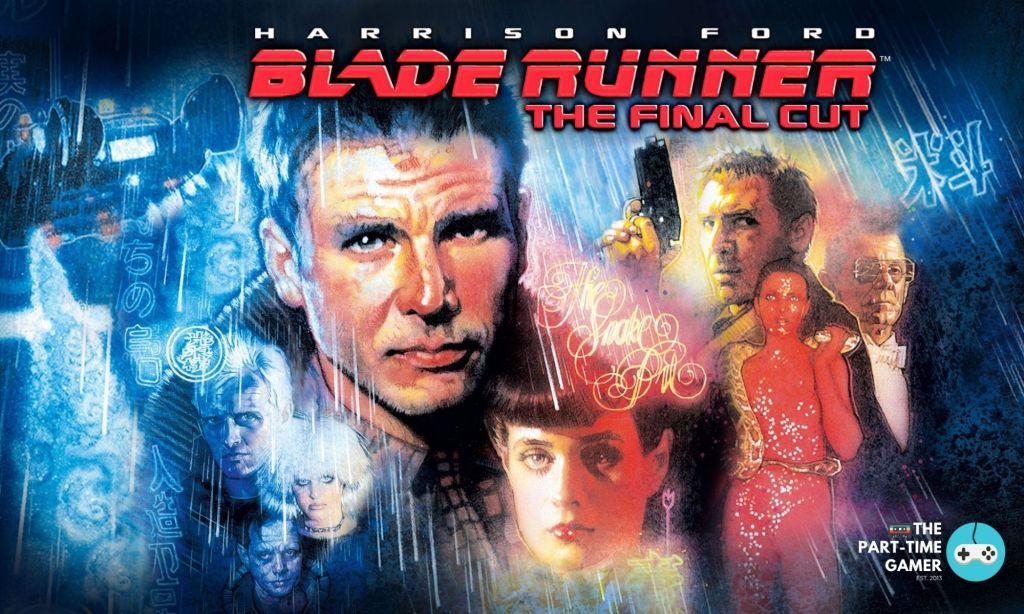
    Ridley Scott’s Blade Runner: The Final Cut isn’t just a science fiction classic—it’s a cornerstone of cyberpunk cinema and one of the most visually influential films ever made. Set in a dystopian 2019 Los Angeles, it explores artificial life, identity, and morality in a decaying, neon-drenched future.

    This version—the 2007 Final Cut—is the definitive edition. It reflects the director’s original vision, with restored footage, updated effects, and crucial changes that deepen its emotional weight and thematic ambiguity.

    “Spoiler Warning: This review contains major plot details. If you haven’t seen Blade Runner: The Final Cut, consider watching it first before continuing.”


    Advertisements

    A Noir Future Full of Questions

    The film follows Rick Deckard (Harrison Ford), a weary ex-cop pulled from retirement to track down and “retire” a group of rogue replicants—genetically engineered humanoids designed for labor and war. These replicants are the Nexus-6 models: biologically superior to humans but limited to a four-year lifespan.

    Unlike typical sci-fi thrillers, Blade Runner doesn’t rely on explosions or fast pacing. It moves slowly, deliberately. It wants you to soak in every rain-drenched neon sign and polluted skyline. That’s part of its hypnotic charm.

    And yet, it’s not an easy film to follow. Nothing in Blade Runner is truly certain. The story unfolds in fragments and implications, demanding your attention. You have to rewatch it—because every time you do, you catch something new. A glance. A phrase. A small moment that recontextualizes everything.

    It’s also a film filled with contradictions. Deckard is just a man—or maybe not. The replicants are just machines—or maybe not. The story seems simple, but the longer you think about it, the deeper it gets.


    Advertisements

    Roy Batty: The Replicant Who Stole the Show

    Roy Batty (Rutger Hauer) is the film’s philosophical and emotional core. As the leader of the escaped replicants, he’s a soldier, a killer, a poet, and—most of all—a man who knows he’s dying.

    Roy Batty in his final scene of the film.
    Roy Batty in his final scene of the film.

    His final confrontation with Deckard is more spiritual than violent. And in his final act—saving Deckard—he transcends his programming. His “Tears in rain” monologue, largely improvised by Hauer, is arguably one of the greatest moments in cinematic history:

    “All those moments will be lost in time, like tears in rain.”

    The other replicants—Pris (Daryl Hannah), Leon (Brion James), and Zhora (Joanna Cassidy)—each contribute to the film’s emotional texture. They’re not just villains. They’re confused, desperate, and dangerously self-aware. They’re children in adult bodies—strong, intelligent, but emotionally raw. Their rebellion isn’t just against humans—it’s against fate.

    And that’s what makes Roy’s arc so powerful. At the end, he doesn’t kill Deckard—not because he can’t, but because he chooses not to. It’s not worth it. He’s seen enough death. He’s tired. He’s at the end of his rope, and in that moment, he becomes more human than the humans trying to destroy him.


    Advertisements

    What Makes Us Human?

    Rachael (Sean Young), a replicant who believes she’s human, forces Deckard to confront his own identity. Their unsettling romance adds layers of tension and vulnerability. Her presence challenges everything Deckard thinks he knows—not just about replicants, but about himself.

    And then there’s the big question: Is Deckard a replicant?

    Blade Runner: The Final Cut leans toward yes. The unicorn dream sequence, paired with Gaff’s (Edward James Olmos) origami unicorn, strongly implies Deckard’s memories were implanted. But the film doesn’t confirm anything. That ambiguity is the point.

    “It doesn’t matter if Deckard is human. The point is that we’re still asking by the end.”

    And that’s what makes this film so special. It doesn’t hand you answers. It invites you to wrestle with questions that don’t go away. Questions about life, memory, purpose, and identity.

    Deckard takes a beating throughout the film—more than you’d expect from a regular human. Some viewers point to that as another clue that he’s a replicant. But maybe the replicants are holding back. Maybe they’re dying. Maybe Deckard just got lucky. The line between man and machine is deliberately blurry.


    Advertisements

    Aesthetic and Legacy

    Visually, Blade Runner is unrivaled. It created the modern cyberpunk aesthetic—gritty, industrial, crowded, and soaked in neon rain. The world feels lived in, decayed, and yet still full of life. It’s a nightmare of the future, but it’s also weirdly beautiful.

    Ridley Scott and cinematographer Jordan Cronenweth crafted a city that doesn’t just look iconic—it feels real. You don’t just see it—you can almost smell the smoke and feel the wet pavement under your feet.

    Vangelis’s score is equally iconic. It’s a blend of futuristic synths and haunting melodies that fills the film with desolation. It doesn’t just accompany the movie—it becomes part of it.

    “Blade Runner doesn’t just show you a world—it pulls you into it and refuses to let go.”


    Advertisements

    Final Thoughts

    Blade Runner: The Final Cut isn’t for everyone. It’s slow. It’s dense. It’s unclear. Some of its effects haven’t aged perfectly. But for what it’s trying to do—for the experience it creates—it’s perfect.

    Deckard and Gaff - Blade Runner The Final Cut
    Deckard and Gaff – Blade Runner The Final Cut

    This is a movie you study, not just watch. A movie you keep coming back to because it won’t stop echoing in your head.

    It’s filled with layers upon layers: metaphor, mystery, philosophy. It’s about artificial intelligence, yes—but more than that, it’s about the human condition. About memory. About the search for meaning in a life that might be manufactured. It’s about what makes us real.

    “A flame that burns twice as bright burns half as long—and you have burned so very, very brightly.”

    There’s never been another movie quite like it, even though so many have tried. From The Matrix to Cyberpunk 2077, you can see its fingerprints everywhere. But Blade Runner stands alone—its atmosphere, tone, and questions still unmatched.


    Final Score: 10/10 – Masterpiece

    Rating: 5 out of 5.

    A flawless, atmospheric sci-fi masterpiece that doesn’t just ask for your attention—it demands your contemplation. Every frame, every whisper of synth, and every question it raises rewards those willing to listen, watch, and think deeply. Decades later, Blade Runner: The Final Cut still leaves its mark—not just as a film, but as a philosophical experience.

    Movie Facts: Blade Runner: The Final Cut

    • Released: 2007 (Final Cut version)
    • Original Film Release: 1982
    • Director: Ridley Scott (Alien, Gladiator)
    • Screenplay: Hampton Fancher & David Peoples
    • Based on: Do Androids Dream of Electric Sheep? by Philip K. Dick
    • Runtime: 117 minutes
    • Notable Changes in Final Cut:
      • No voice-over narration
      • Unicorn dream restored
      • Digital fixes and color correction
      • “Happy ending” removed
      • Deckard’s replicant status made more ambiguous
    • Legacy:
      • Inducted into the U.S. National Film Registry in 1993
      • Inspired countless films, games, and works of fiction
      • Sequel released in 2017: Blade Runner 2049 (directed by Denis Villeneuve)

    Author

    Dylan Lepore is a multimedia professional, entrepreneur, and lifelong gamer who’s passionate about blending creativity with strategy. As the founder of LeporeMedia and The Part-Time Gamer, and the Business Manager at Port City Architecture, Dylan brings a unique mix of storytelling, design, and business savvy to everything he does. He lives in Portland, Maine, with his wife and his dog, Alecto.


    What did Blade Runner mean to you?
    Drop your thoughts in the comments—especially if you think Deckard is a replicant. Let’s dive deep into the neon shadows together. And if you enjoyed this review, share it with a fellow sci-fi fan and subscribe for more cinematic deep dives.

  • Nonnas (2025) Review: Vince Vaughn Delivers Heart and Humor in Netflix’s Feel-Good Hit

    Nonnas (2025) Review: Vince Vaughn Delivers Heart and Humor in Netflix’s Feel-Good Hit


    In a streaming landscape often dominated by algorithmic sameness, Netflix’s original film “Nonnas” emerges as a delightful and authentic anomaly.

    While many Netflix originals seem designed by algorithm—either going big and loud or veering into Hallmark territory—”Nonnas” manages to strike a genuinely sincere tone.

    Anchored by a grounded performance from Vince Vaughn, the film offers warmth, charm, and emotional depth.

    Vaughn’s Heartfelt Performance

    Vince Vaughn has made a career out of playing quick-witted, everyman characters—especially in the early 2000s. But in “Nonnas,” he dials things back, delivering a more nuanced and earnest performance.

    He still brings his signature humor, but this time it’s layered with naturalness and soul.

    This version of Vaughn feels real.”

    His connection to the story, the family, and the “nonnas” (Italian grandmothers) feels deeply personal.

    It’s clear that the film rests on his shoulders, and he carries it exceptionally well. In fact, this may be one of his best roles in years, allowing him to showcase his emotional range in a way we don’t often see.

    A True Story, Served with Love

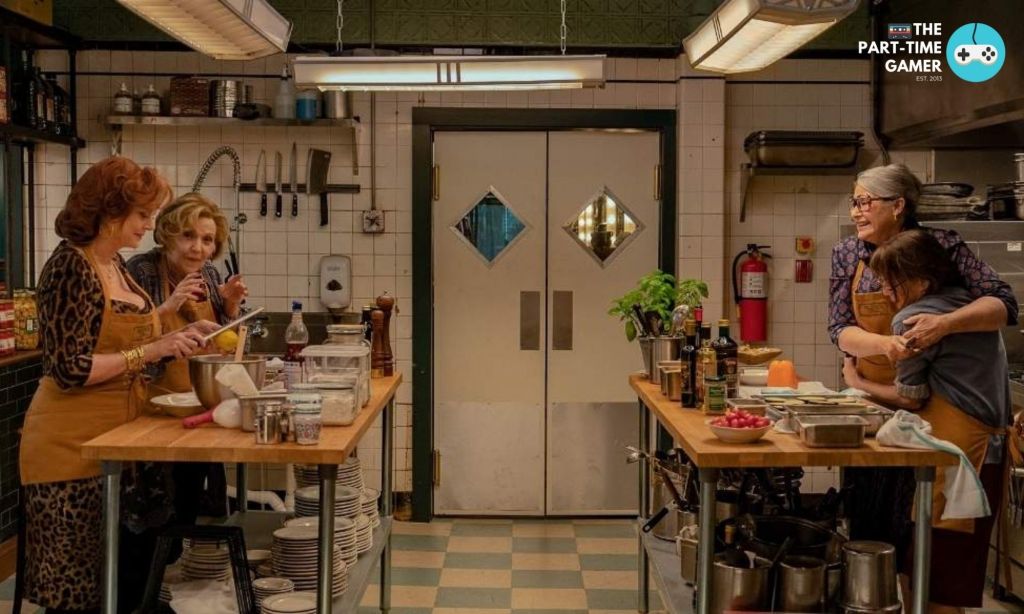
    What makes “Nonnas” even more special is that it’s based on a true story—the creation of Enoteca Maria, a real restaurant in Staten Island where grandmothers from around the world cook meals from their home cultures.

    That heartwarming real-life backdrop elevates the film, making it more than just feel-good fiction.

    It reminded me of my own Italian great-grandmother and the comfort of her cooking. The story captures that nostalgic comfort, even if it leans into a few fairy-tale moments where things wrap up a little too neatly.

    There are also some minor continuity issues, but nothing that pulls the film off track.

    A Deliciously Authentic Ensemble

    The supporting cast enriches the film’s emotional core.

    Lorraine Bracco (“Goodfellas”) offers a grounded, matriarchal strength. Talia Shire (“Rocky”) brings a delicate touch, reflecting family tradition.

    Joe Manganiello (“Magic Mike”) plays against type with vulnerability. Linda Cardellini (“Freaks and Geeks”) provides a sincere and emotionally rooted performance as Vaughn’s love interest.

    Meanwhile, Susan Sarandon (“Thelma & Louise”) is magnetic as ever, lending wisdom and gravitas. The grandmothers themselves infuse the film with authenticity, and their scenes are full of life, humor, and gentle guidance.

    It’s the kind of movie that leaves you smiling, thinking about your own family, and maybe even craving a homemade meal.

    Final Thoughts

    “Nonnas” is a heartwarming and enjoyable celebration of family, food, and the pursuit of passion. The film is driven by strong performances and genuine emotion.

    8 out of 10 — Great

    Rating: 4 out of 5.

    Movie Facts

    • Title: Nonnas
    • Director: Stephen Chbosky
    • Stars: Vince Vaughn, Susan Sarandon, Linda Cardellini, Talia Shire
    • Based On: The real-life story of Joe Scaravella and his Staten Island restaurant, Enoteca Maria, where grandmothers from around the world cook their traditional dishes.
    • Genre: Comedy-Drama / Family
    • Streaming On: Netflix
    • Language: English
    • Release Year: May 9, 2025

    Author

    Dylan Lepore is a multimedia professional, entrepreneur, and lifelong gamer who’s passionate about blending creativity with strategy. As the founder of LeporeMedia and The Part-Time Gamer, and the Business Manager at Port City Architecture, Dylan brings a unique mix of storytelling, design, and business savvy to everything he does. He lives in Portland, Maine, with his wife and his dog, Alecto.


    Let’s Chat: Did Nonnas stir up memories of your own family traditions? Share your thoughts in the comments below—and don’t forget to subscribe for more honest movie reviews, personal reflections, and entertainment picks.

  • Final Destination: Bloodlines (2025) Proves There’s Life Left in This Deadly Franchise

    Final Destination: Bloodlines (2025) Proves There’s Life Left in This Deadly Franchise


    Final Destination: Bloodlines is an exhilarating, blood-soaked return to form that reminds us exactly why this franchise took off in the first place. It’s tense, creative, and relentlessly paced—a worthy reintroduction that breathes new life into the series without trying too hard to reinvent what already works.

    From the start, the film grabs you by the throat and doesn’t let up. There’s this underlying anxiety that carries through every frame, which is exactly what a Final Destination movie should do. It’s not just about the gore (though there’s plenty, and it’s impressively executed); it’s about the looming dread, the quiet anticipation of chaos, and the fun in seeing how the dominoes fall.


    Death’s Design Never Felt So Inevitable

    One of the most effective—and honestly kind of funny—ways Bloodlines builds tension is through how it superimposes potential threats throughout the environment. You know, those little visual cues that hint at what could go wrong. In a lesser film, this might come off as cheesy or overly telegraphed, but here, it works really well.

    “It makes you laugh nervously or look away—not because it’s funny, but because the tension is so sharp, you have to react.”

    Instead of relying on the classic vision sequences the series is known for, this movie plays it differently—you see the possible cause-and-effect setups almost in real time. It creates this constant sense of dread, where you’re nervously scanning the screen, bracing yourself for the worst. You know something’s coming, but not exactly how or when, and that unpredictability makes it all the more intense.

    This approach becomes a brilliant alternative to the premonition trope. Rather than having characters receive a warning, the viewer gets the ominous puzzle pieces laid out just enough to anticipate disaster—without fully seeing the picture.


    A Smart, Blood-Soaked Legacy Sequel

    One of the most interesting creative choices here is how it handles the franchise’s signature premonition mechanic. While it doesn’t rely on the full-blown “vision sequence” we’re used to, there’s still a sense of fate creeping in—an eerie awareness that something is off, even if the characters can’t quite put their fingers on it. That subtle shift actually adds a fresh layer of mystery without losing the tension.

    What stands out most, though, is how cohesive the story is. Every character choice and every gruesome death feeds into a well-structured plot that’s smartly self-aware. The filmmakers clearly understood the assignment: bring the franchise back in a way that honors its roots while feeling new enough to justify its return. And they nailed it.

    The film centers on Stefani Reyes (Kaitlyn Santa Juana, The Flash), a college student plagued by recurring nightmares of a catastrophic event from the 1960s. As she delves into her family’s past, Stefani uncovers a chilling connection to a tragedy that her grandmother, Iris Campbell (Gabrielle Rose, The Man in the High Castle), narrowly escaped. This revelation sets off a chain of events, drawing Stefani and her relatives into a deadly sequence orchestrated by an unseen force.

    The ensemble cast delivers compelling performances, with notable appearances by Teo Briones (Ratched) as Stefani’s brother Charlie, Richard Harmon (The 100) as cousin Erik, and Rya Kihlstedt (Dexter) as Stefani’s estranged mother, Darlene. Their portrayals add depth to the narrative, grounding the supernatural elements in relatable family dynamics.

    A standout aspect of Bloodlines is the return of Tony Todd (Candyman) as the enigmatic William Bludworth. Todd’s presence has been a constant thread throughout the series, and his final performance adds a layer of gravitas and nostalgia. His portrayal offers a deeper glimpse into Bludworth’s mysterious connection to Death’s design, serving as a fitting tribute to the late actor’s legacy.

    Compared to other horror franchise reboots (looking at you, Scream), Bloodlines makes a stronger first impression. While I did enjoy the recent Scream films, they didn’t hit me the way this did. Bloodlines feels more confident in what it is—gruesome, thrilling fun from start to finish.


    Final Verdict:

    If you’re a fan of the Final Destination series—or just in the mood for something tense, bloody, and creatively twisted—Bloodlines delivers. It’s fun, it’s gruesome, and it knows exactly what it is.

    Rating: 9/10 – Amazing

    Rating: 4.5 out of 5.

    Quick Facts:

    • Title: Final Destination: Bloodlines
    • Director: Zach Lipovsky & Adam B. Stein
    • Writers: Lori Evans Taylor & Guy Busick
    • Release Date: May 3, 2025
    • Runtime: 95 minutes
    • Studio: New Line Cinema
    • Genre: Horror, Thriller
    • Rating: R
  • Movie Review: A Nice Indian Boy (2025) – A Heartfelt, Culture-Rich Romantic Comedy

    Movie Review: A Nice Indian Boy (2025) – A Heartfelt, Culture-Rich Romantic Comedy


    Romantic comedies often walk a fine line between heartwarming and overly emotional, but A Nice Indian Boy, directed by Roshan Sethi (Call Jane), lands comfortably in the sweet spot. Adapted from Madhuri Shekar’s stage play, the film brings a fresh and culturally grounded perspective to a familiar genre—offering laughs, sincerity, and just enough complexity to keep things meaningful without ever feeling heavy-handed.

    The story centers around Naveen Gavaskar (Karan Soni – Deadpool), a reserved Indian-American doctor whose carefully structured life takes a welcome detour when he meets Jay Kurundkar (Jonathan Groff – Glee), a confident, charming man who just so happens to have been adopted and raised by Indian parents. What begins as a meet-cute at a local temple blossoms into a sincere romance that challenges not only cultural expectations but also family dynamics as they navigate the idea of a traditional Hindu wedding.

    The film is structured into chapters, giving the narrative a clear rhythm that makes each emotional turn feel deliberate and digestible. This choice helps ground the story, allowing the viewer to settle into each phase of the relationship and the family’s evolving understanding.

    Advertisements

    While the film certainly embraces some rom-com tropes—quirky side characters, feel-good montages, and a few sentimental speeches—it never loses its footing. The characters are layered, their relationships believable. Soni and Groff have genuine chemistry, and their performances carry emotional weight beneath the charm. Sunita Mani (Glow) delivers a standout performance as Naveen’s bold and hilarious sister Arundhathi, while Harish Patel (Run Fatboy Run) and Zarna Garg (The Zarna Garg Family Podcast) shine as the well-meaning but culturally tethered parents.

    A Nice Indian Boy doesn’t aim to reinvent the romantic comedy—it simply elevates it. It finds strength in accuracy, letting culture inform character and story rather than serving as a punchline. And while it isn’t overly dramatic, it still manages to explore identity, family, and love with a refreshing sense of care.

    This is a movie that knows what it is: a digestible, heartfelt, Hallmark-adjacent love story with an authentic emotional core. It doesn’t overstay its welcome, doesn’t try to do too much—and that’s exactly why it works.

    Final Verdict:

    A Nice Indian Boy is funny, warm, and sincere, offering a feel-good viewing experience without becoming overly sentimental. It’s an easy recommendation for fans of inclusive romantic comedies or anyone looking for a heartfelt story with charm and cultural depth.

    Rating: 8/10 – Great

    Rating: 4 out of 5.

    Movie Facts

    • Title: A Nice Indian Boy
    • Director: Roshan Sethi
    • Screenplay: Madhuri Shekar
    • Based on: A Nice Indian Boy (stage play) by Madhuri Shekar
    • Genre: Romantic Comedy / Drama
    • Starring: Karan Soni, Jonathan Groff, Sunita Mani, Harish Patel, Zarna Garg
    • Runtime: 105 minutes
    • Language: English
    • Country: United States
    • Release Date: March 15, 2024 (U.S. theatrical release)
    • Distributed by: Film Independent / Roadside Attractions


    Author

    Dylan Lepore is a multimedia professional, entrepreneur, and lifelong gamer who’s passionate about blending creativity with strategy. As the founder of LeporeMedia and The Part-Time Gamer, and the Business Manager at Port City Architecture, Dylan brings a unique mix of storytelling, design, and business savvy to everything he does. He lives in Portland, Maine, with his wife and his dog, Alecto.

  • GUNNAR Mustang Glasses Review: Stylish Look, Mixed Performance (2025)

    GUNNAR Mustang Glasses Review: Stylish Look, Mixed Performance (2025)


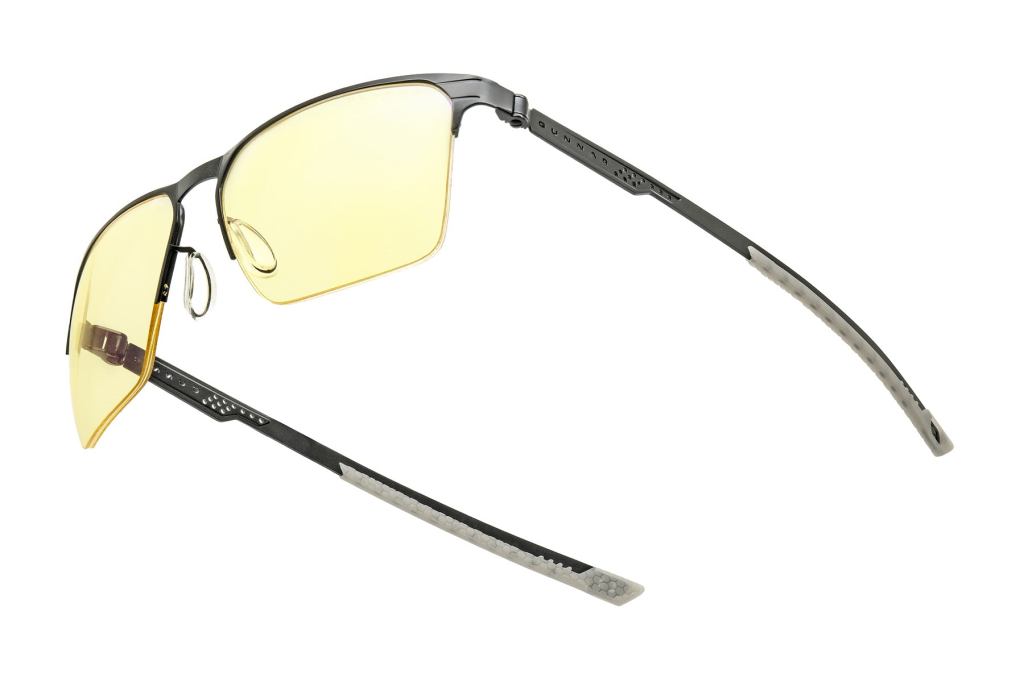
    When I first got the GUNNAR Mustang glasses for review, I was genuinely curious. I didn’t know anything about the brand, but the glasses looked sharp — a clean navigator-style design, lightweight stainless steel frame, and a sleek matte finish. I was excited to try them out.

    After spending some time with them, I’m giving the GUNNAR Mustang glasses a 6 out of 10. They’re decent. They’re stylish, light, and definitely help with screen time. But they’ve got their quirks that hold them back from being a go-to choice. Here’s my honest take.

    Mustang_Chrome_Sun_Male_lifestyle2

    Build Quality: Light but Sturdy

    Right out of the box, these glasses felt solid. The stainless steel frame strikes a nice balance — it’s flexible but still feels durable. At just 31 grams, they don’t weigh you down, which is great if you’re planning to wear them for hours.

    That said, the glasses don’t stay put on my face. They slide down my nose pretty easily, so I find myself readjusting them frequently, especially if I move around too much. It’s a little annoying.

    Comfort: Nose Pads Are a Letdown

    Even though they’re light, the nose pads were a problem for me. The adjustable nose clamps don’t fit all that comfortably on my nose after a while. They don’t cause sharp pain, but they definitely irritate after longer periods of wear.

    So if you’re someone who plans to wear these all day, you’ll probably need to take breaks or consider tweaking the fit. It’s just not the most comfortable thing to keep on for hours.

    These Aren’t Sunglasses — And That’s Okay

    Let’s be clear: these are not sunglasses. They weren’t made to block sunlight. They’re blue light blocking glasses designed for indoor use, like when you’re working at your desk, gaming, or staring at screens all day.

    Out of curiosity, I did try them outside. They do add a slight yellow tint that softens the brightness a bit, but they don’t protect against the sun. You’ll still need to squint if you’re outside in direct sunlight. So, if you’re looking for outdoor eyewear, this isn’t it.

    Indoor Performance: Good for Screens, but Some Visual Issues

    Where the GUNNAR Mustang glasses really shine is indoors. The yellow tint and blue light blocking technology help reduce eye strain during long hours on the computer, TV, or gaming monitor. I noticed less eye fatigue and a bit more comfort after using them for a while.

    However, there’s a trade-off: the lens coating reflects blue light, which causes some weird artifacts. I’d see faint ghost images or flashes inside the lenses, which can be distracting, especially if you’re sensitive to reflections.

    It’s clear the lenses are doing their job in blocking blue light, but the side effect is those reflections — something to keep in mind if that kind of thing bothers you.

    Mustang_Gold_Amber_Female_lifestyle1

    Final Verdict: Good for Screen Time, But Not Perfect

    In the end, I’m giving the GUNNAR Mustang glasses a 6/10. They have some solid features, like the sleek design, lightweight feel, and blue light protection. But the sliding, uncomfortable nose pads, and annoying lens reflections keep them from being a top-tier option.

    If you need a pair of blue light glasses for desk work or screen-heavy days, the GUNNAR Mustang will do the job. Just be prepared for those little trade-offs.

    Final Rating: 6/10 — Okay.

    Rating: 6 out of 10.

    Have you tried blue light glasses before? What’s your experience been like? Drop a comment below — would love to hear!

    🧾 GUNNAR Mustang Glasses – Fact Sheet

    Product Name: GUNNAR Mustang
    Collection: Flight Deck
    Purpose: Blue Light Blocking Glasses (Indoor Use)
    Frame Style: Navigator (Aviator-Inspired)
    Frame Material: Stainless Steel
    Available Colors: Onyx, Chrome, Gold
    Lens Tint Options: Amber (contrast), Clear (neutral), Sun (bright conditions)

    Key Features:

    • Lightweight at 31 grams
    • Flexible hinges for added comfort
    • Adjustable nose pads (may cause discomfort for some)
    • GUNNAR patented lens tech for screen protection
    • G-Shield® lens coating: anti-reflective + smudge-resistant
    • Blocks 100% UV and high-energy blue light
    • Helps reduce digital eye strain and visual fatigue

    Dimensions:

    • Lens Width: 56 mm
    • Lens Height: 48 mm
    • Nose Bridge: 17 mm
    • Temple Length: 140 mm
    • Frame Width: 136 mm

    Included in the Box:

    • Quad-Fold Protective Case
    • Microfiber Pouch
    • Microfiber Cleaning Cloth
    • 12-Month Manufacturer Warranty

    Author

    Dylan Lepore is a multimedia professional, entrepreneur, and lifelong gamer who’s passionate about blending creativity with strategy. As the founder of LeporeMedia and The Part-Time Gamer, and the Business Manager at Port City Architecture, Dylan brings a unique mix of storytelling, design, and business savvy to everything he does. He lives in Portland, Maine, with his wife and his dog, Alecto.