Category: Opinion Pieces (lists, features, columns)

  • Opinion: Sony Is Pushing an All-Digital Future While Undermining Digital Ownership

    Opinion: Sony Is Pushing an All-Digital Future While Undermining Digital Ownership


    On July 1, 2026, Sony Interactive Entertainment issued two announcements that expose a fatal contradiction in the modern video game industry. The company is actively forcing players toward an all-digital future, while demonstrating in real time that digital libraries carry a corporate expiration date. They are demanding total consumer reliance on their digital infrastructure, while proving that infrastructure is anything but permanent.

    The first blow to physical preservation came via the official PlayStation Blog. Sid Shuman, Senior Director of SIE Content Communications, announced that starting in January 2028, physical game disc production will end for all new PlayStation releases. Shuman framed the decision as a necessary adaptation, stating the move is “in response to shifting trends in consumer preference.”

    “Physical game disc production for all new games releasing on PlayStation consoles will be discontinued starting January 2028.”

    — Sid Shuman, Senior Director, Sony Interactive Entertainment

    The market data certainly supports that trend. According to gaming industry analyst Piers Harding-Rolls of Ampere Analysis, the digital share of game purchases has skyrocketed over the past decade, jumping from just 13% at the PS4’s launch to nearly 80% by 2025. From a strict business perspective, eliminating the manufacturing, shipping, and warehousing overhead of physical media is an understandable corporate efficiency.

    But what makes financial sense for a corporation isn’t always what is best for the consumer—especially when digital ownership is legally treated as a revocable license.


    The Illusion of the Digital Library

    Sony is asking players to move toward an all-digital future, yet the company is actively dismantling its digital past. This concern is not theoretical; it is happening right now.

    Just days before announcing the end of physical discs, Sony confirmed a massive deletion of digital content from user libraries. According to reporting from Game Informer, written by Marcus Stewart, Sony began notifying users that hundreds of previously purchased movies and television shows from Studio Canal—including acclaimed films like Terminator 2: Judgment Day, Apocalypse Now, and Paddington 2—would be wiped from PlayStation digital libraries starting September 1, 2026. The removal, tied to expiring content licensing agreements, offers no refunds to the players who paid for them.

    “From September 1, 2026, due to our content licensing agreements, you will no longer be able to access your previously purchased content from Studio Canal, and it will be removed from your video library.”

    — Official PlayStation Store Notice

    This establishes a grim precedent: when a licensing agreement lapses, the consumer is the one left empty-handed. For anyone who has spent decades curating a physical media library, the reality is stark. A physical disc on a shelf belongs to you. A digital purchase is merely a conditional rental, tethered to the shifting legal agreements of corporate entities.


    Dismantling the Fallback

    To compound the issue, Sony used the very same day it announced the 2028 disc cutoff to reveal that legacy digital infrastructure is also on the chopping block.

    In a separate post, Shuman announced the impending closure of the PlayStation 3 and PlayStation Vita digital stores, shutting off new purchases globally by July 2027. The juxtaposition is staggering. Sony is demanding that consumers abandon physical media while showing exactly what happens when the digital storefronts that replace them eventually become obsolete.

    The community immediately connected the dots. Sony’s announcements quickly accumulated thousands of comments on the PlayStation Blog, the overwhelming majority expressing fierce opposition.

    “We literally own nothing now but licenses.”

    — PlayStation Blog Commenter

    For many core fans, the 2028 timeline marks a hard exit ramp, with another commenter adding, “Looks like the PS6 is where it sadly ends for me.”


    The Core Argument for Ownership

    Physical media provides rights that digital purchases simply do not: resale, lending, donation, and long-term preservation independent of platform control. In a fully digital ecosystem, access is conditional—governed by licensing agreements, account status, and storefront availability rather than permanent possession. As preservation organizations like the Video Game History Foundation have long warned, when physical formats die, the legal and practical ability to archive and protect the medium’s history is severely crippled.

    Thirteen years ago, Sony built a mountain of consumer goodwill with a 22-second viral video playfully demonstrating how to share physical games on the PS4. It was a defining moment that helped them win a console generation by positioning PlayStation as the platform that respected traditional ownership. Now, Sony is eliminating the very medium that made that message possible.


    The Retail Ripple Effect

    The consequences extend far beyond a single player’s game shelf. Without physical media, Sony gains significantly greater control over pricing within its own ecosystem because consumers no longer have access to competing retailers selling new physical copies or a used game market.

    This shift will fundamentally alter the broader retail landscape. Walk into many Target or Walmart stores today, and the console game aisle is already shrinking. Removing PlayStation discs eliminates one of the largest remaining categories of physical console software. Retail analysts warn that this transition could accelerate the decline of specialty electronics stores like GameStop, which rely heavily on the secondary market of used games to maintain foot traffic.

    Sony argues that it is following consumer behavior, but by removing the alternative, it is actively reshaping it. The question is no longer whether digital downloads are the future—they already are for a majority of the market. The real tension is no longer physical versus digital, but permanence versus permission. If that choice disappears in 2028, July 1, 2026, will be remembered as the day PlayStation fundamentally redefined game ownership.

  • Why Videogame Journalism and How I Got in To It

    Why Videogame Journalism and How I Got in To It


    Every since I was a little boy, my dad was always into videogames. He had the SEGA Game Gear, a Gameboy, the original PlayStation One (PS1), and a Nintendo Entertainment System (NES). My twin brother Noah and I would play our Gameboys, and before going to daycare, we would wake up in the morning to play Big Bass Fishing, Dave Mirra Freestyle BMX, or Caesars Palace on the PS1 even if we had no idea what we were doing. It was fun, and that was the point. Eventually, I got into more AAA games, typically meaning of having a higher development and marketing budget, such as Tony Hawk’s Pro Skater and the Spyro the Dragon franchise.

    As we got older, my brothers and father would move over to the new Xbox 360 (2005) playing Halo and Gears of War. At the same time, I would stick with PlayStation and Spyro through and through, attempting to play every Spyro videogame ever made – collecting gems and hatching dragon eggs, as they would be brutally killing aliens from faraway planets saving the Earth.

    That’s when playing videogames became more personal for me as I got into Sly Cooper, Ratchet & Clank, Crash Bandicoot, Need for Speed, Scooby-Doo, and Spider-Man at the peak of the PlayStation 2 (PS2) era.

    I was glued.

    Friends and neighborhood kids would ask me to come and play outside with them, and I wouldn’t want to because I felt it couldn’t be any better than what I was already doing. Being on my own and staying my course is something I learned I like to do real quick, as that time alone gave me a chance to think, create, wonder, dream, and play. In that sense, I grew up fast and matured quickly.

    Eventually, after the PlayStation 3 (2006), PlayStation Vita (2011), and the PlayStation 4 (2013) came out, between 2012 and 2013 I was thinking of what I wanted to become or do for the rest of my life. I knew I wasn’t just going to be playing videogames all day as a full-time income, while more possible now, it’s still a rare gig to acquire.

    I started thinking of what I was good at or things I could do with little no money. I couldn’t draw, so no graphic design; I couldn’t write stories, so no directing or becoming an author; and I didn’t have the know-how or equipment to stream or video record my games.

    However, I watched many YouTube videos talking about gaming news and reviews, had magazine subscriptions to Game Informer and Playstation Magazine, and I would read up on news on the internet whenever I could. I even started watching videogame press conferences such as the Electronic Entertainment Expo (E3) at a young age.

    Greg Miller, a former editor and video host of the entertainment website Imagine Games Network (IGN), came up on my radar earlier into my self-discovery. Greg had a similar story; he was just a kid growing up in the ’80s and ’90s who loved playing videogames and reading comics. He went to college at the University of Missouri to pursue magazine journalism and started working for IGN by 2007.

    This story seemed possible at the time to impatient, but times have changed, and the way videogame news and entertainment are consumed and produced have changed as well. I realized it’s going to take me a lot more than just writing articles and hoping for the best.

    I consumed every book I could get on videogame journalism, watched every video, listened to every podcast, and read every article to determine the path I needed to take. I started browsing the web for an opportunity to write anywhere I could find that was videogame centric. I came across the website Brutal Gamer and worked there for about a year and a half for free. I wholeheartedly thank them for introducing me to freelance writing and working for a website.

    Truth be told, I was a terrible writer even out of high school. It wasn’t good.

    But, I got better with practice. I never had the chance to write what I wanted to write or explore other writing types in public school. It was always essays that were oddly formatted.

    Journalism drew me in because I am naturally sarcastic, blunt, and to the point. I want to say what I need to say, keep it clear, and move on to the next topic. It doesn’t need to be complicated with a 10-page paper, single-paced, point 12 font, APA style, and in Times New Roman. That’s just too much and something the average person wouldn’t read.

    Everyone eventually gets where they need to be, but no path is usually the same. It’s more of a feeling and a drive, and that’s what I have found with videogames and journalism. Not because it would seem cool or that all I care about is videogames, but more of a feeling of something I need to do.

    When you get that feeling for something, follow through with it, and see where it leads you. Life can surprise you.

  • Articles I’ve Written That Are Not Published on This Site

    Articles I’ve Written That Are Not Published on This Site


    Due to contractual agreements, some of the articles that I’ve have written can not be published on my site.

    (more…)

  • The Top 5 Gaming Laptops to Buy in 2019

    The Top 5 Gaming Laptops to Buy in 2019


    While a PC may be the way to go if you want the highest quality, 4K, VR capable, might make you toast, gaming setup in the world, however, with the costs of parts going down (as shown on PCPartPicker), the industry is getting ready to drop more and more high-end gaming laptops. It isn’t hard to see that the growing market wants more wirelessness and portability with their devices, and as fewer people buy dedicated PCs, laptops and tablets are on the rise shown by Statista’s data.

    (more…)

  • What Is the Best VR Headset to Buy in 2019

    What Is the Best VR Headset to Buy in 2019


    Virtual Reality seemed to be just another technology fad, that would pass us by like 3D TVs did in 2013. The market would invest in it, and then it would fade out, but that doesn’t seem to be the case.

    (more…)

  • Violent Videogames, Mass Shootings, and the Blame Game

    Violent Videogames, Mass Shootings, and the Blame Game


    A Research Synthesis essay.

    My topic is on videogames and why violent videogames cannot be blamed for causing real-world acts of violence such as the school shootings of the recent past. It is known that most young people in this generation one way or another play videogames, whether that be a big budget AAA game or Solitaire on their smartphones. Moreover, most of these games contain some sort of violence one way or another; the game Whac-A-Mole is an arcade cabinet that involves bashing a hammer into the head of a small burrowing mammal with tiny eyes. The point is that I have to first acknowledge that violent videogames and violence in these games do exist, however, violent videogames have never been the cause of violence (Ferguson Christopher J., a., 2014) and have shown little to no proven research that videogames cause acts of violence (Calvert, S. L., et al, 2017).

    The main reason I chose this topic for my Research Synthesis Assignment is that in the past month (March 2018) President Donald Trump said, “I’m hearing more and more people saying the level of violence on video games is really shaping young people’s thoughts,” said Trump. “And then you go the further step, and that’s the movies. You see these movies — they’re so violent, and yet a kid is able to see the movie if sex isn’t involved but killing is involved.” Now as a person with a deep passion and love for videogames I tend to hear these arguments a lot, and so I dug to find the truth in this “blame game.” In the great words of Michael Che, one of the hosts of SNL’s Weekend Update, “I grew up playing ‘Mario Brothers.’ But I never had the urge to curb stomp a turtle. Though I did grow up with a kid that played ‘Pac Man’ all day. And now he’s addicted to pills and sees ghosts everywhere [Che said sarcastically].”

    I noticed that I needed five scholarly articles but a minimum of eight sources for my Research Synthesis Assignment and I was a little scared that I would not find anything, but I was determined to find papers on the subject because there was bound to be a professor that played Tetris at some point in their lives enough to write about it. I went straight to the McConnell Library database and searched “videogames” in the hope that something would come up while already knowing that there would be a ton of articles from magazines, specifically 51,824 results, but that, of course, was not what I was looking for. I refined the search of the publication date to 1985 to 2018 mostly in part of the Nintendo Entertainment System released in 1985, but more precisely this is when the public eye started to talk about violence in videogames more rapidly. Then going to the “Limit To” section and checking the “Scholarly Journals” box. There were 16,298 results, so I was feeling good about my chances of finding something. Now I took the last step in refining my search, looking up “Videogames and violence” which appeared as the second most recommended search result showing 1,364. I eventually figured out the three points about this topic I want to prove or make clear, which are—1) I am not saying that violent videogames do not have any effect on violent behaviors, thoughts, or actions but they might be a factor. 2) The time we spend playing videogames may have cause for bad health or emotional problems but little real-world violence, such as school shootings. Lastly 3) parents research in videogames rating and playability while also research in their children’s health and needs may help determine if or what videogames are right for their children to play because videogames have shown to help the developmental process of kids (Hughes, E. 2014). In other words, too much of anything can be bad; water is the best thing in the world, but too much water can cause sickness or even death which is known as ‘water intoxication.’

    I first read “Rage Against the Machines: The real danger of videogames isn’t violence; it’s swindling” it wasn’t what I was looking for in terms of explicitly discussing violence in videogames but went on to discuss why videogames are used to swindle people into giving in to the machine with free-to-play and pay-to-win games, to even the 1970’s coin-op arcade cabinets, such as the Whac-A-Mole I previously mentioned. It also went into how someone would keep paying even if the games primary goal is to get the player out of the game as soon and fast as possible so he or she can put more money back into the machine (Bogost, I., 2014). Although interesting, it did not help my case. Then I got a little closer to what I was looking for but not fully there yet as the journal “Revisiting violent videogames research: Game Studies perspectives on aggression, violence, immersion, interaction, and textual analysis” states it’s looking for better research methods into researching about violence in videogames but doesn’t state it’s stance saying “whether this will ever be attempted, whether it is possible, and whether the results would be anything other than a dog’s breakfast, is of course something that remains to be seen. However, it seems prudent to attempt to move the conversation on violent digital games forward in a way that will be of benefit to researchers in both camps, and toward policy that takes into account the broader complexity of gaming as it has come to be,” (Kyle, K., 2009). So far, I can only find “predictors” of playing violent videogames, but there is no definite or even guessed answer yet. I searched further. I then narrowed my search from 2010 to 2018.

    Now as this Research Synthesis dives deeper into the research of videogame violence dates become more important in determining how far the research has come in discovering if violent videogames cause acts of violence. Instead of starting with the release of the ESRB rating system of 1994 (Kohler, C., 2009) I want to jump ahead in the research to the Brown v. Entertainment Merchants Association of 2010. Former-California Senator Lealand Yee and Former-California Gov. Schwarzenegger, yes that Schwarzenegger, made a bill that would further allow the government control over the distribution of violent videogames to minors by banning the sale altogether (Brown v. Entertainment Merchants Assn., 08-1448). While each state has the decision to not sell games to children who do not follow the ESRB guidelines the Supreme Court found that “Like the protected books, plays, and movies that preceded them, video games communicate ideas — and even social messages — through many familiar literary devices (such as characters, dialogue, plot, and music) and through features distinctive to the medium (such as the player’s interaction with the virtual world). That suffices to confer First Amendment protection,” said Antonin Scalia, late Associate Justice of the Supreme Court of the United States. The reason I bring this up is that it is a significant win for the videogame industry proving that videogames are an art form and that the “violent speech” in videogames just like books and other mediums cannot be censored in accordance to the First Amendment.

    My second source titled “Violent video games and young people,” said that “a 2001 report of the U.S. Surgeon General on the topic of youth violence found an association between violent video games and increased aggressive thinking and behavior in youths” and because of this report people during the time of 2001 and after were “assuming that tragic school shootings prove a link between such games and real-world aggression,” (Harvard Mental Health Letter, 2010).  Even though this source does not help my argument about violent videogames, it does show why people could be quick to believe what they hear to justify or give reason to the events that happened in Columbine and Heath High School. My next source goes on to mention a report by Christopher J. Ferguson,  a psychology professor at Texas A&M International University, titled “Violent Video Games and the Supreme Court: Lessons for the Scientific Community in the Wake of Brown v. Entertainment Merchants Association,” where the reports on violent videogames to real-world violence “were unable to demonstrate a cause and effect relationship between video game violence and aggression in youth,” (Ferguson, C. J. 2013). This source helps analyze the court case I mentioned before and counters the 2001 report in my favor.

    Now it seems that I am at square one again still with no definite answer that violent videogames cause real-world acts of violence. The next source I found was on the right track for what I was looking for, “Violence, Crime, and Violent Video Games: Is There a Correlation?” It takes apart arguments stating that “The concerns about the effects of violent video games on aggressive thought patterns, emotions, and behavior are justified. Until now, no study has been able to show that exposure to violent digital games is associated with an increase in criminality, aggressiveness, or violent behavior. Nevertheless, these paradoxical results are not incompatible.” It goes on to state that violent videogames maybe a factor with violent behaviors, but it is no way the cause of these behaviors including that “the research is inconsistent, and thus psychiatrists may wish to be more careful in their public statements linking violent digital games to harm. There is indeed a lack of scientific data dealing with the relationship between violent video games … more research is needed before we can fully understand the influence of violent video games on real life,” (Fournis, G., et al, 2014). It was interesting that this article was not available on the McConnell Library databases but was listed, does Radford have a bias towards videogames? Anyways, I later found Whitney Decamp, WMU associate professor of sociology and associate director of the Kercher Center for Social Research, who researched the matter of younger kids who play violent videogames titled “Who plays violent video games? An exploratory analysis of predictors of playing violent games,” (2017).

    Decamp said that “the young males in my research were in grades eight and 11. I found that just by themselves, even without any controls, violent video games were a poor predictor of violent behavior,” said DeCamp. “Even in the best model, it only explained about 3 percent of the variation in violent behavior” and “after controlling for other factors,” he says, “I found that not only were the effects very weak in comparison with other ones, they were mostly non-significant after you included those other controls.” Decamp found out that there was a better predictor of violent behavior at home rather than blaming videogames. Another interesting research that DeCamp and Ferguson got together for was called “The Impact of Degree of Exposure to Violent Video Games, Family Background, and Other Factors on Youth Violence,” and it said that “a meta-analysis consolidating these effects indicated that increased time playing violent video games does not significantly affect the risk of violent behavior. Rather, it is the social and familial background that seems to play a larger role in determining risk of violent behavior instead of video games,” (2017). In a funny way “the present study identified a curious effect: the more time males spent playing violent games, the less likely they were to engage in a group fight,” which he admits that it could be just a statistical anomaly or it could be when a release of a popular violent videogame comes out, and that research seems to suggest that crime rates actually decrease during that time.

    Lastly, going back and commenting on what Trump said and referring back to the many sources and research papers that have repeated themselves multiple times Mark Appelbaum, an emeritus professor of psychology at the University of California San Diego and the chair of a 2015 American Psychological Association Task Force on Violent Media, puts it together nicely, saying that, “The short answer is there is virtually no research” on whether or not videogames cause violent acts like school shootings. Also, that “there is no scientific evidence that confirms or disconfirms that speculation.” But with the research of the American Psychological Association Task Force on Violent Media in the “Technical Report on the Review of the Violent Video Game Literature” it states that “the APA Task Force on Violent Media has determined that there is sufficient evidence to indicate that these effects appear in older children, adolescents and young adults; however, there remains a dearth [a lack] of studies that examine these effects in children younger than age 10 or that attempt to examine the developmental course of the effects.” Essentially, there is “no single risk factor [that] consistently leads a person to act aggressively or violently. Rather, it is the accumulation of risk factors that tends to lead to aggressive or violent behavior,” (Calvert, S. L., et al, 2017).

    In conclusion, even after 48 years we still don’t have an answer to whether violent videogames are the cause of real-world acts of violence such as school shootings but from what we do have the evidence seems to put out that the positives of videogames out way the negatives. Ferguson says he supports DeCamp’s view, and those violent videogames may help reduce societal violence rather than increase it.” Basically, by keeping young males busy with things they like, you keep them off the streets and out of trouble,” said Ferguson, but the bottom line is that parents and people, in general, need to know that “we need to take a lot of caution before we place the blame on any one particular thing,” said DeCamp (Scutti, S. 2018). While, Ferguson noted that “almost all young males play violent video games,” and yet the majority are not committing crimes. The goal of videogames is to be as inspirational as the cinema, as imaginative as a book, and as abstract as music and sound. It is important to realize that videogames are art which we saw from Brown v. Entertainment Merchants Association and that art has many interpretations, but it is never to harm anyone, instead to share with others and have ideas that keep us thinking, not hurting.

    Photo Credit: (Jamakassi on Unsplash)

    References

    Bogost, I. (2014). Rage Against the Machines: The real danger of videogames isn’t violence; it’s swindling. The Baffler, (24), 96-103. Retrieved from http://www.jstor.org.lib-proxy.radford.edu/stable/43306893

    Bourgonjon, J., Vandermeersche, G., & Rutten, K. (2017). Perspectives on Video Games as Art. Clcweb: Comparative Literature And Culture, (4), https://pdfs.semanticscholar.org/f574/efd7cfef6814a7caaa7a5209819626a3595a.pdf

    Calvert, S. L., Appelbaum, M., Dodge, K. A., Graham, S., Nagayama Hall, G. C., Hamby, S., & … Hedges, L. V. (2017). The American Psychological Association Task Force assessment of violent video games: Science in the service of public interest. The American Psychologist, 72(2), 126-143. doi:10.1037/a0040413 http://psycnet.apa.org.lib-proxy.radford.edu/fulltext/2017-07146-003.pdf

    DeCamp, W., & Ferguson, C. (2017). The Impact of Degree of Exposure to Violent Video Games, Family Background, and Other Factors on Youth Violence. Journal Of Youth & Adolescence, 46(2), 388-400. doi:10.1007/s10964-016-0561-8 https://ee46fd3b-a-62cb3a1a-s-sites.googlegroups.com/site/tbdresearch0/2017idevvg.pdf?attachauth=ANoY7cr0_nWSNJ9lFRCYdHQ51r5geSObKqevHNkvQaRI6krcaMcY3ItHyDj_sd584nORu92VcJiCDVLYilp2TZdS2AnYImMNDZYLAiqHyy20oRK3IYWUafsnYdOv6duN7X_ufy31LQGBnDORP4d0kRC6A6FdcxzThPwzGKgRKTN6CUviA9Ahoc7Vs03mmb045gRkEAlsKqjEYGY0QsteKpUAJoosx0xsXg%3D%3D&attredirects=0

    Ferguson Christopher J., a. (2014). Violent Video Games, Mass Shootings, and the Supreme Court : Lessons for the Legal Community in the Wake of Recent Free Speech Cases and Mass Shootings. New Criminal Law Review, (4), 553. doi:10.1525/nclr.2014.17.4.553 http://nclr.ucpress.edu/content/17/4/553.full.pdf+html

    Ferguson, C. J. (2013). Violent video games and the Supreme Court: lessons for the scientific community in the wake of Brown v. Entertainment Merchants Association. The American Psychologist, 68(2), 57-74. doi:10.1037/a0030597 http://psycnet.apa.org.lib-proxy.radford.edu/fulltext/2013-04752-001.pdf

    Fournis, G., & Abou, N. N. (2014). Violence, Crime, and Violent Video Games: Is There a Correlation?. Psychiatric Times, 31(9), 1-4. http://www.psychiatrictimes.com/cultural-psychiatry/violence-crime-and-violent-video-games-there-correlation

    Hughes, E. (2014, April 24). Effect of Video Games on Child Development. https://my.vanderbilt.edu/developmentalpsychologyblog/2014/04/effect-of-video-games-on-child-development/

    Kohler, C. (2009, July 29). July 29, 1994: Videogame Makers Propose Ratings Board to Congress. https://www.wired.com/2009/07/dayintech_0729/

    Kyle, K. (2009). Revisiting violent videogames research: Game studies perspectives on aggression, violence, immersion, interaction, and textual analysis. Digital Culture & Education , Vol 1, Iss 1, Pp 6-30 (2009), (1), 6. https://doaj.org/article/f41d5b3b300344549f754026c469d36b

    Scutti, S. (2018, February 22). Do video games lead to violence? https://www.cnn.com/2016/07/25/health/video-games-and-violence/index.html

    Violent video games and young people. (2010). Harvard Mental Health Letter, 27(4), 1-3. http://eds.a.ebscohost.com.lib-proxy.radford.edu/eds/pdfviewer/pdfviewer?vid=3&sid=f82c1a5d-0812-4ca5-a9d0-3a286759fa77%40sessionmgr4009


  • Videogames Cause Violence, Not This Again!

    Videogames Cause Violence, Not This Again!


    Due to the school shooting in Parkland, Florida, responsible for the loss of 17 lives, Donald Trump held a meeting at the White House informing the public of the threat of semi-automatic weapons, mentioning that violent videogames maybe to blame.

    (more…)

  • High School Art Teacher Turns Videogame Life Saver

    High School Art Teacher Turns Videogame Life Saver


    Whether you are a retro gamer or a Christmas noob, videogames are an art and a passion. (more…)

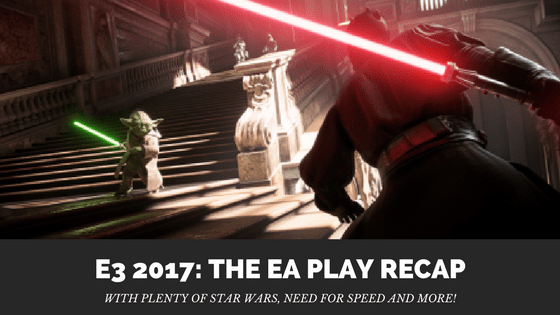
  • E3 2017: The EA Play Recap With Plenty of Star Wars, Need for Speed and More

    E3 2017: The EA Play Recap With Plenty of Star Wars, Need for Speed and More


    We already knew what EA’s press conference was going to be about. And I mean a lot of Star Wars: Battlefront II. They didn’t disappoint. (more…)

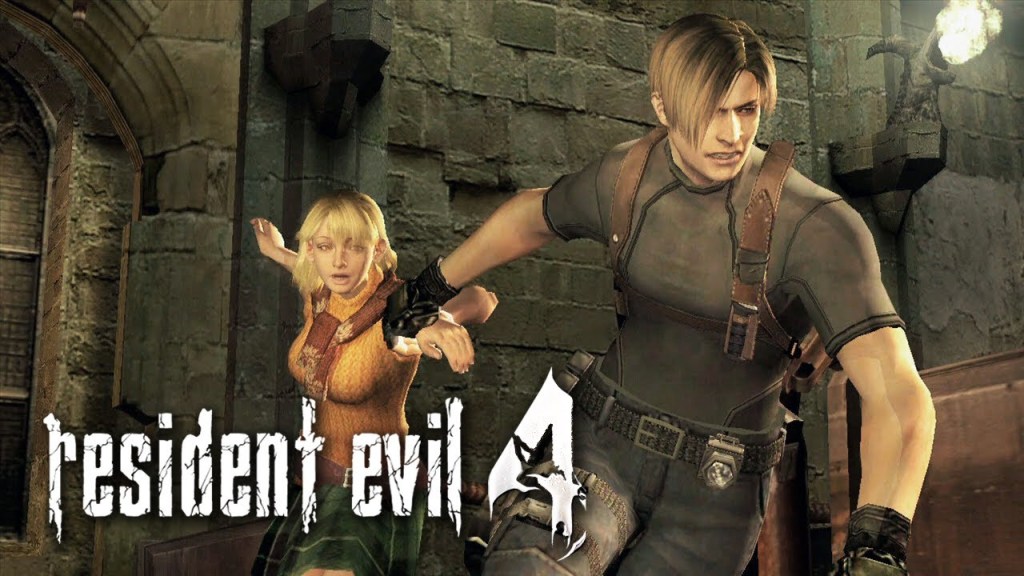
  • Thoughts on Resident Evil 4 After Playing It for the First Time 15 Years Later

    Thoughts on Resident Evil 4 After Playing It for the First Time 15 Years Later


    No use in telling him… he’s dead.

    To start this thing off let’s take it back to when I first got Resident Evil 4 in 2016. (more…)