Tag: Radford

  • Character Analysis: Dallas Buyers Club’s Ron Woodroof

    Character Analysis: Dallas Buyers Club’s Ron Woodroof


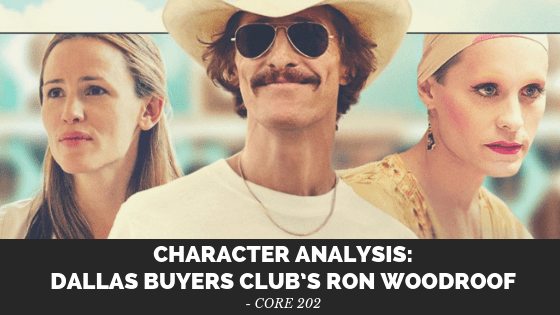
    Ron Woodroof (Matthew McConaughey), an unlikely hero, was the cowboy of drugs, sex, and alcohol in the 1980s where the AIDS crisis started in 1981 with 270 reported cases and the World Health Organization estimating that there were up to 400,000 cases worldwide in 1989 (Avert., 2018). Ron’s Dallas Buyers Club changed everything for the AIDS epidemic by pointing out the flaws of the FDA, giving hope for those to freely live their lives, and flag shipping one of the most significant movements for the gay community. Once cowboy Ron came to realize that he had HIV, he knew he did not have time anymore to go back to his old life, a mission to stay alive began. AIDS was killing, and it did not help that the time linked homosexuality with AIDS, which gave people a more significant reason to hate the gay community further (FOCUS FEATURES., 2013). The FDA concocted the drug AZT to battle the AIDS crisis, but the amount of AZT the patients were receiving made them worse even if it worked at suppressing against the disease. The buyer’s club was being stifled by the FDA because of Ron’s experimentation with drugs to prolong his life. Ron was changing, and the turning point was when Ron started his research into AIDS. He lost many of his old friends, like T.J., in the process but gained many more even if he did not act like it, such as Rayon (Jared Leto) and Dr. Eva Saks (Jennifer Garner). Nobody could ever tell Ron who or what he is and how to live his life, he fought for that freedom. Poor, drug and sex addicted cowboy of an electrician to turning into a poor, drug distributor, and sex addicted hero of the gay community.

    Philosopher Ayn Rand states, “Just as man cannot survive by any random means, but must discover and practice the principles which his survival requires, so man’s self-interest cannot be determined by blind desires or random whims, but must be discovered and achieved by the guidance of rational principles.” Those rational principles come in the form of rational egoism (or rational selfishness) the “concern with one’s own interests” and, in a film, it would be what the actor want’s that maximize their benefit. Rand says that it is not evil to pursue one’s own self-interest for life and survival as the concept does not include any moral evaluation. “The only man who desires to be moral is the man who desires to live.” She makes the argument that altruism is evil instead because it “permits no concept of a self-respecting [and] self-supporting man” and that we are only as “sacrificial animals and profiteers-on-sacrifice, [and] as victims and parasites,” (Rand et al, n.d.).

    The ethical theory of egoism, mainly rational egoism/selfishness, can be seen throughout the start of the film where Ron is seen wearing extremely warn clothes, coughing, and almost seems hollow. He is gambling with fellow men like him (but something feels off particularly with Ron) at a Bull Riding Competition. The bet is on Ron’s friend, T.J., who needs to ride the bull for eight seconds in order for Ron to win. Ron is in his natural habitat, working from a distance and controlling what happens no matter what. T.J. falls on three, and Ron bolts. The men chase after him, and Ron then sees Tucker, a local cop, walking to his car. Ron rushes to his side asking him to arrest him so he can avoid the disgruntled men. “Figure it out yourself,” said Tucker. Ron then punches Tucker, and Tucker hits him twice back on the head. “Back off! I’ll rest all of you,” Tucker yells (“Dallas Buyers Club,” 2013). A few moments later, Ron was seen in the front passenger seat of Tucker’s cop car pulling up next to Ron’s trailer. Ron has gotten what he wanted, money, a show, and a grand escape all to feed his personal survival. Unless T.J. had made it to eight seconds, there was no other way Ron could have won, but by poking the bull, Tucker. This establishes where Ron comes from and who he is. Ron is a fighter literally and figuratively. He is not an evil person; it is the circumstance that he is in and probably was born into that leads him to find and rationalizes situations that will maximize his self-interest to continue his survival as Ron Woodroof. For Ron to become the unintentional hero he becomes at the end of the film, Ron’s rational selfishness is a vital part in his journey of self-preservation and ultimately helping the gay community through his own needs of medication. As Ron put it, “I got a news flash for all y’all, there ain’t nothin’ out there that can kill fuckin’ Ron Woodroof in thirty days,” (“Dallas Buyers Club,” 2013).

    The theme of self-interest and Ron’s fight for survival is even more apparent when he starts his research into medicating himself from dying. Ron begins in a library researching on the topic of HIV and discovers that there was a very likely chance he obtained HIV from unprotected sex with a drug-addicted woman. He goes back to the hospital to find Dr. Saks and get possibly working drugs from out of the country which he discovered. Dr. Saks says that the drugs are not approved by the FDA; however, they are working on new test runs for a drug that could suppress HIV. Ron demands the drug AZT, but Dr. Saks says she could not give him any because the drug, again, is in testing and that he could sign up for the test, however, some patients are receiving placebos to see if the drug works which could take years. Ron says, “So, you’re tellin’ me I’m as good as a horse being sold for dog food,” and “screw the FDA, I’m gonna be DOA. Do I have to sue this hospital to get me some medicine,” (“Dallas Buyers Club,” 2013). Ron storms off but eventually finds a way to obtain AZT through a custodian in the hospital. Ron ignores any morals or laws in place and does what he can because of the possibility of dying within 30 days. He shows how far he would go to save his life. A man that looks like he never opened a book in his time, is the outcast in a library that fills him with pain. This is the first time in Ron’s life that he has to face the bull head-on. There is no escaping this and Ron has to be more conniving than he ever has been to make it out alive. As Ron continues his self-interested self, he starts to change a little at a time. He becomes smarter, more aware of what’s going on around the world, and how he can get what he needs when he needs it, inadvertently discovering the flaws of the FDA as well.

    To help establish Ron’s continuous ethical path through the movie we first need to discuss the characters that he meets along the way. First, Rayon, a homosexual cross-dresser drug addict with HIV, whom Ron meets in a hospital after he has a blood transfusion due to the high consumption of drugs, alcohol and the AZT he obtained. Ron first stays distant of Rayon as he gets closer. Rayon asks if he would like to play cards and Ron agrees as long as he has cash. Ron is again trying to benefit out of a situation.  Ron loses but not long after he gets a cramp in his leg that Rayon helps subdue by massaging it. Ron says thanks and tells him to go away. Ron then discovers that Rayon has been selling half of his AZT prescription for $5,000 and wanted in, Rayon will not allow it. After leaving the hospital, Ron takes advice from the custodian who was giving him AZT and eventually goes across the border to Mexico to find Dr. Vass, a doctor who lost his license and now is running a sick clinic in Mexico City. Dr. Vass keeps Ron for three months to flush his system and gives him a regiment of vitamins to increase his T-cell count. He educates Ron on how to be healthy and to stay away from any toxic crap that may decrease his T-cells. Ron takes his advice and then sees another opportunity to earn money selling these drugs back in Texas for Dr. Vass. These drugs were never listed as illegal but merely unapproved, and in no time Dr. Vass agreed, and Ron heads across the border as a priest with a car filled with pills. At the border, Ron’s car gets inspected and in comes Richard Barkley who is from the Food and Drug Administration office. Ron promises him that the 3,000 pills are his 90 days’ supply of vitamins because of his cancer and that they are only for his personal use. Barkley does not seem to buy it and counts on it that they will bust Ron, but for now, they let him go. These three characters all challenge and teach Ron as he moves through the movie, and Ron takes it all in, creating the Dallas Buyers Club for profit and a way to keep him healthy and supplied. While also eventually getting Rayon in on it as his business partner because of his connections and money.

    As Ron and Rayon run the Dallas Buyers Club and get new clients, the homosexual community begins to thank Ron and show respect for him even if he is doing it for profit. He notices this but continues his selfish and “screw off” ways, which he appears to say a lot as a way of deflecting emotions of kindness from others. In a moment where Ron and Rayon were shopping for healthy groceries thanks to Dr. Vass’ advice. Ron notices T.J., but Ron lets T.J. notice him first before he says anything. T.J. is shocked that he is alive and looking healthy. He makes an offensive remark towards Rayon as he approaches both of them. Rayon says hello and extends his hand. Ron says, “This is Rayon. He said hi to you. Shake his hand, T.J., come on, buddy, what’s your fuckin’ problem?” T.J. flips off Ron, but then Ron grabs T.J.’s arm and twists it around his back forcing T.J. to shake Rayon’s hand. T.J. does it, Ron lets him go, and then T.J. walks off humiliated. Rayon stares at Ron, unsure of how to react to this and shows a smile and starts to tear up. Ron says, “what,” (“Dallas Buyers Club,” 2013). Rayon was moved that Ron stuck up for him. This is the first time in the film that Ron demonstrates an act of support to Rayon. However, it was a self-interested act as he wanted revenge on T.J. for joking to the guys that Ron might be gay in the Lonestar bar, at the beginning of the film when Ron first got diagnosed with HIV. Ron is slowly becoming the selfish hero and face of the gay community. He is hard, but he provides medicine to the people sick with HIV when the doctors will not, and he protects his clients. Ron does feel, and he is aware of the power that he has been given. So, just like the grocery store, he begins to act on his compassion and feelings a little at a time.

    The peak of Ron’s hero-istic egoism is when he takes the FDA to court after the FDA seized their drugs and any information on them Ron had, countless times. The judge hears Ron’s case and Barkley his there as well. The judge says, “The law does not seem to make much common sense. If a person has been found to be terminally ill they ought to be able to take just about any drug they feel will help … but that is not the law. Mr. Woodroof, there is not a person in this courtroom who is not moved to compassion by your plight, what is lacking here is the legal authority to intervene. I’m sorry. This case is hereby dismissed,” (“Dallas Buyers Club,” 2013). Ron left the courtroom that day hollow, defeated, and tired. After everything that Ron has been through and everything that he has done, he feels that nothing has changed at all. Ron comes back to his home and is greeted with applause from almost everyone he has ever helped. Ron finally realizes, at that moment, everything that he has done.

    Throughout every small encounter in the film, Ron changes ever so slightly. It started with Rayon’s blunt kindness, kids sincerely saying thank you to Ron after buying his pills, having a fun time at a gay bar, elderly HIV patients crying because there is hope, to Ron protecting Rayon from T.J., then selling his car and everything he had when prices for importing his drugs went up, and finally fighting the FDA face to face. He never let his egoism and selfishness go, but he used it in the end for good, becoming a hero of the gay community, even if he still was just that poor, white trash, sex addicted, and drug distributor he was at the beginning of the film. It takes a big event to change someone’s path in life. Unfortunately, HIV was Ron Woodroof’s event, and he fought to have the last best seven years of his life. In the end, he was the one finally riding the bull.

    References

    Vallée, J. (Director). (2013). Dallas Buyers Club [Video file]. United States: Focus Features.

    Rand, A., & Binswanger, H. (n.d.). Selfishness. Retrieved from http://aynrandlexicon.com/lexicon/selfishness.html

    Avert. (2018, November 26). History of HIV and AIDS overview. Retrieved from https://www.avert.org/professionals/history-hiv-aids/overview

    FOCUS FEATURES. (2013, November 9). The Life and Times of Ron Woodroof. Retrieved from http://www.focusfeatures.com/article/the_life_and_times_of_ron_woodroof

    Wikipedia. (2018, November 05). Rational egoism. Retrieved from https://en.wikipedia.org/wiki/Rational_egoism

    Kotz, S. (2018, December 13). Ethical Theories—master PowerPoint. Retrieved from https://learn.radford.edu/d2l/le/content/129730/viewContent/2058655/View

  • Blizzard Cuts off Power at Radford University

    Blizzard Cuts off Power at Radford University


    Around 10:30 p.m. Saturday, March 24 the power went out at Radford University due to a blizzard surrounding the City of Radford.

    The power outage first started with the sidewalk and street lights, eventually cutting off some of the building’s power entirely with emergency lights still working.

    (more…)

  • Ideology and the Thorny Path to a Dignified Life – Final Comparative Essay

    Ideology and the Thorny Path to a Dignified Life – Final Comparative Essay


    Everyone has a different ideology, or they might be the same with various tweaks here and there, but for the most part, we all see ourselves in a different light. Watching, analyzing, and discussing our favorite mediums or our not so beloved mediums is how we in real life can relate and have a conversion with one another with something that’s not about the weather. Going into a film can be a rough time for some though, meaning that the director’s vision or ideology that they put in their film might be an entirely different interpretation for viewers of said film and that’s okay. Not everything in life can have a happy ending, but in the films, I will be discussing in this ideology essay at least try. They are Billy Elliot and Moonlight.

    (more…)

  • Examining a Single Frame – Semiotics Essay

    Examining a Single Frame – Semiotics Essay


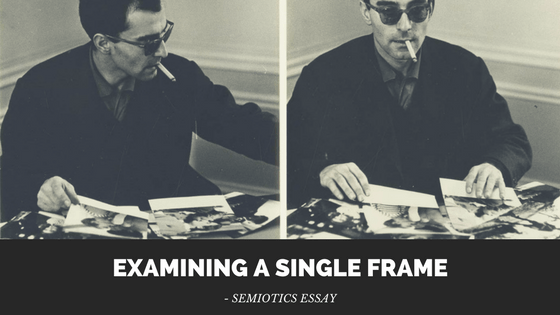
    The man in black sitting on what looks like a trolley in some foreign country seems out of place, and it’s with Barthes Five Codes I can determine what this man is genuinely feeling or thinking. What is he looking at? Why is he there? Why is he dressed up? Like pictures, a frame speaks a thousand words, but our own experiences shape what we see through the metaphors, metonymies, and synecdoches of the characters.

    (more…)

  • Billy Elliot – Cinematography Essay

    Billy Elliot – Cinematography Essay


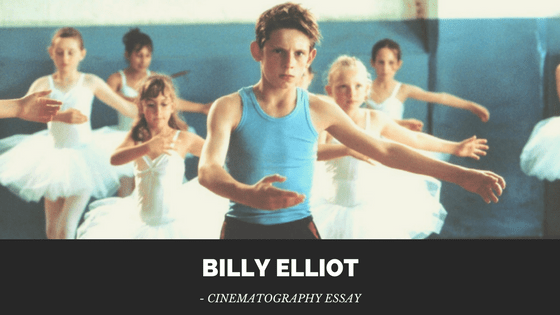
    Billy Elliot isn’t just a film about growing up and finding who you are but it’s about society clashing against the government for a better life but through the eyes of Billy Elliot. The cinematography in this film conveys a sense of power through the tilt of the lens, low- and high-key lighting (although must of the film is dull and gray), and the height of the camera itself. In Billy Elliot, the character takes us on a journey of self-discovery weather that is with his dad and how he doesn’t want Billy to do ballet, his friend coming out, or his brother giving in to the government and their coal mining strike. For this essay though, we are looking at Billy’s brother Tony (and the government) in the “London has Fallen” scene and how Brian Tufano, the cinematographer, decided to shoot it.

    (more…)

  • Killing Them Softly – Sound Essay

    Killing Them Softly – Sound Essay


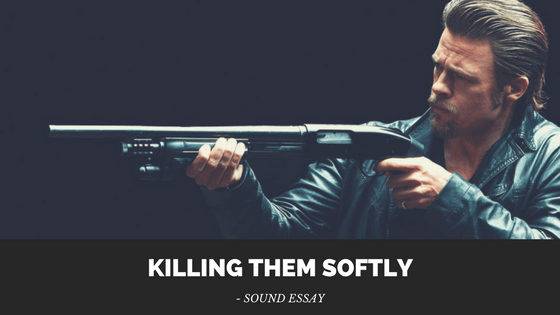
    Killing Them Softly, it’s an art-house film at its core, but I wouldn’t go as far to call it an indie. It takes place in Boston where a card game with the mob gets busted by one competent guy (Frankie) and a less than competent man (Russell). With a Catch-22 setup, it’s struggling to prove the worth of the film’s mob but the visual and sonic elements in this political influenced carefully drawn out mob thriller is different than other movies in the mob and gangster drama nowadays.

    (more…)

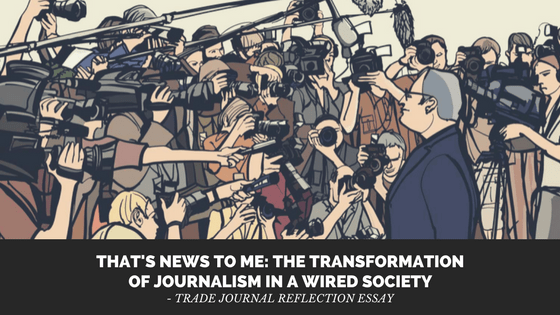
  • That’s News to Me: The Transformation of Journalism in a Wired Society – Trade Journal Reflection Essay

    That’s News to Me: The Transformation of Journalism in a Wired Society – Trade Journal Reflection Essay


    Journalism and the media applications we use and how we use them are changing whether we want it to or not. The younger generation is doing their own reporting on national events or the chicken salad they had for lunch through blogs, forums, Facebook, YouTube, and even a simple tweet; While the older generation is stuck reading the Sunday paper or tuning in for their hourly news channel. With this power to tell stories without a news network or a newspaper, anyone can say whatever he or she wants but at what cost is that to the consumer of such news.

    (more…)

  • Has Everything Changed? – Trade Journal Reflection Essay

    Has Everything Changed? – Trade Journal Reflection Essay


    Ever since the 9/11 attack that destroyed the Twin Towers in New York City, the news media has, was, and still is trying to recover from it. People aren’t afraid of the news anymore. They hunt for it and want it 24/7, but it comes at a cost especially if they wish to hear the foreign news. No more being safe and nobody listening to the news anchor because now it’s not safe and everyone can hear him speak. It’s time to be careful with your words but how do you deliver the words, so it’s not the same on every other news outlet.

    (more…)

  • How Communication Plays in my life – Personal Communication Reflection

    How Communication Plays in my life – Personal Communication Reflection


    Communication plays a huge part in my life, and that’s just not the every day, “Hi, how are you doing.” With all the different outlets and platforms for communications, YouTube has to be the biggest one for me by far especially considering my consternation is in journalism.

    (more…)

  • Drunkorexia, a Wide Spread Health Concern Among College Students

    Drunkorexia, a Wide Spread Health Concern Among College Students


    CaptureDrunkorexia “involves skipping meals, exercising heavily before drinking alcohol, taking laxatives or diuretics, or vomiting after imbibing. A study presented last week at a meeting of the Research Society on Alcoholism suggests this disturbing trend is on the rise,” as stated in CBS’s video ““Drunkorexia” a disturbing trend on college campuses.”

    (more…)