UPDATE 5/24/19
Welcome to the end of the second week of Summer. The days seem like they’re flying by … probably because of all the endless social media feed scrolling. That stuff is honestly addictive.

Ron Woodroof (Matthew McConaughey), an unlikely hero, was the cowboy of drugs, sex, and alcohol in the 1980s where the AIDS crisis started in 1981 with 270 reported cases and the World Health Organization estimating that there were up to 400,000 cases worldwide in 1989 (Avert., 2018). Ron’s Dallas Buyers Club changed everything for the AIDS epidemic by pointing out the flaws of the FDA, giving hope for those to freely live their lives, and flag shipping one of the most significant movements for the gay community. Once cowboy Ron came to realize that he had HIV, he knew he did not have time anymore to go back to his old life, a mission to stay alive began. AIDS was killing, and it did not help that the time linked homosexuality with AIDS, which gave people a more significant reason to hate the gay community further (FOCUS FEATURES., 2013). The FDA concocted the drug AZT to battle the AIDS crisis, but the amount of AZT the patients were receiving made them worse even if it worked at suppressing against the disease. The buyer’s club was being stifled by the FDA because of Ron’s experimentation with drugs to prolong his life. Ron was changing, and the turning point was when Ron started his research into AIDS. He lost many of his old friends, like T.J., in the process but gained many more even if he did not act like it, such as Rayon (Jared Leto) and Dr. Eva Saks (Jennifer Garner). Nobody could ever tell Ron who or what he is and how to live his life, he fought for that freedom. Poor, drug and sex addicted cowboy of an electrician to turning into a poor, drug distributor, and sex addicted hero of the gay community.
Philosopher Ayn Rand states, “Just as man cannot survive by any random means, but must discover and practice the principles which his survival requires, so man’s self-interest cannot be determined by blind desires or random whims, but must be discovered and achieved by the guidance of rational principles.” Those rational principles come in the form of rational egoism (or rational selfishness) the “concern with one’s own interests” and, in a film, it would be what the actor want’s that maximize their benefit. Rand says that it is not evil to pursue one’s own self-interest for life and survival as the concept does not include any moral evaluation. “The only man who desires to be moral is the man who desires to live.” She makes the argument that altruism is evil instead because it “permits no concept of a self-respecting [and] self-supporting man” and that we are only as “sacrificial animals and profiteers-on-sacrifice, [and] as victims and parasites,” (Rand et al, n.d.).
The ethical theory of egoism, mainly rational egoism/selfishness, can be seen throughout the start of the film where Ron is seen wearing extremely warn clothes, coughing, and almost seems hollow. He is gambling with fellow men like him (but something feels off particularly with Ron) at a Bull Riding Competition. The bet is on Ron’s friend, T.J., who needs to ride the bull for eight seconds in order for Ron to win. Ron is in his natural habitat, working from a distance and controlling what happens no matter what. T.J. falls on three, and Ron bolts. The men chase after him, and Ron then sees Tucker, a local cop, walking to his car. Ron rushes to his side asking him to arrest him so he can avoid the disgruntled men. “Figure it out yourself,” said Tucker. Ron then punches Tucker, and Tucker hits him twice back on the head. “Back off! I’ll rest all of you,” Tucker yells (“Dallas Buyers Club,” 2013). A few moments later, Ron was seen in the front passenger seat of Tucker’s cop car pulling up next to Ron’s trailer. Ron has gotten what he wanted, money, a show, and a grand escape all to feed his personal survival. Unless T.J. had made it to eight seconds, there was no other way Ron could have won, but by poking the bull, Tucker. This establishes where Ron comes from and who he is. Ron is a fighter literally and figuratively. He is not an evil person; it is the circumstance that he is in and probably was born into that leads him to find and rationalizes situations that will maximize his self-interest to continue his survival as Ron Woodroof. For Ron to become the unintentional hero he becomes at the end of the film, Ron’s rational selfishness is a vital part in his journey of self-preservation and ultimately helping the gay community through his own needs of medication. As Ron put it, “I got a news flash for all y’all, there ain’t nothin’ out there that can kill fuckin’ Ron Woodroof in thirty days,” (“Dallas Buyers Club,” 2013).
The theme of self-interest and Ron’s fight for survival is even more apparent when he starts his research into medicating himself from dying. Ron begins in a library researching on the topic of HIV and discovers that there was a very likely chance he obtained HIV from unprotected sex with a drug-addicted woman. He goes back to the hospital to find Dr. Saks and get possibly working drugs from out of the country which he discovered. Dr. Saks says that the drugs are not approved by the FDA; however, they are working on new test runs for a drug that could suppress HIV. Ron demands the drug AZT, but Dr. Saks says she could not give him any because the drug, again, is in testing and that he could sign up for the test, however, some patients are receiving placebos to see if the drug works which could take years. Ron says, “So, you’re tellin’ me I’m as good as a horse being sold for dog food,” and “screw the FDA, I’m gonna be DOA. Do I have to sue this hospital to get me some medicine,” (“Dallas Buyers Club,” 2013). Ron storms off but eventually finds a way to obtain AZT through a custodian in the hospital. Ron ignores any morals or laws in place and does what he can because of the possibility of dying within 30 days. He shows how far he would go to save his life. A man that looks like he never opened a book in his time, is the outcast in a library that fills him with pain. This is the first time in Ron’s life that he has to face the bull head-on. There is no escaping this and Ron has to be more conniving than he ever has been to make it out alive. As Ron continues his self-interested self, he starts to change a little at a time. He becomes smarter, more aware of what’s going on around the world, and how he can get what he needs when he needs it, inadvertently discovering the flaws of the FDA as well.
To help establish Ron’s continuous ethical path through the movie we first need to discuss the characters that he meets along the way. First, Rayon, a homosexual cross-dresser drug addict with HIV, whom Ron meets in a hospital after he has a blood transfusion due to the high consumption of drugs, alcohol and the AZT he obtained. Ron first stays distant of Rayon as he gets closer. Rayon asks if he would like to play cards and Ron agrees as long as he has cash. Ron is again trying to benefit out of a situation. Ron loses but not long after he gets a cramp in his leg that Rayon helps subdue by massaging it. Ron says thanks and tells him to go away. Ron then discovers that Rayon has been selling half of his AZT prescription for $5,000 and wanted in, Rayon will not allow it. After leaving the hospital, Ron takes advice from the custodian who was giving him AZT and eventually goes across the border to Mexico to find Dr. Vass, a doctor who lost his license and now is running a sick clinic in Mexico City. Dr. Vass keeps Ron for three months to flush his system and gives him a regiment of vitamins to increase his T-cell count. He educates Ron on how to be healthy and to stay away from any toxic crap that may decrease his T-cells. Ron takes his advice and then sees another opportunity to earn money selling these drugs back in Texas for Dr. Vass. These drugs were never listed as illegal but merely unapproved, and in no time Dr. Vass agreed, and Ron heads across the border as a priest with a car filled with pills. At the border, Ron’s car gets inspected and in comes Richard Barkley who is from the Food and Drug Administration office. Ron promises him that the 3,000 pills are his 90 days’ supply of vitamins because of his cancer and that they are only for his personal use. Barkley does not seem to buy it and counts on it that they will bust Ron, but for now, they let him go. These three characters all challenge and teach Ron as he moves through the movie, and Ron takes it all in, creating the Dallas Buyers Club for profit and a way to keep him healthy and supplied. While also eventually getting Rayon in on it as his business partner because of his connections and money.
As Ron and Rayon run the Dallas Buyers Club and get new clients, the homosexual community begins to thank Ron and show respect for him even if he is doing it for profit. He notices this but continues his selfish and “screw off” ways, which he appears to say a lot as a way of deflecting emotions of kindness from others. In a moment where Ron and Rayon were shopping for healthy groceries thanks to Dr. Vass’ advice. Ron notices T.J., but Ron lets T.J. notice him first before he says anything. T.J. is shocked that he is alive and looking healthy. He makes an offensive remark towards Rayon as he approaches both of them. Rayon says hello and extends his hand. Ron says, “This is Rayon. He said hi to you. Shake his hand, T.J., come on, buddy, what’s your fuckin’ problem?” T.J. flips off Ron, but then Ron grabs T.J.’s arm and twists it around his back forcing T.J. to shake Rayon’s hand. T.J. does it, Ron lets him go, and then T.J. walks off humiliated. Rayon stares at Ron, unsure of how to react to this and shows a smile and starts to tear up. Ron says, “what,” (“Dallas Buyers Club,” 2013). Rayon was moved that Ron stuck up for him. This is the first time in the film that Ron demonstrates an act of support to Rayon. However, it was a self-interested act as he wanted revenge on T.J. for joking to the guys that Ron might be gay in the Lonestar bar, at the beginning of the film when Ron first got diagnosed with HIV. Ron is slowly becoming the selfish hero and face of the gay community. He is hard, but he provides medicine to the people sick with HIV when the doctors will not, and he protects his clients. Ron does feel, and he is aware of the power that he has been given. So, just like the grocery store, he begins to act on his compassion and feelings a little at a time.
The peak of Ron’s hero-istic egoism is when he takes the FDA to court after the FDA seized their drugs and any information on them Ron had, countless times. The judge hears Ron’s case and Barkley his there as well. The judge says, “The law does not seem to make much common sense. If a person has been found to be terminally ill they ought to be able to take just about any drug they feel will help … but that is not the law. Mr. Woodroof, there is not a person in this courtroom who is not moved to compassion by your plight, what is lacking here is the legal authority to intervene. I’m sorry. This case is hereby dismissed,” (“Dallas Buyers Club,” 2013). Ron left the courtroom that day hollow, defeated, and tired. After everything that Ron has been through and everything that he has done, he feels that nothing has changed at all. Ron comes back to his home and is greeted with applause from almost everyone he has ever helped. Ron finally realizes, at that moment, everything that he has done.
Throughout every small encounter in the film, Ron changes ever so slightly. It started with Rayon’s blunt kindness, kids sincerely saying thank you to Ron after buying his pills, having a fun time at a gay bar, elderly HIV patients crying because there is hope, to Ron protecting Rayon from T.J., then selling his car and everything he had when prices for importing his drugs went up, and finally fighting the FDA face to face. He never let his egoism and selfishness go, but he used it in the end for good, becoming a hero of the gay community, even if he still was just that poor, white trash, sex addicted, and drug distributor he was at the beginning of the film. It takes a big event to change someone’s path in life. Unfortunately, HIV was Ron Woodroof’s event, and he fought to have the last best seven years of his life. In the end, he was the one finally riding the bull.
References
Vallée, J. (Director). (2013). Dallas Buyers Club [Video file]. United States: Focus Features.
Rand, A., & Binswanger, H. (n.d.). Selfishness. Retrieved from http://aynrandlexicon.com/lexicon/selfishness.html
Avert. (2018, November 26). History of HIV and AIDS overview. Retrieved from https://www.avert.org/professionals/history-hiv-aids/overview
FOCUS FEATURES. (2013, November 9). The Life and Times of Ron Woodroof. Retrieved from http://www.focusfeatures.com/article/the_life_and_times_of_ron_woodroof
Wikipedia. (2018, November 05). Rational egoism. Retrieved from https://en.wikipedia.org/wiki/Rational_egoism
Kotz, S. (2018, December 13). Ethical Theories—master PowerPoint. Retrieved from https://learn.radford.edu/d2l/le/content/129730/viewContent/2058655/View

Reporting and covering events for news is not always an easy task and it is something that one must build on and learn from over time. In this essay, I will be simplifying how to effectively accomplish news writing and reporting for on and off camera use, considerations that can lead to problems if not addressed, things that will surprise or frustrate someone when attempting this process, and most importantly my experience working in this system. To start, what is news, why is important, and where can one find it?

By Dylan Lepore | dlepore1@radford.edu
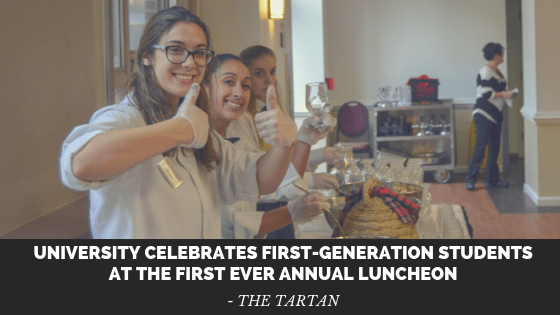
During family weekend last Saturday, Oct. 20, Radford University hosted it’s first-ever Annual First Generation Family Weekend Luncheon in the Muse Banquet Room.

Around 10:30 p.m. Saturday, March 24 the power went out at Radford University due to a blizzard surrounding the City of Radford.
The power outage first started with the sidewalk and street lights, eventually cutting off some of the building’s power entirely with emergency lights still working.


Julianna Stanley, the Student Government Association president, has extended the coat drive that SGA ran in conjunction with Helping Eradicate Homelessness through Resources Opportunities and Supplies (HEHROS) from Nov. 13-16, 2017, to include faculty.

On the one hand, there is a particular upright backbone one needs to create something out of a blank canvas to make it the masterpiece they hope it to be. While in comparison, teaching any class is a challenge for a teacher every year, but it also allows the students and the teacher to grow together.

David C. Jefferson was toting a flower delivery box while walking to the bank. When an officer came up to the man, he pulled out of the box a sawed-off shotgun; the officer shot him down before the suspect could get one off.

Opioids are an epidemic in Virginia with 1,400 opioid overdose fatalities, and of these deaths, they show a 38 percent increase from 2015, according to The Washington Post. Radford students give their say in the matter.

The recent death of Jacob Terry, a freshman due to alcohol poisoning has raised a lot of questions at Radford University of alcohol on a “dry” campus.
“Approximately 25 percent of college students report having experienced academic consequences as a result of drinking,” as stated by Radford’s SAVES website (Substance Abuse and Violence Education Support) office. “Approximately 5 percent of college students are involved with police as a result of drinking.”
Substance Abuse and Violence Education Support Services (SAVES) is Radford’s office that is dedicated to reducing negative consequences related to substance abuse and/or violence through campus-wide initiatives that address these issues and promote student success. They compile facts about substance abuse and violence, hotlines to speak with, and website links for help for students on and off campus.
Further mentioning that “Approximately 31 percent of college students met criteria for alcohol abuse and approximately 6 percent for alcohol dependence in the past 12 months based on self-report (2009 NIAAA’s Snapshot of Annual High-Risk College Drinking.
Meaning that of those 6 percent of college students they run on alcohol as a physically or psychologically need (dependence).
National Institute on Alcohol Abuse and Alcoholism (NIAAA) supports and conducts research on the impact of alcohol use on human health and one’s well-being while being one of the 27 institutes and centers that comprise the National Institutes of Health (NIH)
“I feel absolutely horrible. A guy that I’ve seen walking around campus and talked to a few times is dead.” Justin Dryer, a psychology freshman, said” I could only imagine how his family is feeling,”
“Personally, I think the idea of having a dry campus puts up a fake sense of hope for parents and prospective students. There is no such thing as a dry campus. I think consumption of alcohol is going to happen anywhere if people want it to happen.”
While Meredith Lewis, pre-nursing freshman said, “I think it’s inevitable” for the consumption of alcohol on a “dry” campus.
Radford University’s campus police provide 24-hour patrol protection on campus, parking lots, and residence halls. 172 on campus and 108 residential facilities liquor law arrests were conducted 2014 – 2016; while 657 on campus and 604 residential facilities were liquor law violations referred for disciplinary actions throughout those same years presented on Radford’s police Safety and Security Report.
“I mean they [the police] could probably do more, but there’s no way they could prevent it all, you’re dealing with college-aged kids they’re going to drink,” Lewis said.
“We need to look out for each other. Encourage each other to seek help when we aren’t doing well whether it’s academically or mentally and physically,” Dryer said.
Lewis seems to have a more educational look at the matter, “I think the best way to deal with it would be from an educational aspect. Informing to prevent the dangerous drinking, not wasting resources to get every student who drinks,” Lewis said.
“Unfortunately, it’s everywhere on campus. It truly depends on who you hang out with. There’s a 99 percent chance that someone has drugs or alcohol either in their living environment, on their person, or in their system,” Dryer said.
For more information on Alcohol and Drug abuse go to the SAVES office https://www.radford.edu/content/saves/home.html, and the hotline is 540-961-8400