Tag: games

  • Soccer Dash: Football Simulator Review — A Mobile Game Wearing Switch Clothes

    Soccer Dash: Football Simulator Review — A Mobile Game Wearing Switch Clothes


    It’s Soccer… Sort Of

    In Soccer Dash: Football Simulator, you don’t control a player—you are the ball. You aim, charge, and kick your way through 46 near-identical levels, dodging obstacles and cartoonish defenders while navigating mini golf-style mazes.

    It’s an idea that could be fun in quick bursts. But the game doesn’t evolve. It doesn’t challenge. It doesn’t respect your time—or your money.

    “I had everything unlocked in under 30 minutes. And I wasn’t even rushing.”


    Advertisements

    One Mechanic, Zero Innovation

    The game’s main feature is slow motion. You pull back on the left stick to charge a shot, then press “A” to kick. This triggers a slo-mo effect that helps you line up your path.

    You can spam this mid-air, meaning you can basically cheese your way through any obstacle. There’s no scoring, no timing challenges, no tracking—just kick, coast, repeat.

    “There’s nothing to master. No skill ceiling. Just a skill floor you never need to leave.”


    Touchless on a Touchscreen?

    This game screams “mobile port,” but bafflingly, there are no touch controls on the Switch. For a game all about tapping direction and momentum, it’s a strange omission—and one that makes it feel half-finished.

    The UI is also barebones. Your only options in the settings menu? Mute sound and mute music. That’s it.

    World Cup Without the Cup

    The “World Cup” mode lets you choose from dozens of country flags and compete with a CPU through a 4–5 match sequence. Sounds exciting—but you win nothing, there are no rankings, and the matches don’t feel any different from normal levels.

    It’s a mode that exists just to exist.

    Skins Don’t Save It

    There are 16 unlockable “ball skins,” some with minor perks like more speed or coin bonuses. One of them is a literal golf ball that’s immune to traps. But they don’t add depth. If anything, they make the already-too-easy game even easier.

    “The skins are cute. But when your game is this thin, cosmetics aren’t a fix.”


    Advertisements

    Sound Effects: One Size Fits All

    The sound design feels as lazy as the level design. Every ball—whether it’s a beach ball, a steel ball, or a soccer ball—makes the same dull thud when kicked or deflated. No variation. No charm. No immersion.

    Final Thoughts: A Game That Barely Tries

    Soccer Dash: Football Simulator is what happens when a clever core idea gets lost in poor execution. There’s potential in controlling the ball and navigating puzzle-like soccer mazes, but this game simply does not care to do more than the bare minimum.

    No par system. No level variety. No rewards. No difficulty curve. No sound diversity. No joy.

    Score: 2/10 – Painfully Basic

    It feels like an early mobile prototype rushed onto a console marketplace—without even bothering to implement touch controls on a touchscreen system. It isn’t offensively bad. It’s just lazily made and quickly forgotten.

    “You won’t hate it. But you definitely won’t remember it.”


    Soccer Dash: Football Simulator – Fact Sheet

    Release date: July 23, 2025 (Switch Store March 6, 2025)
    Reviewed on: Nintendo Switch
    Developed by: [Developer name not specified]
    Published by: Upscale Studio
    Platform(s): Nintendo Switch

    Disclosure: I received a free review copy of this product from Keymailer. All thoughts and opinions in this review are my own.

    🎮 Want to try Soccer Dash: Football Simulator yourself?
    Visit the Nintendo eShop or check availability via your Keymailer dashboard.


    Author

    Dylan Lepore is a multimedia professional, entrepreneur, and lifelong gamer who’s passionate about blending creativity with strategy. As the founder of LeporeMedia and The Part-Time Gamer, and the Business Manager at Port City Architecture, Dylan brings a unique mix of storytelling, design, and business savvy to everything he does. He lives in Portland, Maine, with his wife and his dog, Alecto.

  • RoboCop: Rogue City Review – A Flawed but Faithful Sequel

    RoboCop: Rogue City Review – A Flawed but Faithful Sequel


    TL;DR – RoboCop: Rogue City Review

    RoboCop: Rogue City is a gritty, cinematic return for the legendary cyborg cop, acting as a spiritual RoboCop 4 complete with Peter Weller’s iconic voice. It nails the tone and story with impressive cutscenes and RPG-lite mechanics, but technical issues and weak replayability hold it back. The combat is fun but too brief, especially in New Game Plus, and the lack of mission select limits replays. Still, it’s a love letter to fans and a surprisingly faithful licensed game.

    Verdict: A must-play for fans—just be ready for some rough edges.
    Score: 6/10


    RoboCop Returns in Glorious, Gritty Fashion

    RoboCop: Rogue City is the kind of surprise you don’t see coming. In a time when many licensed games feel like cash grabs or forgettable tie-ins, this one dares to deliver a full-blown cinematic experience rooted in love for the source material. It plays like a direct sequel to the original films—ignoring the reboot and stepping in as a worthy RoboCop 4. From the unmistakable voice of Peter Weller to the smog-choked streets of Old Detroit, this game is clearly made by fans, for fans.

    It’s a game that gets a lot right: the tone, the pacing, and especially the first-person feel of becoming RoboCop. But for every step forward in immersion and style, there’s a stumble in technical polish and replayability. The result is an experience that feels both authentic and ambitious, but ultimately uneven.

    Advertisements

    Authentic RoboCop Vibes

    RoboCop: Rogue City does a great job capturing the gritty, dystopian world of the classic RoboCop films. Set after the events of RoboCop 1 and 2, the story throws you into the boots of Alex Murphy once again, with new villains and conspiracy theories that feel right at home in the franchise.

    It nails that RoboCop tone—grimy streets, corrupt systems, and violent justice. What really impressed me was how faithfully it recreated iconic locations from the movies. These environments have been rebuilt from the ground up and are surprisingly detailed and immersive. It actually made me go back and rewatch the original films, which says a lot about how well the game captures the spirit of the source material.

    Peter Weller Returns as RoboCop

    One of the coolest things about this game? It’s voiced by Peter Weller, the original RoboCop himself. That alone gives the game a huge dose of authenticity. His signature monotone delivery and presence make it feel like you’re really stepping into a forgotten chapter of the movies. Fans of the franchise will absolutely appreciate hearing that familiar voice again—it’s not just a nostalgia hit, it’s a game-changer for immersion.

    This feels like RoboCop finally got the Alien: Isolation treatment.

    A Great Start with Solid Gameplay

    The first 15 minutes had me hooked. Playing in first-person as RoboCop feels right—it gives weight to every step and bullet, immersing you in his heavy, methodical presence. The pacing, music, and tone blend into something cinematic yet still fun to play. It’s reminiscent of how Alien: Isolation brought its movie world to life—this feels like RoboCop finally got that same treatment.

    Combat is satisfying. RoboCop doesn’t sprint or dive-roll—he stomps through enemies like a tank. As you level up, you can upgrade your skills and customize your Auto-9 pistol. The Deduction skill is especially useful early on for a 30% XP boost.

    Advertisements

    Customization and RPG Elements

    The skill tree is simple but effective—you’ll likely max it out by the end of the campaign. Each skill tier noticeably improves RoboCop’s capabilities, from combat efficiency to environmental scanning, making you feel progressively more powerful without overwhelming you with complexity.

    As far as customization goes, the RPG-lite mechanics are surprisingly engaging. RoboCop’s iconic Auto-9 sidearm supports swappable chip sets that alter its performance—everything from increasing damage and armor-piercing capabilities to boosting fire rate or ammo capacity. You’ll collect these chips throughout the game and use a clever mini-puzzle system to optimize how they’re slotted in. The trick is to align power flow through a circuit grid, finding the most efficient path to activate multiple bonuses at once. It adds just enough depth to reward experimentation without slowing down the pace.

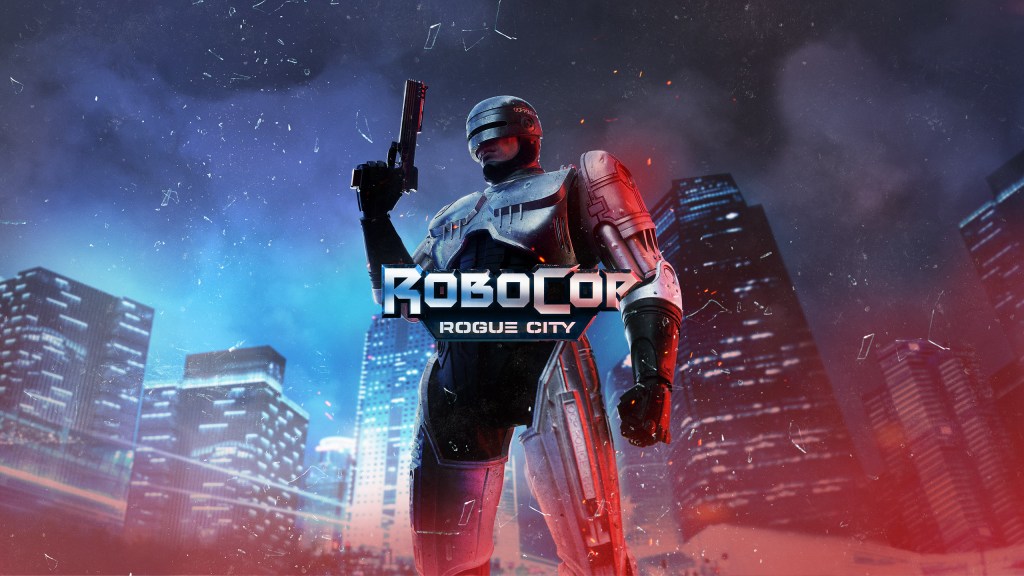
    RoboCop in Old Detroit - Rogue City screenshot

    A Cinematic but Restrictive Experience

    Beyond the action and leveling system, the game leans heavily into its cinematic roots. The cutscenes are frequent, well-acted, and beautifully rendered, often blurring the line between game and movie. This immersive storytelling works great in your first playthrough. The story even branches in some interesting ways. You can affect relationships with characters and your decisions lead to either a “good” or “bad” ending.

    This layer of choice is a great addition to the RoboCop franchise in game form. But it also introduces some technical constraints that I don’t think the developers were quite prepared for. The branching narrative adds replay value, sure, but it also complicates things like mission select, and replayability—making the absence of those features feel more like a necessary compromise than a design choice.

    New Game Plus and Replayability Issues

    But once you get towards the end of the game and New Game Plus, the pacing falters. With RoboCop already fully leveled, enemies go down almost instantly, making combat encounters feel more like brief intermissions than actual challenges. The excellent cutscenes begin to feel like barriers between gameplay, especially when you’re just in the mood for some RoboCop-style carnage. Those moments of explosive action become too brief simply because of how overpowered you are.

    New Game Plus should’ve been a chance to relive the best moments with more freedom. Instead, it’s more of the same—and too easy. Once you’ve maxed out your skills and gear, even the hardest difficulty becomes a walk in the park.

    As mentioned before, there’s no level select or mission replay, which is a major oversight—especially in a game with such strong cinematic highlights. If you want to relive a specific shootout or story beat, you have to replay the entire campaign from the beginning. A sandbox or freeplay mode would’ve added a lot of value, especially for players who prefer gameplay over story or just want to flex their fully-upgraded RoboCop in combat.

    A dedicated practice mode or combat simulator could’ve solved this, offering quick access to action without narrative interruptions. There is one section of the game that does something close to this—and it’s a blast—but it ends up feeling more like a tease than a feature. Its presence only emphasizes how much the game would benefit from more of that kind of content.

    Combat gameplay in RoboCop Rogue City

    Ambitious World Design, Uneven Execution

    The game tries to walk the line between open-world exploration and a linear narrative. Some zones feel lively and well-integrated, offering side missions, interactive NPCs, and environmental storytelling that expands the RoboCop universe in interesting ways. However, this semi-open structure often clashes with the more rigid, cinematic pacing of the main story.

    Dialogue doesn’t pause when you walk away, and characters don’t repeat lines—so if you miss something, it’s gone. This leads to moments where the storytelling and gameplay feel out of sync. For instance, you may stumble across a meaningful side activity only to find it undercut by your current story objective or accidentally miss important narrative beats by straying too far off the path.

    It’s like the game wants to be both things at once—story-driven and semi-open—but doesn’t quite stick the landing. The lack of dynamic systems or reactive world-building means exploration can sometimes feel flat, and you’re left deciding whether to slow down for immersion or risk missing content entirely. A more focused structure or better integration of open-world elements could have really elevated the experience.

    Advertisements

    The Technical Glitches Hurt the Experience

    As fun as it is, the game isn’t without its issues—and they can pile up fast. Frame rate drops are common, especially during high-intensity scenes or crowded environments, which undercuts the game’s cinematic momentum. One particularly frustrating bug caused the right stick to stop responding entirely, meaning I couldn’t turn the camera—mid-fight or while exploring, that’s a dealbreaker.

    The audio also suffers: voice lines sometimes crackle, sound effects cut out, and lipsync frequently drifts out of sync during dialogue. Add in the occasional flickering textures or glitches, and immersion starts to crumble. If this game ever had a VR version, the performance alone would make it nauseating.

    Most of these issues can be temporarily resolved by restarting the game, but that’s no real fix. It disrupts the flow of gameplay and can make progress feel tedious rather than rewarding. For a title that relies so much on atmosphere and presentation, these technical flaws stand out even more. The developers clearly have a strong foundation here, but they absolutely need to follow up with patches and performance updates to let the experience shine the way it was meant to.

    Final Thoughts: A Love Letter to RoboCop with Room for Improvement

    RoboCop: Rogue City is clearly made by people who love the franchise. The visuals, the tone, Peter Weller’s return, and the general feel of the game all come together in a way that really honors the movies. It absolutely succeeds at making you feel like RoboCop.

    But as strong as the heart is, the body still needs work. Technical bugs, lack of quality-of-life features like mission select, and shallow replayability keep it from being a truly great game. With a little more refinement—like a training mode, improved pacing, and patching out the glitches—this could’ve been a definitive RoboCop experience.

    6/10 – Okay

    Rating: 6 out of 10.

    With a few patches and a little more content, it could easily be a 7 or even 8. As it stands, it’s a rough but lovable tribute to an ’80s icon—and definitely worth playing for fans of RoboCop.

    RoboCop: Rogue City
    Release date: November 2, 2023
    Reviewed on: PlayStation 5
    Developed: Protostar
    Published by: Teyon
    Platform(s): PlayStation 5, Xbox Series X and Series S, GeForce Now, Microsoft Windows, Amazon Luna, Mac operating systems


    Author

    Dylan Lepore is a multimedia professional, entrepreneur, and lifelong gamer who’s passionate about blending creativity with strategy. As the founder of LeporeMedia and The Part-Time Gamer, and the Business Manager at Port City Architecture, Dylan brings a unique mix of storytelling, design, and business savvy to everything he does. He lives in Portland, Maine, with his wife and his dog, Alecto.

  • DragonFly Games Website

    DragonFly Games Website


    DragonFly Games

    Launched: February 19, 2019

    Launch Project (6)

    The Journey 

    Absolutely amazing job! Our website turned out much better than I ever could have expected. Easy to work with and always professional and personal with amazing attention to detail. Expert advice and knowledge to make our website an amazing experience. Our site is our companies home and Dylan made our home beautiful, clean, and a reflection of our company! – Jay Cameron, DragonFly Games Studio


    Working with DragonFly Games has been one of the best freelance experience I have ever had in my years running The Part-Time Gamer.

    In The Beginning

    Jay Cameron, Project Lead, initially reached out to me because they were looking for written copy to promote their upcoming game Beyond the Oaks and to share their development process. The copy was meant to help as a guide for other indie developers to share their imagination with the rest of the world.

    Jay then realized that I also provide web design services. He started working on a website using Webflow, which at the time I never worked with, but Jay liked the e-commerce features and the other tools they provide.

    So, thus work began. I took inspiration from other developer sites such as Campo SantoBungie, and Insomniac GamesWebflow University was also a big help; however, I still Googled and YouTubed for a lot of questions.

    After working with Webflow for the past four months, it far out complicates WordPress and Wix, but anything is better than Wix.

    Features

    The site was created from the ground up starting with a blank canvas.

    The website features a Home Page, Beyond the Oaks Page, About/Contact Us Page, and a Store. The video tab directs to their YouTube channel, and the Blog is hosted on Medium due to convenience, time, and money.

    Working with Webflow’s e-commerce tools was a challenge at first because of how unfamiliar I was to its mechanics. Through trial and error, I managed to create a clean shop that represents DragonFly Games and the products they provided.

    The site was designed to be one thing: a showcase of their work, not blocks of text.

    For users on desktops, tablets, or smartphones the website is set up for each device so the desktop version is not made for the smartphone and vice versus.


    Let Your Website Be LeporeMedia‘s Next Project!

    LeporeMedia is a media service agency, built for the now. We drive businesses, non-profits, families, and individuals into the world to craft and garner attention and culture – bringing heart and hustle, to get brands and people the awareness and professional service they deserve.

  • Violent Videogames, Mass Shootings, and the Blame Game

    Violent Videogames, Mass Shootings, and the Blame Game


    A Research Synthesis essay.

    My topic is on videogames and why violent videogames cannot be blamed for causing real-world acts of violence such as the school shootings of the recent past. It is known that most young people in this generation one way or another play videogames, whether that be a big budget AAA game or Solitaire on their smartphones. Moreover, most of these games contain some sort of violence one way or another; the game Whac-A-Mole is an arcade cabinet that involves bashing a hammer into the head of a small burrowing mammal with tiny eyes. The point is that I have to first acknowledge that violent videogames and violence in these games do exist, however, violent videogames have never been the cause of violence (Ferguson Christopher J., a., 2014) and have shown little to no proven research that videogames cause acts of violence (Calvert, S. L., et al, 2017).

    The main reason I chose this topic for my Research Synthesis Assignment is that in the past month (March 2018) President Donald Trump said, “I’m hearing more and more people saying the level of violence on video games is really shaping young people’s thoughts,” said Trump. “And then you go the further step, and that’s the movies. You see these movies — they’re so violent, and yet a kid is able to see the movie if sex isn’t involved but killing is involved.” Now as a person with a deep passion and love for videogames I tend to hear these arguments a lot, and so I dug to find the truth in this “blame game.” In the great words of Michael Che, one of the hosts of SNL’s Weekend Update, “I grew up playing ‘Mario Brothers.’ But I never had the urge to curb stomp a turtle. Though I did grow up with a kid that played ‘Pac Man’ all day. And now he’s addicted to pills and sees ghosts everywhere [Che said sarcastically].”

    I noticed that I needed five scholarly articles but a minimum of eight sources for my Research Synthesis Assignment and I was a little scared that I would not find anything, but I was determined to find papers on the subject because there was bound to be a professor that played Tetris at some point in their lives enough to write about it. I went straight to the McConnell Library database and searched “videogames” in the hope that something would come up while already knowing that there would be a ton of articles from magazines, specifically 51,824 results, but that, of course, was not what I was looking for. I refined the search of the publication date to 1985 to 2018 mostly in part of the Nintendo Entertainment System released in 1985, but more precisely this is when the public eye started to talk about violence in videogames more rapidly. Then going to the “Limit To” section and checking the “Scholarly Journals” box. There were 16,298 results, so I was feeling good about my chances of finding something. Now I took the last step in refining my search, looking up “Videogames and violence” which appeared as the second most recommended search result showing 1,364. I eventually figured out the three points about this topic I want to prove or make clear, which are—1) I am not saying that violent videogames do not have any effect on violent behaviors, thoughts, or actions but they might be a factor. 2) The time we spend playing videogames may have cause for bad health or emotional problems but little real-world violence, such as school shootings. Lastly 3) parents research in videogames rating and playability while also research in their children’s health and needs may help determine if or what videogames are right for their children to play because videogames have shown to help the developmental process of kids (Hughes, E. 2014). In other words, too much of anything can be bad; water is the best thing in the world, but too much water can cause sickness or even death which is known as ‘water intoxication.’

    I first read “Rage Against the Machines: The real danger of videogames isn’t violence; it’s swindling” it wasn’t what I was looking for in terms of explicitly discussing violence in videogames but went on to discuss why videogames are used to swindle people into giving in to the machine with free-to-play and pay-to-win games, to even the 1970’s coin-op arcade cabinets, such as the Whac-A-Mole I previously mentioned. It also went into how someone would keep paying even if the games primary goal is to get the player out of the game as soon and fast as possible so he or she can put more money back into the machine (Bogost, I., 2014). Although interesting, it did not help my case. Then I got a little closer to what I was looking for but not fully there yet as the journal “Revisiting violent videogames research: Game Studies perspectives on aggression, violence, immersion, interaction, and textual analysis” states it’s looking for better research methods into researching about violence in videogames but doesn’t state it’s stance saying “whether this will ever be attempted, whether it is possible, and whether the results would be anything other than a dog’s breakfast, is of course something that remains to be seen. However, it seems prudent to attempt to move the conversation on violent digital games forward in a way that will be of benefit to researchers in both camps, and toward policy that takes into account the broader complexity of gaming as it has come to be,” (Kyle, K., 2009). So far, I can only find “predictors” of playing violent videogames, but there is no definite or even guessed answer yet. I searched further. I then narrowed my search from 2010 to 2018.

    Now as this Research Synthesis dives deeper into the research of videogame violence dates become more important in determining how far the research has come in discovering if violent videogames cause acts of violence. Instead of starting with the release of the ESRB rating system of 1994 (Kohler, C., 2009) I want to jump ahead in the research to the Brown v. Entertainment Merchants Association of 2010. Former-California Senator Lealand Yee and Former-California Gov. Schwarzenegger, yes that Schwarzenegger, made a bill that would further allow the government control over the distribution of violent videogames to minors by banning the sale altogether (Brown v. Entertainment Merchants Assn., 08-1448). While each state has the decision to not sell games to children who do not follow the ESRB guidelines the Supreme Court found that “Like the protected books, plays, and movies that preceded them, video games communicate ideas — and even social messages — through many familiar literary devices (such as characters, dialogue, plot, and music) and through features distinctive to the medium (such as the player’s interaction with the virtual world). That suffices to confer First Amendment protection,” said Antonin Scalia, late Associate Justice of the Supreme Court of the United States. The reason I bring this up is that it is a significant win for the videogame industry proving that videogames are an art form and that the “violent speech” in videogames just like books and other mediums cannot be censored in accordance to the First Amendment.

    My second source titled “Violent video games and young people,” said that “a 2001 report of the U.S. Surgeon General on the topic of youth violence found an association between violent video games and increased aggressive thinking and behavior in youths” and because of this report people during the time of 2001 and after were “assuming that tragic school shootings prove a link between such games and real-world aggression,” (Harvard Mental Health Letter, 2010).  Even though this source does not help my argument about violent videogames, it does show why people could be quick to believe what they hear to justify or give reason to the events that happened in Columbine and Heath High School. My next source goes on to mention a report by Christopher J. Ferguson,  a psychology professor at Texas A&M International University, titled “Violent Video Games and the Supreme Court: Lessons for the Scientific Community in the Wake of Brown v. Entertainment Merchants Association,” where the reports on violent videogames to real-world violence “were unable to demonstrate a cause and effect relationship between video game violence and aggression in youth,” (Ferguson, C. J. 2013). This source helps analyze the court case I mentioned before and counters the 2001 report in my favor.

    Now it seems that I am at square one again still with no definite answer that violent videogames cause real-world acts of violence. The next source I found was on the right track for what I was looking for, “Violence, Crime, and Violent Video Games: Is There a Correlation?” It takes apart arguments stating that “The concerns about the effects of violent video games on aggressive thought patterns, emotions, and behavior are justified. Until now, no study has been able to show that exposure to violent digital games is associated with an increase in criminality, aggressiveness, or violent behavior. Nevertheless, these paradoxical results are not incompatible.” It goes on to state that violent videogames maybe a factor with violent behaviors, but it is no way the cause of these behaviors including that “the research is inconsistent, and thus psychiatrists may wish to be more careful in their public statements linking violent digital games to harm. There is indeed a lack of scientific data dealing with the relationship between violent video games … more research is needed before we can fully understand the influence of violent video games on real life,” (Fournis, G., et al, 2014). It was interesting that this article was not available on the McConnell Library databases but was listed, does Radford have a bias towards videogames? Anyways, I later found Whitney Decamp, WMU associate professor of sociology and associate director of the Kercher Center for Social Research, who researched the matter of younger kids who play violent videogames titled “Who plays violent video games? An exploratory analysis of predictors of playing violent games,” (2017).

    Decamp said that “the young males in my research were in grades eight and 11. I found that just by themselves, even without any controls, violent video games were a poor predictor of violent behavior,” said DeCamp. “Even in the best model, it only explained about 3 percent of the variation in violent behavior” and “after controlling for other factors,” he says, “I found that not only were the effects very weak in comparison with other ones, they were mostly non-significant after you included those other controls.” Decamp found out that there was a better predictor of violent behavior at home rather than blaming videogames. Another interesting research that DeCamp and Ferguson got together for was called “The Impact of Degree of Exposure to Violent Video Games, Family Background, and Other Factors on Youth Violence,” and it said that “a meta-analysis consolidating these effects indicated that increased time playing violent video games does not significantly affect the risk of violent behavior. Rather, it is the social and familial background that seems to play a larger role in determining risk of violent behavior instead of video games,” (2017). In a funny way “the present study identified a curious effect: the more time males spent playing violent games, the less likely they were to engage in a group fight,” which he admits that it could be just a statistical anomaly or it could be when a release of a popular violent videogame comes out, and that research seems to suggest that crime rates actually decrease during that time.

    Lastly, going back and commenting on what Trump said and referring back to the many sources and research papers that have repeated themselves multiple times Mark Appelbaum, an emeritus professor of psychology at the University of California San Diego and the chair of a 2015 American Psychological Association Task Force on Violent Media, puts it together nicely, saying that, “The short answer is there is virtually no research” on whether or not videogames cause violent acts like school shootings. Also, that “there is no scientific evidence that confirms or disconfirms that speculation.” But with the research of the American Psychological Association Task Force on Violent Media in the “Technical Report on the Review of the Violent Video Game Literature” it states that “the APA Task Force on Violent Media has determined that there is sufficient evidence to indicate that these effects appear in older children, adolescents and young adults; however, there remains a dearth [a lack] of studies that examine these effects in children younger than age 10 or that attempt to examine the developmental course of the effects.” Essentially, there is “no single risk factor [that] consistently leads a person to act aggressively or violently. Rather, it is the accumulation of risk factors that tends to lead to aggressive or violent behavior,” (Calvert, S. L., et al, 2017).

    In conclusion, even after 48 years we still don’t have an answer to whether violent videogames are the cause of real-world acts of violence such as school shootings but from what we do have the evidence seems to put out that the positives of videogames out way the negatives. Ferguson says he supports DeCamp’s view, and those violent videogames may help reduce societal violence rather than increase it.” Basically, by keeping young males busy with things they like, you keep them off the streets and out of trouble,” said Ferguson, but the bottom line is that parents and people, in general, need to know that “we need to take a lot of caution before we place the blame on any one particular thing,” said DeCamp (Scutti, S. 2018). While, Ferguson noted that “almost all young males play violent video games,” and yet the majority are not committing crimes. The goal of videogames is to be as inspirational as the cinema, as imaginative as a book, and as abstract as music and sound. It is important to realize that videogames are art which we saw from Brown v. Entertainment Merchants Association and that art has many interpretations, but it is never to harm anyone, instead to share with others and have ideas that keep us thinking, not hurting.

    Photo Credit: (Jamakassi on Unsplash)

    References

    Bogost, I. (2014). Rage Against the Machines: The real danger of videogames isn’t violence; it’s swindling. The Baffler, (24), 96-103. Retrieved from http://www.jstor.org.lib-proxy.radford.edu/stable/43306893

    Bourgonjon, J., Vandermeersche, G., & Rutten, K. (2017). Perspectives on Video Games as Art. Clcweb: Comparative Literature And Culture, (4), https://pdfs.semanticscholar.org/f574/efd7cfef6814a7caaa7a5209819626a3595a.pdf

    Calvert, S. L., Appelbaum, M., Dodge, K. A., Graham, S., Nagayama Hall, G. C., Hamby, S., & … Hedges, L. V. (2017). The American Psychological Association Task Force assessment of violent video games: Science in the service of public interest. The American Psychologist, 72(2), 126-143. doi:10.1037/a0040413 http://psycnet.apa.org.lib-proxy.radford.edu/fulltext/2017-07146-003.pdf

    DeCamp, W., & Ferguson, C. (2017). The Impact of Degree of Exposure to Violent Video Games, Family Background, and Other Factors on Youth Violence. Journal Of Youth & Adolescence, 46(2), 388-400. doi:10.1007/s10964-016-0561-8 https://ee46fd3b-a-62cb3a1a-s-sites.googlegroups.com/site/tbdresearch0/2017idevvg.pdf?attachauth=ANoY7cr0_nWSNJ9lFRCYdHQ51r5geSObKqevHNkvQaRI6krcaMcY3ItHyDj_sd584nORu92VcJiCDVLYilp2TZdS2AnYImMNDZYLAiqHyy20oRK3IYWUafsnYdOv6duN7X_ufy31LQGBnDORP4d0kRC6A6FdcxzThPwzGKgRKTN6CUviA9Ahoc7Vs03mmb045gRkEAlsKqjEYGY0QsteKpUAJoosx0xsXg%3D%3D&attredirects=0

    Ferguson Christopher J., a. (2014). Violent Video Games, Mass Shootings, and the Supreme Court : Lessons for the Legal Community in the Wake of Recent Free Speech Cases and Mass Shootings. New Criminal Law Review, (4), 553. doi:10.1525/nclr.2014.17.4.553 http://nclr.ucpress.edu/content/17/4/553.full.pdf+html

    Ferguson, C. J. (2013). Violent video games and the Supreme Court: lessons for the scientific community in the wake of Brown v. Entertainment Merchants Association. The American Psychologist, 68(2), 57-74. doi:10.1037/a0030597 http://psycnet.apa.org.lib-proxy.radford.edu/fulltext/2013-04752-001.pdf

    Fournis, G., & Abou, N. N. (2014). Violence, Crime, and Violent Video Games: Is There a Correlation?. Psychiatric Times, 31(9), 1-4. http://www.psychiatrictimes.com/cultural-psychiatry/violence-crime-and-violent-video-games-there-correlation

    Hughes, E. (2014, April 24). Effect of Video Games on Child Development. https://my.vanderbilt.edu/developmentalpsychologyblog/2014/04/effect-of-video-games-on-child-development/

    Kohler, C. (2009, July 29). July 29, 1994: Videogame Makers Propose Ratings Board to Congress. https://www.wired.com/2009/07/dayintech_0729/

    Kyle, K. (2009). Revisiting violent videogames research: Game studies perspectives on aggression, violence, immersion, interaction, and textual analysis. Digital Culture & Education , Vol 1, Iss 1, Pp 6-30 (2009), (1), 6. https://doaj.org/article/f41d5b3b300344549f754026c469d36b

    Scutti, S. (2018, February 22). Do video games lead to violence? https://www.cnn.com/2016/07/25/health/video-games-and-violence/index.html

    Violent video games and young people. (2010). Harvard Mental Health Letter, 27(4), 1-3. http://eds.a.ebscohost.com.lib-proxy.radford.edu/eds/pdfviewer/pdfviewer?vid=3&sid=f82c1a5d-0812-4ca5-a9d0-3a286759fa77%40sessionmgr4009


  • Videogames Cause Violence, Not This Again!

    Videogames Cause Violence, Not This Again!


    Due to the school shooting in Parkland, Florida, responsible for the loss of 17 lives, Donald Trump held a meeting at the White House informing the public of the threat of semi-automatic weapons, mentioning that violent videogames maybe to blame.

    (more…)