There’s something about Noah Baumbach’s movies that makes you want to stay as far away from his characters as humanly possible.
I didn’t even realize Baumbach directed Margot at the Wedding until after I had started watching it. But throughout the film, I kept thinking there was something incredibly familiar about its style, dialogue, and characters. When I finally saw who directed it, everything clicked.
This is a Noah Baumbach movie through and through.
The Noah Baumbach Fingerprint
The story follows Margot (Nicole Kidman), who arrives with her son Claude (Zane Pais) at her estranged sister Pauline’s (Jennifer Jason Leigh) seaside home ahead of Pauline’s wedding to Malcolm (Jack Black). What should be an opportunity for a family reunion instead becomes a mess of arguments, resentment, secrets, and painfully uncomfortable conversations.
Much like The Squid and the Whale and Marriage Story, this film is populated almost entirely by selfish, emotionally immature people who seem incapable of maintaining a healthy relationship with anyone around them. These characters have the emotional maturity of five-year-olds, and nearly every interaction becomes another opportunity for somebody to say something unnecessarily cruel.
Quite frankly, the only redeemable character might be the dog. Considering the people it has to live with, I can’t blame it for running away.
But that is also what makes Baumbach’s movies so distinctive. His films often feel like stage plays brought to the screen. The dialogue is theatrical, the characters are deeply flawed, and the drama unfolds through conversations that alternate between funny, uncomfortable, and downright exhausting. There’s a rhythm to his writing and directing that makes his work instantly recognizable.
Even when his characters are completely insufferable, he manages to give them enough depth to make their behavior worth examining. They’re not necessarily likable, but they’re recognizably human.
A Cozy Autumn Film About Terrible People
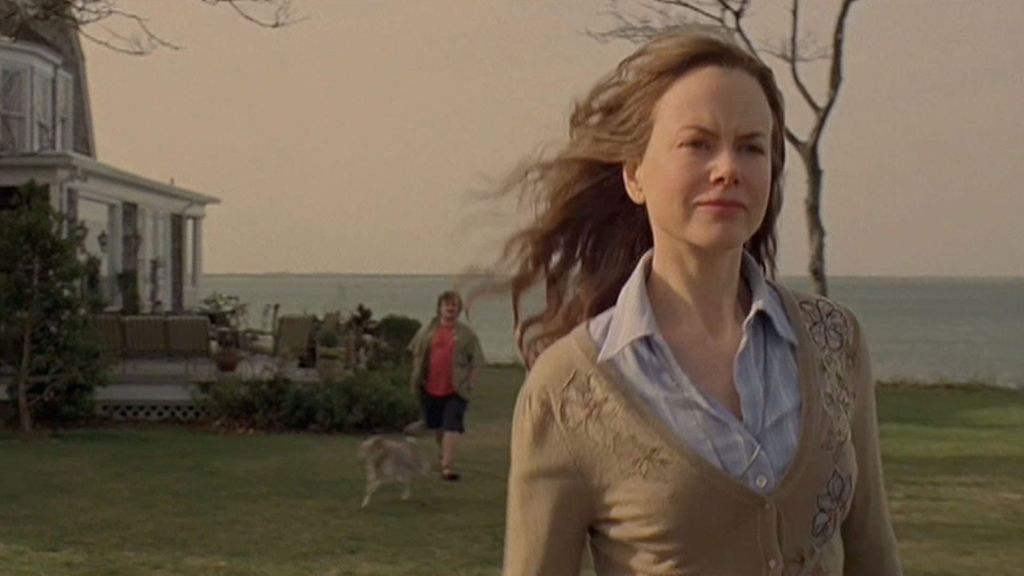
Visually, I thought the movie was wonderful. Baumbach has a talent for creating environments that feel lived-in, intimate, and strangely comforting. There’s something about the cinematography, locations, and overall atmosphere that captures that unmistakable mid-2000s independent-film aesthetic.
Margot at the Wedding almost looks like a cozy autumn movie. It’s the kind of film you could imagine revisiting on a quiet fall afternoon. Everything about its presentation feels warm and inviting.
And then the characters open their mouths.
Suddenly, that cozy atmosphere becomes a front-row seat to some of the most exhausting family drama imaginable. It’s the kind of dysfunction that makes you appreciate not being involved in these people’s lives.
There were genuinely funny moments, and I found myself laughing at the absurdity of certain interactions. But there were also plenty of moments when I was simply wondering why everyone had to be so awful to one another.
When Drama Stops Moving the Story
My biggest criticism is that the movie doesn’t always seem to know what to do with all that dysfunction.
There are numerous narrative threads, suggestions of deeper conflicts, and moments that seem to foreshadow something important. Yet some of those developments never seem to lead anywhere particularly meaningful. Characters argue, relationships deteriorate, and new conflicts emerge, but I often found myself wondering what had actually been accomplished.
At times, it feels like there’s drama simply for the sake of having drama.
I understand that the lack of resolution might be intentional. Real families don’t neatly resolve their problems in 90 minutes, and Baumbach has never been particularly interested in giving audiences uncomplicated emotional closure. But there’s a difference between deliberately leaving things unresolved and creating a narrative that occasionally feels directionless.
A Cast Playing the Same Uncomfortable Game
I also found it difficult to single out any particular performance. Kidman, Leigh, Black, and the rest of the cast are all operating within the same world of emotional dysfunction. They’re convincing in their roles, but their characters are so consistently unpleasant that no one really emerges as somebody worth rooting for.
Everybody is playing the same game, even if some characters get the worst of it. I kept thinking: I do not want to know any of these people in real life.
Final Thoughts
Ultimately, I liked Margot at the Wedding, although I wouldn’t place it above Marriage Story or The Squid and the Whale. It has all the quirks, personality, and visual appeal I’ve come to associate with Baumbach’s work, and there’s something undeniably rewatchable about its particular brand of mid-2000s independent cinema.
What I’m still wrestling with is whether a film successfully making me dislike nearly everyone in it automatically makes it a successful film. It certainly made me think. It kept me engaged, made me laugh, and gave me plenty to analyze afterward. Its characters might be unbearable, but the filmmaking itself is anything but.
I suppose that’s the strange achievement of Margot at the Wedding: it makes you want to spend more time in a world populated by people you’d never want to spend five minutes with in real life.
FINAL REVIEW SCORE
6/10 — Okay, But Worth Watching
Beautifully shot, sharply written, and unmistakably Baumbach. Its atmosphere and uncomfortable humor make it engaging, even when the characters and wandering plot test your patience.
Movie Facts
- Film: Margot at the Wedding
- Year: 2007
- Writer and director: Noah Baumbach
- Starring: Nicole Kidman, Jennifer Jason Leigh, Jack Black, John Turturro, Zane Pais
- Cinematography: Harris Savides
- Genre: Comedy-drama
- Runtime: 92 minutes
- MPA rating: R
More Movie Reviews
For more stories about complicated families, read my review of What Maisie Knew. For a much warmer take on family, see my review of Nonnas. You can also browse all my movie reviews.
Watch the Trailer
Featured image: Film still from Margot at the Wedding (2007), © Paramount Vantage; via The New Yorker.


Leave a Reply