

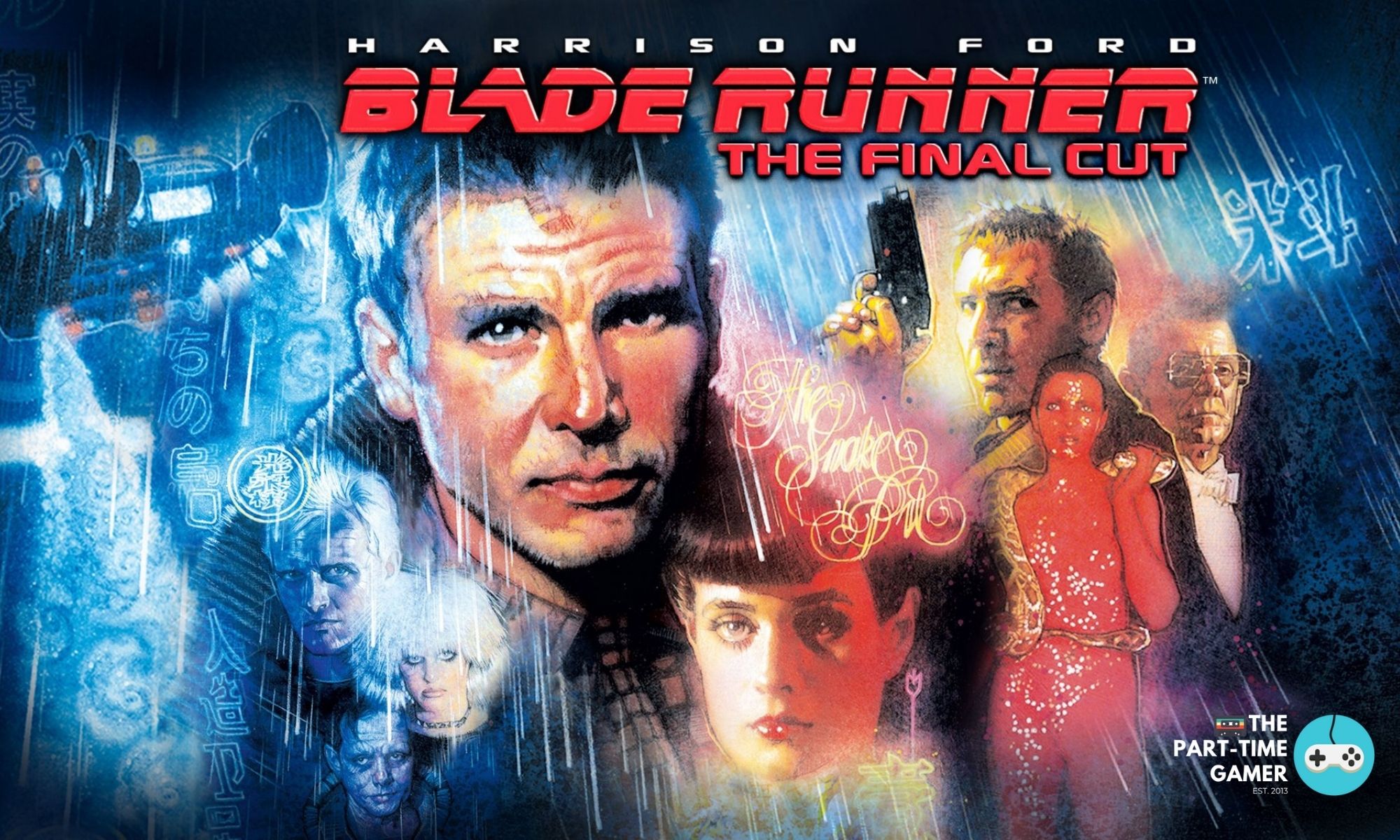
Ridley Scott’s Blade Runner: The Final Cut isn’t just a science fiction classic—it’s a cornerstone of cyberpunk cinema and one of the most visually influential films ever made. Set in a dystopian 2019 Los Angeles, it explores artificial life, identity, and morality in a decaying, neon-drenched future.
This version—the 2007 Final Cut—is the definitive edition. It reflects the director’s original vision, with restored footage, updated effects, and crucial changes that deepen its emotional weight and thematic ambiguity.
“Spoiler Warning: This review contains major plot details. If you haven’t seen Blade Runner: The Final Cut, consider watching it first before continuing.”
A Noir Future Full of Questions
The film follows Rick Deckard (Harrison Ford), a weary ex-cop pulled from retirement to track down and “retire” a group of rogue replicants—genetically engineered humanoids designed for labor and war. These replicants are the Nexus-6 models: biologically superior to humans but limited to a four-year lifespan.
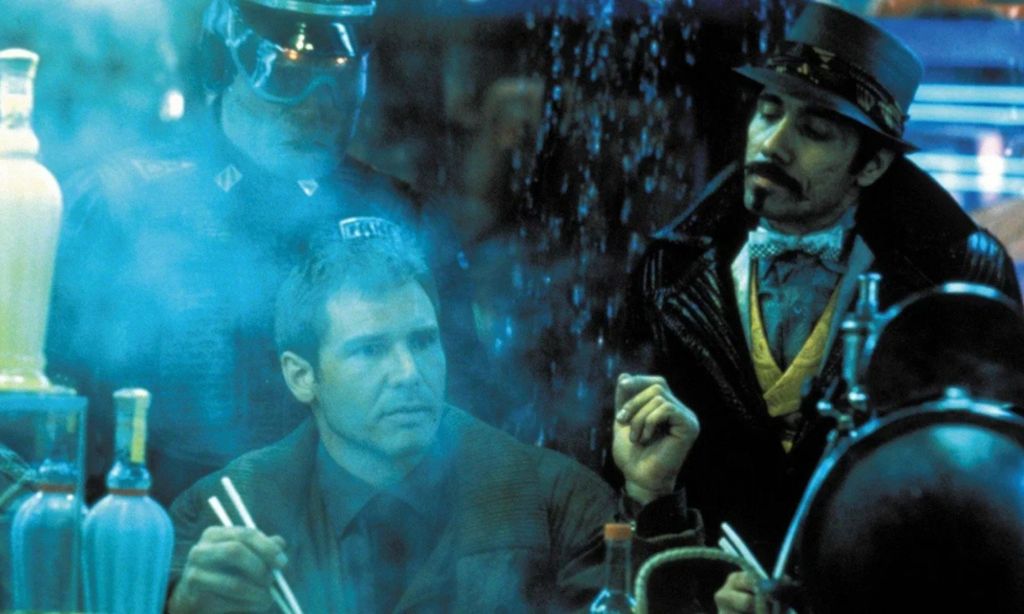
Unlike typical sci-fi thrillers, Blade Runner doesn’t rely on explosions or fast pacing. It moves slowly, deliberately. It wants you to soak in every rain-drenched neon sign and polluted skyline. That’s part of its hypnotic charm.
And yet, it’s not an easy film to follow. Nothing in Blade Runner is truly certain. The story unfolds in fragments and implications, demanding your attention. You have to rewatch it—because every time you do, you catch something new. A glance. A phrase. A small moment that recontextualizes everything.
It’s also a film filled with contradictions. Deckard is just a man—or maybe not. The replicants are just machines—or maybe not. The story seems simple, but the longer you think about it, the deeper it gets.
Roy Batty: The Replicant Who Stole the Show
Roy Batty (Rutger Hauer) is the film’s philosophical and emotional core. As the leader of the escaped replicants, he’s a soldier, a killer, a poet, and—most of all—a man who knows he’s dying.

His final confrontation with Deckard is more spiritual than violent. And in his final act—saving Deckard—he transcends his programming. His “Tears in rain” monologue, largely improvised by Hauer, is arguably one of the greatest moments in cinematic history:
“All those moments will be lost in time, like tears in rain.”
The other replicants—Pris (Daryl Hannah), Leon (Brion James), and Zhora (Joanna Cassidy)—each contribute to the film’s emotional texture. They’re not just villains. They’re confused, desperate, and dangerously self-aware. They’re children in adult bodies—strong, intelligent, but emotionally raw. Their rebellion isn’t just against humans—it’s against fate.
And that’s what makes Roy’s arc so powerful. At the end, he doesn’t kill Deckard—not because he can’t, but because he chooses not to. It’s not worth it. He’s seen enough death. He’s tired. He’s at the end of his rope, and in that moment, he becomes more human than the humans trying to destroy him.
What Makes Us Human?
Rachael (Sean Young), a replicant who believes she’s human, forces Deckard to confront his own identity. Their unsettling romance adds layers of tension and vulnerability. Her presence challenges everything Deckard thinks he knows—not just about replicants, but about himself.
And then there’s the big question: Is Deckard a replicant?
Blade Runner: The Final Cut leans toward yes. The unicorn dream sequence, paired with Gaff’s (Edward James Olmos) origami unicorn, strongly implies Deckard’s memories were implanted. But the film doesn’t confirm anything. That ambiguity is the point.
“It doesn’t matter if Deckard is human. The point is that we’re still asking by the end.”
And that’s what makes this film so special. It doesn’t hand you answers. It invites you to wrestle with questions that don’t go away. Questions about life, memory, purpose, and identity.
Deckard takes a beating throughout the film—more than you’d expect from a regular human. Some viewers point to that as another clue that he’s a replicant. But maybe the replicants are holding back. Maybe they’re dying. Maybe Deckard just got lucky. The line between man and machine is deliberately blurry.
Aesthetic and Legacy
Visually, Blade Runner is unrivaled. It created the modern cyberpunk aesthetic—gritty, industrial, crowded, and soaked in neon rain. The world feels lived in, decayed, and yet still full of life. It’s a nightmare of the future, but it’s also weirdly beautiful.
Ridley Scott and cinematographer Jordan Cronenweth crafted a city that doesn’t just look iconic—it feels real. You don’t just see it—you can almost smell the smoke and feel the wet pavement under your feet.
Vangelis’s score is equally iconic. It’s a blend of futuristic synths and haunting melodies that fills the film with desolation. It doesn’t just accompany the movie—it becomes part of it.
“Blade Runner doesn’t just show you a world—it pulls you into it and refuses to let go.”
Final Thoughts
Blade Runner: The Final Cut isn’t for everyone. It’s slow. It’s dense. It’s unclear. Some of its effects haven’t aged perfectly. But for what it’s trying to do—for the experience it creates—it’s perfect.
This is a movie you study, not just watch. A movie you keep coming back to because it won’t stop echoing in your head.
It’s filled with layers upon layers: metaphor, mystery, philosophy. It’s about artificial intelligence, yes—but more than that, it’s about the human condition. About memory. About the search for meaning in a life that might be manufactured. It’s about what makes us real.
“A flame that burns twice as bright burns half as long—and you have burned so very, very brightly.”
There’s never been another movie quite like it, even though so many have tried. From The Matrix to Cyberpunk 2077, you can see its fingerprints everywhere. But Blade Runner stands alone—its atmosphere, tone, and questions still unmatched.
Final Score: 10/10 – Masterpiece
A flawless, atmospheric sci-fi masterpiece that doesn’t just ask for your attention—it demands your contemplation. Every frame, every whisper of synth, and every question it raises rewards those willing to listen, watch, and think deeply. Decades later, Blade Runner: The Final Cut still leaves its mark—not just as a film, but as a philosophical experience.
Movie Facts: Blade Runner: The Final Cut
- Released: 2007 (Final Cut version)
- Original Film Release: 1982
- Director: Ridley Scott (Alien, Gladiator)
- Screenplay: Hampton Fancher & David Peoples
- Based on: Do Androids Dream of Electric Sheep? by Philip K. Dick
- Runtime: 117 minutes
- Notable Changes in Final Cut:
- No voice-over narration
- Unicorn dream restored
- Digital fixes and color correction
- “Happy ending” removed
- Deckard’s replicant status made more ambiguous
- Legacy:
- Inducted into the U.S. National Film Registry in 1993
- Inspired countless films, games, and works of fiction
- Sequel released in 2017: Blade Runner 2049 (directed by Denis Villeneuve)
Author

Dylan Lepore is a multimedia professional, entrepreneur, and lifelong gamer who’s passionate about blending creativity with strategy. As the founder of LeporeMedia and The Part-Time Gamer, and the Business Manager at Port City Architecture, Dylan brings a unique mix of storytelling, design, and business savvy to everything he does. He lives in Portland, Maine with his fiancée.
What did Blade Runner mean to you?
Drop your thoughts in the comments—especially if you think Deckard is a replicant. Let’s dive deep into the neon shadows together. And if you enjoyed this review, share it with a fellow sci-fi fan and subscribe for more cinematic deep dives.
 Dylan Lepore